


Etihad’s Silent Coup: Why City’s Next Right-Back Move Says More About Power Than Position
POLICY WIRE — MANCHESTER, ENGLAND — The ink’s barely dry on the new manager’s contract, and already, the tea leaves are being read with feverish intensity down Manchester City way. Most folks would...

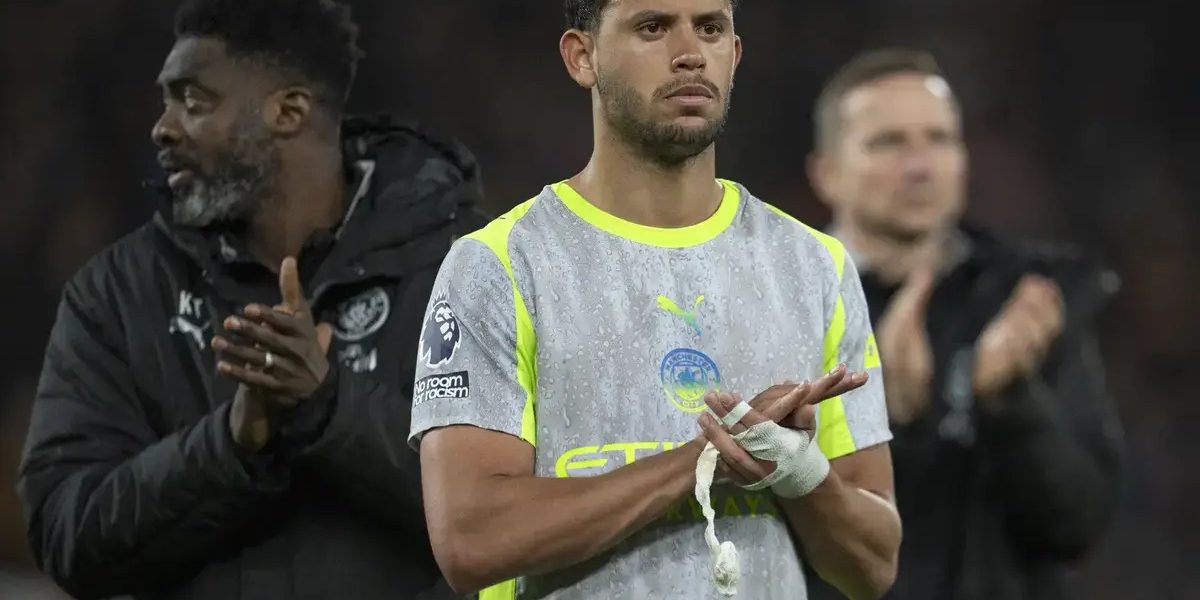
POLICY WIRE — MANCHESTER, ENGLAND — The ink’s barely dry on the new manager’s contract, and already, the tea leaves are being read with feverish intensity down Manchester City way. Most folks would naturally focus on the shiny new toys—the strikers, the flair players—but at the Etihad, it’s often the quiet, almost imperceptible shifts that betray the grand strategy. This time, the rumblings concern a right-back, and what seems like a mundane decision speaks volumes about Enzo Maresca’s subtle ascension, and perhaps, the lingering ghost of Pep Guardiola’s reign.
It’s not about shipping Matheus Nunes out, oh no. That’s the conventional wisdom. Instead, the club’s talent hunters are scouring the continent for a specialised, youthful defensive profile
to support the Portuguese international, not supplant him. A wrinkle, a nuance—and one that highlights a deep-seated philosophy that prioritizes depth, development, and an almost clinical efficiency over blockbuster ego-buys. Call it pragmatic ruthlessness, if you like. The very thing that makes City such a juggernaut.
Maresca, fresh from a surprising return, seems content to tiptoe rather than stamp his authority. He’s reportedly working elbow-to-elbow with Sporting Director Hugo Viana, auditing the squad. Not a purge, mind you, but a careful inventory. Look, every coach wants their stamp on things,
Maresca was heard to remark recently, a quiet nod to the pressure cooker. But this club? It’s not about tearing down; it’s about building on solid ground. Matheus has shown his grit, his tactical flexibility. We’re looking at intelligent enhancements, not revolution for revolution’s sake.
His words, for those who pay attention, are as telling as any multi-million-pound transfer fee.
The choice to target a young prospect, rather than a proven, pricy European star, also hints at City’s desire to keep the dressing room competitive and, perhaps more significantly, fiscally prudent. Recent market analysis indicates the average fee for a ‘proven’ right-back aged 25-28 in Europe’s top five leagues now hovers around €45 million, a 30% increase over the last three seasons, according to Football Analytics Today. City, it seems, isn’t keen on buying at peak prices if they don’t have to. They’d rather mold.
And molding, they’re. Nunes himself, let’s not forget, was repurposed last season, a midfield general asked to become a wide sentinel. A testament, some would say, to Guardiola’s tactical sorcery—others, to the adaptability demanded by the Etihad machine. It’s an interesting blueprint for new blood, isn’t it? Come, learn, adapt, conquer.
But how does this low-key acquisition strategy ripple through the global football landscape? Consider the sheer brand power these decisions leverage. When Manchester City—or any Premier League giant, for that matter—eyes a young talent, the effect on their home club, their league, their entire ecosystem, is profound. From the dusty pitches of Karachi where kids dream of playing for their favorite English club, to the academies in Lahore aiming to produce the next big star, this systematic scouting reinforces a global talent hierarchy. It’s a powerful narrative, a subtle form of economic influence that extends far beyond the English Channel, into markets like Pakistan, where fandom for these clubs runs as deep as any local rivalry. It shapes aspirations, drives investment, and maintains the allure of the top European leagues as the ultimate destination.
📄 POLICY WIRE WHITEPAPER PUBLISHED: PAKISTAN'S NATIONAL SECURITY POLICY PRIORITIES
👉 READ BY CLICKING HERESo, Maresca, the heir apparent, isn’t coming in with an axe. He’s wielding a scalpel. He wants the squad finalized before jetting off to Far-East Asia for pre-season, but the FIFA World Cup in North America complicates matters for player availability. Still, the underlying message is clear: incremental, strategic growth, not impulsive renovation. And perhaps, that’s what makes the City model so infuriatingly successful for its rivals.
What This Means
This isn’t merely a football transfer decision; it’s a political maneuver within the gilded cage of elite sports. Maresca’s approach signifies a strategic adherence to the established ‘City Football Group’ philosophy, which prioritizes a steady, analytical build over a reactive, celebrity-driven market splurge. It suggests that while Guardiola’s era has concluded, the fundamental infrastructure and operational doctrine he championed remain firmly in place. Maresca is being given the keys to a finely tuned, ruthlessly efficient engine, not a broken-down vehicle requiring a full overhaul. His public posture—focusing on ‘intelligent enhancements’—is a tacit acknowledgement that revolutionary changes are neither expected nor perhaps even desired from the board. This calculated restraint also offers a valuable insight into the evolving power dynamics between modern club ownership and managerial discretion. The manager is an important cog, certainly, but the system is bigger. And because of this, expect long-term financial stability to take precedence over short-term market gambles, solidifying City’s position as a blueprint for sustainable (and often dominant) sporting enterprise. It also sends a clear signal to ambitious young talents globally: City offers a developmental path, not just a hefty paycheck—a potent message in a hyper-inflated transfer market.
Sporting Director Hugo Viana, never one for bombast, distilled the strategy. The market’s a beast, always hungry. We don’t chase shiny objects; we identify needs, cultivate talent. To acquire a specialist defensive prospect—young, hungry—it’s smart business. It protects our investments and keeps the engine running smooth, a long-term play, wouldn’t you say?
This, ladies and gentlemen, is the quiet articulation of Manchester City’s ambition—not just to win trophies, but to craft a legacy through systematic, almost inevitable, success.