


The Mets’ Hardball Calculus: When Yesterday’s Hero Becomes Tomorrow’s Trade Bait
POLICY WIRE — New York, United States — Barely a half-year after his grand acquisition, a star pitcher, lured to New York amidst significant fanfare and not-insignificant financial outlays, now finds...

POLICY WIRE — New York, United States — Barely a half-year after his grand acquisition, a star pitcher, lured to New York amidst significant fanfare and not-insignificant financial outlays, now finds himself teetering on the edge of the trade block. That’s the brutally transactional nature of elite professional sports, isn’t it? The New York Mets, despite opening the vault in recent seasons, are once again wrestling with their fortunes, finding themselves mired at the bottom of the National League East in early June. And this isn’t just about losing games; it’s about a coldly rational calculus on managing assets.
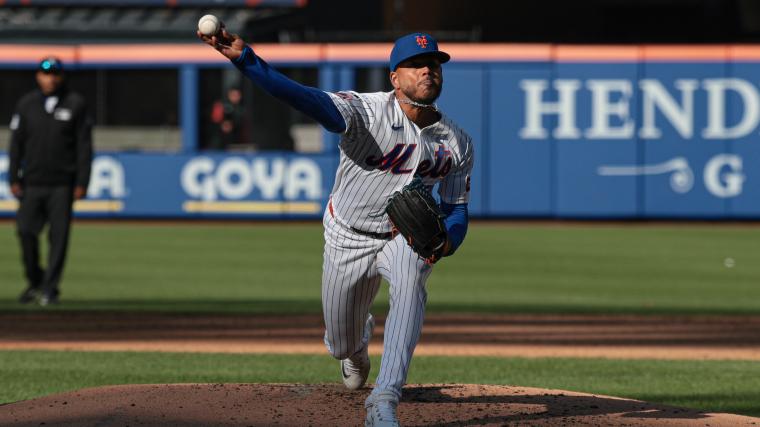
It sounds harsh, sure. But hear me out. Freddy Peralta, an All-Star ace picked up from the Milwaukee Brewers just this past offseason, now reportedly tops the list for an impending fire sale. Jeff Passan, an ESPN insider, suggests moving Peralta is “what makes the most sense” for a franchise that seems to have more questions than answers right now. Sense, here, meaning a ruthless adherence to fiscal prudence, not sentimental attachment. Because in this league, you’re either winning or you’re optimizing your balance sheet—and for the Mets, it’s clearly the latter.
This isn’t particularly shocking news for anyone watching the money games in professional baseball. Teams acquire talent. They develop it. They occasionally offload it. What’s often overlooked, however, is the velocity of this cycle, especially for a player like Peralta, whose market value is peaking right when his current team needs a strategic reset. He’s a free agent after this season, meaning his trade value far outstrips any paltry compensation the team might receive if he simply walked via free agency—even considering a qualifying offer. For instance, the 2023 qualifying offer for MLB players stood at a respectable $20.325 million, a sum often rejected because a player can earn so much more on the open market, or his team can net better prospects through a trade. But for the Mets, they wouldn’t even get that if he leaves, only a draft pick.
“In this league, you don’t get sentimental about assets that depreciate faster than a new car off the lot, especially when the current model isn’t driving results,” a former long-time MLB General Manager, speaking under the condition of anonymity, observed dryly. He added, “Teams, big market or not, can’t afford to let premium talent walk for nothing when they’re not contending. It’s an unsustainable business model, pure and simple.” This isn’t just about baseball; it’s a masterclass in market manipulation, an art many developing nations struggle to emulate in retaining their top intellectual capital. And, it’s a cold truth, isn’t it?
And so, Peralta, whose arm offers potent electricity on the mound, becomes currency. A commodity. The sheer efficiency of the exchange is staggering: one season of potential brilliance, followed by a potential haul of prospects to rebuild a beleaguered farm system. But what does this say about the grand vision? Or the lack thereof?
📄 POLICY WIRE WHITEPAPER PUBLISHED: PAKISTAN'S NATIONAL SECURITY POLICY PRIORITIES
👉 READ BY CLICKING HERE“The economics of modern sports? It’s a high-stakes, hyper-liquid market. You buy low, you hope to sell higher. When a player’s market value so starkly outstrips their on-field return for a non-contender, that’s just sound business, even if it feels—to the loyal fans—like financial alchemy,” Dr. Karim Zahavi, a sports finance analyst with Doha’s Center for Global Athletic Investments, told Policy Wire. “From an investor’s standpoint, be it Wall Street or the Gulf States, consistency in maximizing returns is preferred over fleeting emotional victories. There’s a harsh beauty in that pragmatism.” It’s a philosophy that often governs more pressing global policy decisions, too, sacrificing immediate stability for perceived long-term gains.
But what if the Mets miraculously turned their season around? Such a comeback would fundamentally alter the equation. Without it, however, the gears of the trade market will grind, and Peralta, a man they just welcomed, will almost certainly be gone before the August 3 deadline. Teams will line up, hungry for an All-Star-caliber pitcher. They’d undoubtedly offer a strong package. This isn’t a move fans will celebrate, not on social media anyway, but it’s framed as an investment in a future that, from their current vantage point, seems stubbornly distant.
What This Means
This situation isn’t just another baseball transaction; it’s a harsh spotlight on the increasing financialization of professional sports, where players are seen as depreciating assets to be managed for maximum equity. It illustrates a league policy shift towards short-term, market-driven decision-making, even in storied franchises. The Mets, like many struggling large-market teams, find themselves in a precarious political position with their fanbase, balancing the need for long-term rebuilding against the expectation of immediate competitiveness. The quick flip of a star player, barely warm in his new uniform, speaks volumes about executive confidence – or perhaps, a startling lack thereof – in the current team’s trajectory. It’s a reflection of global economic realities too, where quick profits often overshadow the slower, more organic process of building enduring structures or stable institutions. Just look at the differing investment strategies in, say, nascent technology ventures versus vast infrastructure projects in Pakistan or the broader South Asian landscape. One seeks rapid, disruptive returns; the other, sustainable, foundational impact. Here, the Mets appear to be playing the disruptive venture capital game rather than the long-haul infrastructural development strategy. It highlights the volatile dance between corporate stewardship and public relations in the hyper-connected, high-stakes world of modern sports, where a team’s financial health often trumps its emotional appeal.