

Berlin’s Innovation Drain: Foreign Hands Grasp Germany’s Cutting Edge
POLICY WIRE — Berlin, Germany — For generations, German ingenuity hasn’t just been a marketing slogan; it’s been the bedrock of Europe’s largest economy. Precision engineering,...

POLICY WIRE — Berlin, Germany — For generations, German ingenuity hasn’t just been a marketing slogan; it’s been the bedrock of Europe’s largest economy. Precision engineering, groundbreaking chemistry, relentless technological advancement—these weren’t merely aspirations, they were earned reputations. So it’s a bit of a gut punch, frankly, to hear that the intellectual muscle that keeps Germany punching above its weight class is increasingly, well, not German anymore. It’s an inconvenient truth that’s landed with a thud.
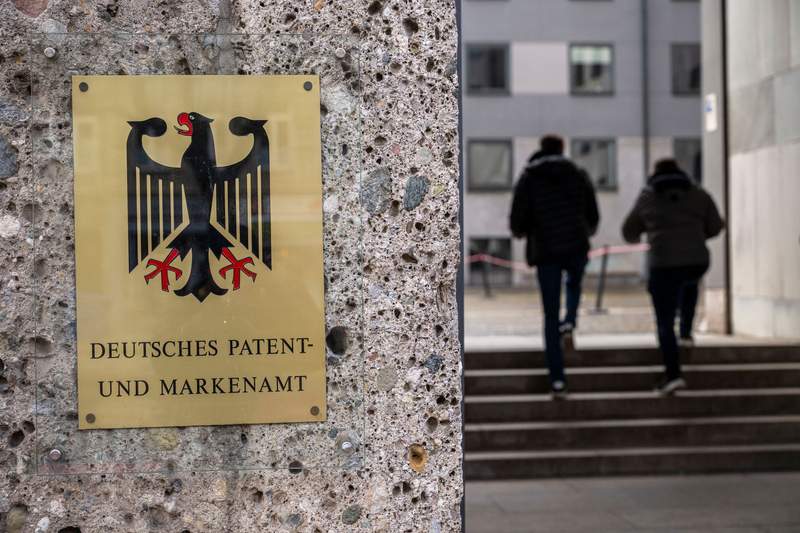
A recent, unsettling analysis by the Fraunhofer Institute for Systems and Innovation Research (ISI) laid out the stark reality: a startling 29 percent of all strategically significant patents registered in Germany now belong to foreign entities. That’s nearly one in three of the blueprints defining future industries, the innovative sparks meant to ignite tomorrow’s economy. It isn’t just about ownership; it’s about control over R&D, manufacturing, — and ultimately, jobs. It’s about where the money goes when those ideas hit the market, and often enough, it’s not staying within the federal republic’s borders.
And because these aren’t just any patents, mind you, they’re the ‘key patent families’—those identified as having high technological relevance and market potential—this figure isn’t some dusty statistic for academics to bicker over. This is about where Germany’s industrial strength goes next. Or, more accurately, who takes it there.
“This isn’t about isolation; it’s about safeguarding future prosperity,” lamented Dr. Anja Becker, State Secretary for Economic Affairs, in a recent private briefing. “Our ingenuity is a national asset, — and its control deserves scrutiny. We’re welcoming investment, sure, but we must protect our technological edge.” But there’s always another side to the coin, isn’t there?
“Innovation’s borders blur, that’s just the reality we operate in,” countered Klaus Richter, head of the German Chamber of Commerce and Industry’s Innovation Division, during a teleconference. “We need global capital — and collaboration to compete effectively. Protectionism? That’s a short road to obsolescence, especially when we’re seeing digital dealers making moves worldwide. What Germany needs is smarter partnerships, not walls.”
But the numbers speak for themselves. The lion’s share of this intellectual property exodus flows towards the United States and Switzerland, followed closely by nations in East Asia. Think about it: a country that built its modern reputation on Volkswagen, Siemens, and Bayer is now watching its conceptual birthright trickle elsewhere. This isn’t a slow leak, it’s a discernible shift, fundamentally altering the strategic landscape.
📄 POLICY WIRE WHITEPAPER PUBLISHED: PAKISTAN'S NATIONAL SECURITY POLICY PRIORITIES
👉 READ BY CLICKING HEREIt gets worse. These aren’t patents for quirky household gadgets, either. We’re talking about core sectors—electromobility, advanced manufacturing techniques, biotech, digital infrastructure. Stuff that shapes a nation’s competitive stance for decades. Imagine if China controlled a third of Germany’s car patents, or if a significant portion of its pharmaceutical breakthroughs were ultimately dictated from overseas. That’s the sort of long-game concern percolating in Berlin’s corridors.
For context, consider how other nations approach this. Take many emerging economies in South Asia, for instance. Just as countries like Pakistan struggle to attract much-needed foreign direct investment (FDI) without ceding too much local control over their nascent tech or industrial sectors, Germany now faces similar questions—albeit at a vastly different scale of economic development. They’re both wrestling with the complex tightrope walk of global capital versus national sovereignty over intellectual assets. That challenge, it seems, knows no GDP per capita ceiling. Everyone’s in the same boat, just with different kinds of life rafts.
What This Means
This isn’t merely an academic debate about patent registers; it’s a cold splash of reality for Germany’s long-term economic sovereignty. Losing control over a substantial chunk of future innovation directly translates to ceding market advantage, revenue streams, and—crucially—decision-making power. Politically, it complicates Berlin’s efforts to shape industrial policy, especially in strategic fields like climate tech or AI, if key foundational technologies aren’t domestically owned. And it makes German businesses potentially reliant on licenses from foreign competitors, stripping them of competitive edge and even strategic flexibility.
Economically, you’re looking at diminished returns on domestic research spending. If Germany funds basic and applied research, but the patent registration and commercialization benefits disproportionately flow abroad, the societal ROI shrinks. It signals a quiet erosion of the country’s manufacturing base if proprietary methods and tools are controlled from outside. For a nation built on exporting high-value goods, this development could see its premium markets slowly turn into commodity plays, while the true innovators profit elsewhere. It’s a wake-up call, plain — and simple, for a country that prides itself on looking ahead.