
Obama’s Legacy Takes Concrete Form on Chicago’s South Side – But Who Gets In?
POLICY WIRE — Chicago, USA — So, what’s a presidential legacy worth? About $30, it turns out, if you want to see the good stuff inside the Obama Presidential Center’s main tower. On the...

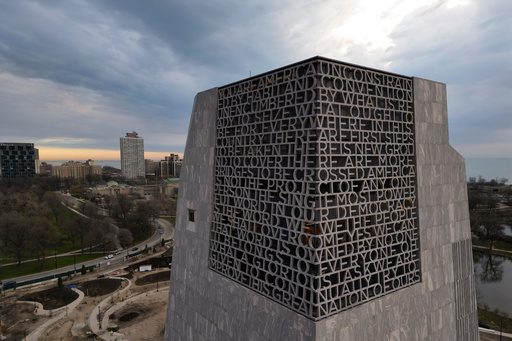
POLICY WIRE — Chicago, USA — So, what’s a presidential legacy worth? About $30, it turns out, if you want to see the good stuff inside the Obama Presidential Center’s main tower. On the surface, the nearly 20-acre sprawl on Chicago’s South Side promises community engagement, picnic spots, and a new library. But once past the freely accessible John Lewis Plaza and community grills, a different sort of engagement begins—one with a rather steep admissions fee that tops every other presidential museum in the country.
It’s a peculiar dichotomy, this insistence on neighborhood roots paired with the most expensive entry point to presidential history. This monument, projected to draw a million visitors annually once it officially throws open its doors on Juneteenth, wasn’t merely dropped from the sky. No, it’s infused with the former president’s personal touches, from textured stone evoking his home aesthetic to striped reading chairs eerily similar to his own. It’s a meticulously curated space, blurring the lines between personal recollection and public institution, all while striving to inspire the next generation—assuming they can swing the ticket price.
The roughly $850 million complex doesn’t just house a museum; it’s a statement. A gleaming replica of the Oval Office—complete with George W. Bush’s handwritten letter and Obama’s BlackBerry, preserved like ancient artifacts—allows visitors to play president for a day. Campaign memorabilia sits alongside displays on the Affordable Care Act and a poignant video of Obama singing ‘Amazing Grace.’ It’s an immersive experience, sure. But for some, especially those from the very neighborhoods the center purports to uplift, the cost might feel less like an invitation and more like a gentle nudge back outside.
Josh Harris, the Obama Foundation’s vice president of public engagement, is keen on squaring that circle. “We want to make sure that people from all walks of life have the opportunity to sit behind the Resolute Desk,” he recently told the Associated Press, downplaying the admission fees by emphasizing the free areas. “If a young organizer from the South Side of Chicago can be president, you can be president too.” It’s a powerful narrative, that notion of aspiration—a message that certainly resonates beyond American shores, touching places where economic ladders feel perpetually out of reach. Even in booming economies like India, the rhetoric of opportunity often clashes with ground realities.
And speaking of global narratives, President Obama’s unique position as the first African American president made him a figure of immense symbolism across the world, particularly in Muslim-majority nations and the broader South Asia region. His presidency sparked conversations about American identity, opportunity, and foreign policy in Karachi cafes and Dhaka university halls. This center, in its very existence, acts as a physical embodiment of a significant chapter in that story. It’s a high-tech facility, one of the first entirely digital presidential museums, meaning less dusty paper trails and more interactive exhibits designed to capture the digital-native attention spans of today’s youth—a generation as fluent in TikTok as in historical fact.
But can it bridge the perceived gap between inspiration — and affordability? Because while the Obama Foundation stresses accessible public areas—a playground, sledding hill, grilling spots mirroring Obama’s own cherished memories of grilling in Chicago parks—the main attraction, that deep dive into presidential history, demands thirty bucks. That’s ten dollars more than Abraham Lincoln’s legacy charges a few hours downstate in Springfield, and five dollars more than Chicago’s Museum of Science and Industry. On the other hand, the highest floor of the museum tower, offering panoramic views of Chicago, is indeed free. A small victory, perhaps, for those who just want to see the city from up high without contemplating legislative maneuvers.
📄 POLICY WIRE WHITEPAPER PUBLISHED: PAKISTAN'S NATIONAL SECURITY POLICY PRIORITIES
👉 READ BY CLICKING HERE“We built this for the community, a place where people don’t just observe history, but engage with it—and with each other,” Valerie Jarrett, a former senior advisor to Obama and now board member for the Foundation, explained. “We’ve created job opportunities, a fresh library, — and open spaces where families can simply be. You can’t put a price on that kind of catalytic impact, even if some parts require a fee to maintain the high standard people expect.” It’s a sentiment often heard when grand public-private partnerships take shape: the dream of wide access often collides with the practicalities of upkeep and operation. The hard truth: in 2023, the Obama Foundation raised over $350 million from various donors and pledges to fund its initiatives and the center’s ongoing development, according to its annual public filing. These large-scale projects don’t run on good intentions alone.
What This Means
The Obama Presidential Center isn’t just another museum; it’s a socio-economic experiment masquerading as a historical tribute. Its placement on the South Side, an area grappling with historical disinvestment, holds enormous symbolic weight. The economic ripple effects—jobs, tourism, increased foot traffic—are tangible, a promised uplift for neighborhoods long overlooked. Yet, the price point for the core museum itself suggests a calculated decision to either target a specific demographic of visitors or acknowledge the sheer operational cost of a modern, high-tech institution. It risks creating a perception of exclusivity within a facility championing inclusivity.
Politically, the center serves as a powerful reminder of Obama’s enduring influence and the Democratic Party’s connection to progressive urban revitalization. It’s a statement about how presidential legacies are crafted and controlled in the 21st century—less about dusty archives and more about interactive engagement and community programming. This dual function, historical preservation combined with urban development, makes the center a unique model, and its success (or challenges) will undoubtedly inform future presidential library projects. It forces a conversation about who these institutions are truly for, — and at what cost. Because in the end, legacies aren’t just built; they’re maintained, and that always comes with a price tag, visible or otherwise.