

Amid Drought, Arizona Golf Green Offers Unlikely Blueprint for Global Water Crisis
POLICY WIRE — Phoenix, Arizona — Forget the fairway, at least for a moment. In the increasingly parched American Southwest, water isn’t just a resource; it’s a political hot potato, an...

POLICY WIRE — Phoenix, Arizona — Forget the fairway, at least for a moment. In the increasingly parched American Southwest, water isn’t just a resource; it’s a political hot potato, an economic flashpoint, and, for some, a dwindling birthright. While federal bureaucrats and state legislators haggle over declining Colorado River allocations, a seemingly innocuous renovation at a private golf club in the Phoenix suburb of Fountain Hills might just be—get this—the most consequential development for regional water policy we’ve seen in ages. No, really. And it’s not about new laws or massive dams; it’s about grass.
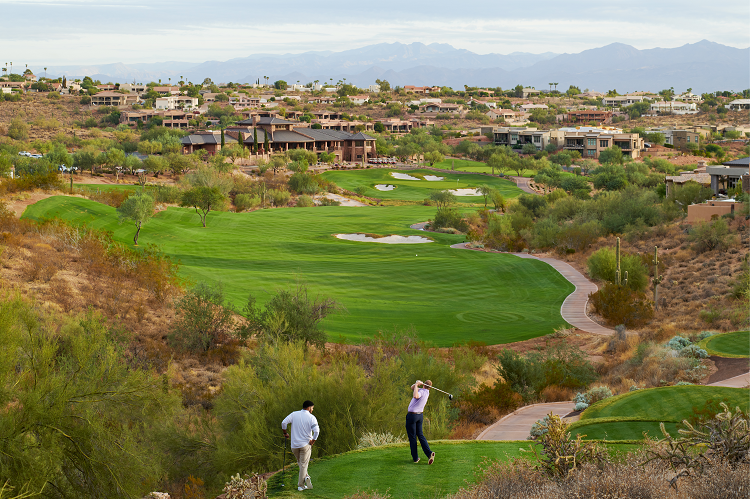
FireRock Country Club, designed by Gary Panks, recently threw out the old rulebook. Or, more precisely, they ripped up the old turf. They’ve swapped their traditional, thirst-trap overseeding regimen—a biannual addiction to water-guzzling winter ryegrass that practically all desert golf courses have been enslaved to for decades—for something entirely different. They’re the first in Arizona to embrace Stadium Zoysia across their entire playing surface: tees, fairways, green surrounds. A simple turf swap? Well, it isn’t.
It’s a declaration. Tim Geesey, FireRock’s general manager, sounds less like a golf pro and more like a man who’s stared down a financial and environmental abyss. “Our water supply was once described as the worst in the Southwest,” he recalled, his voice a dry echo of Arizona’s arid reality. “We were following the same practices as everyone else in town trying to get the grass to grow, — and we just couldn’t. We were spending all this money — and wasting all this water for nothing. Now, we’ve created a solution that positions us for the future.” His blunt assessment cuts through the usual country club platitudes, revealing a desperate struggle for survival. Because when the wells dry up, your greens become brown, your members vanish, and your business dies.
This isn’t some quick patch job. FireRock embarked on a monumental overhaul ahead of a planned 2025 re-opening. They carved out six inches of topsoil, then installed a sophisticated new drainage system—all while adhering to Panks’ original layout. What did they get for their troubles, for all that earthmoving? A cool 40 million gallons of water saved annually, according to the club’s own figures. And what do you know? Rounds played actually increased, hitting 4,700 in January alone, up from 4,000 in previous years. Apparently, players don’t miss the ryegrass much when year-round play is still possible. They actually prefer not having to deal with closed courses for turf transitions, turns out.
David Doguet, CEO and Founder of Bladerunner Farms, the developer behind this particular strain of Zoysia, isn’t just selling grass; he’s peddling a philosophy. “What they’ve accomplished is more than a renovation,” Doguet stated with an almost evangelical fervor. “It’s a reset of what’s possible for golf in desert environments. This project proves that courses no longer have to choose between playability — and sustainability. They can achieve both.” It’s the kind of disruption that environmentalists dream of, coming not from regulators, but from—of all places—the greens committee.
📄 POLICY WIRE WHITEPAPER PUBLISHED: PAKISTAN'S NATIONAL SECURITY POLICY PRIORITIES
👉 READ BY CLICKING HEREWhat This Means
This isn’t just a win for Arizona’s luxury leisure industry; it’s a stark policy signal. If golf courses—often derided as water-hogging oases—can innovate this radically, what excuse does everyone else have? We’re talking about fundamental changes to water consumption in a region teetering on ecological brinksmanship. The political implications are immense, shifting focus from who gets to keep their faucet flowing, to how we can all use less, smarter. And let’s be frank: such changes require less federal arbitration — and more local, innovative buy-in. It certainly puts pressure on other high-water-use sectors to follow suit. Don’t think for a second state officials aren’t taking notice.
Beyond the American West, this experiment holds a potent lesson for places like Pakistan and much of the Middle East—regions wrestling with escalating climate change impacts, dwindling snowmelt, and ballooning populations. Water scarcity isn’t an academic problem there; it’s a daily struggle, sparking localized conflicts and crippling agricultural output. If golf, in its quest for uninterrupted sport, can drastically reduce its footprint, then industries and communities worldwide that face even more dire water stress should take a long, hard look at their own long-held traditions and water-intensive practices. It’s not just about what grows best, it’s about what allows *everything* to keep growing.
The tale of FireRock isn’t simply a feel-good renovation story. It’s an inconvenient truth for traditionalists and a powerful case study for policymakers grappling with a rapidly changing world. It demonstrates that meaningful conservation sometimes arrives not with grand pronouncements, but with a humble change of turf.