

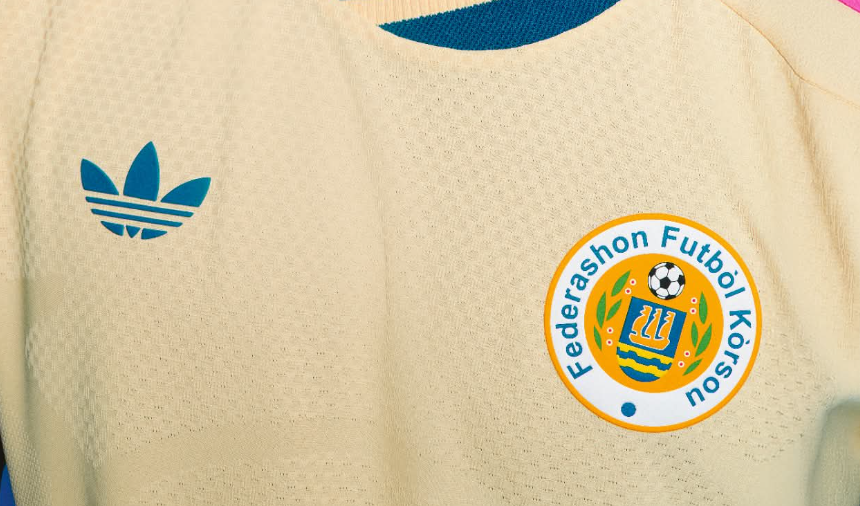
Silent Benches: The Geopolitics of Unseen World Cup Jerseys
POLICY WIRE — Zurich, Switzerland — Football, they tell us, is the beautiful game. But beneath the thunderous roar of the crowds and the kinetic dance of athletes, there’s a quieter, often...

POLICY WIRE — Zurich, Switzerland — Football, they tell us, is the beautiful game. But beneath the thunderous roar of the crowds and the kinetic dance of athletes, there’s a quieter, often unacknowledged contest unfolding. It’s not just about goals — and glory; it’s about visibility. About who gets to project their nation’s brand, culture, and economic muscle onto the world stage, and whose sartorial statement—often months, if not years, in the making—gets folded away, gathering dust on a metaphorical shelf.
It’s a peculiar byproduct of a global spectacle, isn’t it? We talk about pitches, tactics, star players. Rarely do we discuss the wardrobe. Yet, here we’re, facing down the reality that a not-insignificant number of national kits—eighteen, to be exact, according to FIFA’s meticulously curated match-day protocols for the initial group stage—won’t see the light of a World Cup floodlight. These aren’t just strips of polyester and dye; they’re symbols, crafted with intricate design narratives and significant financial investment. They’re a country’s visual ambassador, for better or worse.
Many of these ‘benched’ designs are social media darlings. Take South Africa’s vibrant alternate, Curaçao’s distinct blue, or Japan’s artistically ambitious second kit. They’ve generated considerable buzz online, proving they resonate with fans. But for FIFA, and indeed for the global governing body’s myriad commercial partners, fan enthusiasm isn’t always the ultimate arbiter. Operational mandates — and marketing synergy often take precedence. It’s a pragmatic approach, some might argue—cold, certainly, but then again, that’s how global operations tend to roll.
“Every decision, down to the colour combination for a match, serves to optimize viewership and uphold the integrity of the game,” asserted FIFA Director of Tournament Operations, Lena Hoffmann, in an exclusive off-the-record briefing earlier this week. She stressed the importance of visual contrast for television audiences — and refereeing efficiency. “It’s about more than just a pretty design; it’s about a seamless broadcast experience for billions.”
Because, really, when you consider the sheer scale of the enterprise, minor considerations often get steamrolled. This isn’t just about clashes in colour palettes or a quirky aesthetic. It impacts everything from souvenir sales to national identity projection. Imagine a country from, say, Southeast Asia—a growing market with immense potential—investing heavily in a distinct new kit to capture global attention, only for it to be sidelined for a conventional pairing. It’s a missed opportunity for cultural diplomacy, isn’t it? A soft power play thwarted before it even leaves the locker room. And many nations, particularly those from emerging football markets like Pakistan or Indonesia, understand this delicate dance of visibility. A prominent showing of a unique national kit could boost national pride, inspire youth engagement, and even subtly shift global perceptions. It’s not just fabric; it’s a canvas for a story.
📄 POLICY WIRE WHITEPAPER PUBLISHED: PAKISTAN'S NATIONAL SECURITY POLICY PRIORITIES
👉 READ BY CLICKING HERE“We spend considerable time and resources developing kits that embody our national spirit and cultural heritage,” remarked Rashid Khan, Vice President of the Pakistan Football Federation. He sounded genuinely disheartened about some similar challenges faced by other nations in regional tournaments. “When a design, especially one inspired by local artistry or history, doesn’t get seen on the biggest stage, it’s not just a fashion oversight. It’s a blow to our brand. A significant lost chance for recognition — and pride on a truly global scale. We’re telling our story, sometimes silently, through these threads.”
The folks over at Mantos do Futebol, a website with a serious obsession for this stuff, did a proper deep dive, mapping out exactly which of the 48 participating nations have their ‘away’ or ‘third’ kits relegated to the bench. It’s a comprehensive breakdown of the beautiful game’s forgotten aesthetics. Their survey highlighted designs often lauded by fans for their daring departures from tradition, yet ultimately deemed unsuitable for initial match days. So, while you might fawn over Ghana’s second kit online, the television cameras will probably be fixated on the more ‘traditional’ pairings. And that’s the rub, isn’t it?
What This Means
The quiet shelving of nearly one-third of available national football kits isn’t just a sartorial curiosity; it speaks volumes about the pragmatic realities governing modern global sports. Politically, this phenomenon underscores a subtle power dynamic. Nations, particularly those from the Global South—think African or Asian confederations—often leverage the World Cup to enhance their soft power and cultural diplomacy. An unseen kit means a diminished visual footprint, reducing a crucial avenue for national branding and cultural projection on a global viewership scale pegged at over 5 billion people for the last tournament cycle. Economically, the implications are equally stark. National federations, along with their commercial partners, invest millions in kit design, manufacturing, and marketing. A kit not showcased loses significant merchandising potential and limits exposure for sponsors, who pay hefty sums to have their logos paraded before a global audience. The perceived “market value” of national identity, then, becomes intrinsically linked to FIFA’s internal, often opaque, logistical and commercial considerations. It suggests that while football is global, the dictates of its presentation remain highly centralized, favouring broadcast optimization over diverse aesthetic representation. The unspoken message? Commercial viability and seamless production often trump unique cultural expression—a quiet, but impactful, policy decision made far from the pitch. It’s a reminder that even in sport, image is carefully managed, — and not all images are created equal.