


Ballot Box Bluster: Madrid Presidential Hopeful Draws City’s Legal Ire Over Haaland Claims
POLICY WIRE — City, Country — Election season, it seems, isn’t just for parliamentary hopefuls and backroom deals. No, sometimes the fiercest political battles unfold on a pitch, or rather,...

POLICY WIRE — City, Country — Election season, it seems, isn’t just for parliamentary hopefuls and backroom deals. No, sometimes the fiercest political battles unfold on a pitch, or rather, about who’ll command the greatest talents on one. Right now, it’s a Real Madrid presidential race, a veritable carnival of promises and a challenger’s audacious ploy that’s got the Manchester City legal department sharpening its pencils. It’s high drama, really—football, pure politics, and a healthy dose of international corporate muscle flexing.
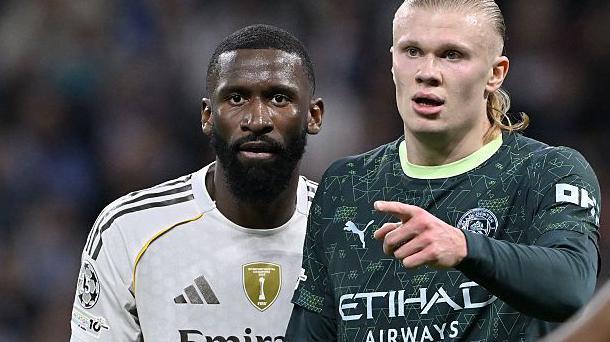
The latest fireworks? An insurgent presidential candidate, Enrique Riquelme, a man of renewable energy fortunes, opted for what many might call a bold, others, a downright reckless, campaign strategy. On national television, Riquelme unveiled a Real Madrid shirt. It wasn’t just any shirt, mind you; this one bore the name “Haaland”—yes, *that* Haaland, Erling Haaland, the prolific Manchester City striker who currently terrorizes defenses across Europe. He didn’t just flash it, either. He made a direct, rather definitive pronouncement: “He has a release clause — and would like to join Real Madrid. If I become president, he will play for Real Madrid.” That’s quite the stump speech.
Because why stop at just one prize possession? Riquelme, perhaps warmed by the cameras or the prospect of unsettling a rival, then casually dropped another name: Rodri, City’s midfield linchpin. “He is a great player, in a position where Madrid need to strengthen,” Riquelme asserted, adding with an almost paternal air, “We have spoken to his agent. We have to respect his club, but if I’m president he will play for Madrid. I will do everything possible.” It’s electoral exuberance, isn’t it? A whirlwind of speculation masquerading as policy. This isn’t just about winning a seat; it’s about owning the narrative, regardless of its foundation.
But that kind of bluster, especially when it involves highly valuable assets—players in multi-million dollar contracts, that’s—doesn’t sit well in the boardrooms of the reigning English champions. The reaction from the blue half of Manchester was swift. A joint statement from Haaland’s camp (his father — and agent) hit the wire first, a firm hand slap. City then piled on, with a spokesperson stating, “The stories which have emerged from Spain regarding the future of Erling Haaland are untrue. There’s no chance of this happening — and there’s no contractual clause to enable it.” They didn’t stop there. “We’re considering legal action for the use of our player image in this context.” That’s lawyer-speak for, ‘We’re not playing around.’
The stakes are high for Riquelme. This isn’t some quaint village election. This is for the presidency of Real Madrid, one of the most recognizable and financially powerful sports franchises globally, valued at an astonishing $6.6 billion in 2024 by Forbes. The club hasn’t won a major trophy in two seasons, a drought that’s practically a famine for their gilded standards. Current president Florentino Perez, the architect of the Galácticos era, hasn’t faced a challenger in two decades. Riquelme, a comparative outsider, is making promises like a property mogul launching a luxury development: a ‘members’ city’ for fans, annual fee reductions up to 50% if the Champions League isn’t won—because, hey, who wouldn’t want a rebate on failure? He even took a swing at Perez’s reported pick for manager, José Mourinho, suggesting the iconic Jürgen Klopp as his alternative. It’s an election defined by what one promises to snatch from rivals or conjure from thin air.
And these dramatics? They don’t just stay in Spain or Manchester. No, they ripple outwards, through social media, news channels, — and fan forums across continents. In places like Pakistan, where millions fervently follow European football—their hearts often torn between Real Madrid, Barcelona, and the English titans—such claims become instant, passionate debates. Fans there, navigating their own complex socio-economic realities, find a shared, thrilling escapism in these high-stakes football sagas. A candidate’s pledge in Madrid about a Norwegian striker becomes breakfast table talk in Lahore, showcasing the truly global reach of modern football’s absurdities. Because in this interconnected world, what happens in a Madrid boardroom can electrify a fan base thousands of miles away, often blurring the lines between sporting ambition and political spectacle.
📄 POLICY WIRE WHITEPAPER PUBLISHED: PAKISTAN'S NATIONAL SECURITY POLICY PRIORITIES
👉 READ BY CLICKING HEREWhat This Means
This episode, though framed as a mere spat over player transfers, pulls back the curtain on a few telling truths about modern football, and indeed, about contemporary global politics. Firstly, it spotlights the increasingly blurred lines between sports management — and political campaigneering. Riquelme’s stunt isn’t just about football; it’s a classic electioneering move, designed to grab headlines, rally supporters, and destabilize an incumbent by offering grand, almost impossible, visions. It’s performative, overtly theatrical, and perhaps, a sign of what awaits more traditional institutions if they don’t adapt to a media-saturated environment.
Secondly, it underscores the hyper-commodification of elite athletes. Players like Erling Haaland aren’t just sportsmen; they’re brands, assets, — and sometimes, political pawns. Their image — and contractual status carry immense commercial value, protected by armies of lawyers. Violations aren’t just matters of public relations; they can translate into significant financial liabilities or strategic disadvantages. It’s why City isn’t just issuing a stern warning; they’re considering the heavy artillery of litigation.
Finally, the entire kerfuffle shines a light on the power dynamics within the sport. Real Madrid is arguably the most recognized club globally. Its elections aren’t local affairs; they influence narratives, player markets, — and sponsorship deals worldwide. Riquelme’s challenge to Florentino Perez—who has held sway with a powerful grip for so long—represents a generational and ideological tussle for control of an iconic institution. It’s a contest for the soul of the club, wrapped in billion-dollar promises and fueled by public pronouncements that push the boundaries of sportsmanship and corporate etiquette. The battle isn’t just for votes, it’s for perception. And it appears, sometimes, the perception matters more than the plausible reality. Expect more fireworks, regardless of who wins on June 7th.