

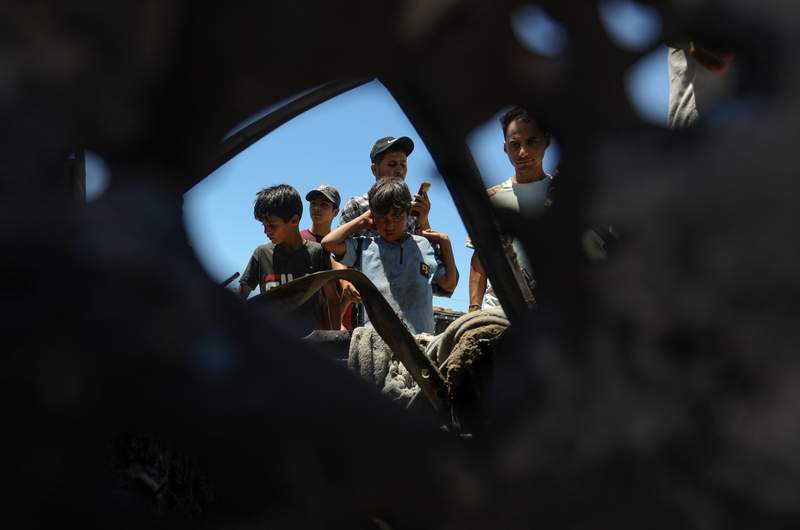
Gaza’s Bleak Frontier: Minors and Disabled Drawn into Reconnaissance as IDF Looms
POLICY WIRE — Tel Aviv, Israel — The conflict in Gaza, it seems, has yet another chilling chapter to etch into its bloody history. Forget the traditional frontline skirmishes; forget any semblance of...

POLICY WIRE — Tel Aviv, Israel — The conflict in Gaza, it seems, has yet another chilling chapter to etch into its bloody history. Forget the traditional frontline skirmishes; forget any semblance of established warfare protocol. Now, sources claim Hamas is deploying the most vulnerable for battlefield intelligence: teens and individuals with disabilities. It’s a gut-wrenching calculus ahead of an anticipated, major Israel Defense Forces offensive—a tactic that rips apart any remaining pretense of civility.
Nobody said war was fair. But this? It pushes the boundaries of a dark reality into truly abhorrent territory. These aren’t combatants, not in any conventional sense, yet they’re reportedly being funneled toward observation points along the border fence, mapping IDF positions, flagging troop movements, and identifying defensive weak spots. They’re pawns, essentially, walking human tripwires for an intelligence harvest. And Israel’s military, gearing up for what could be its most arduous ground operation yet, faces an ethical tightrope.
“We face an impossible choice, every single day,” Rear Admiral Daniel Hagari, spokesperson for the IDF, conveyed to Policy Wire via an official statement. “Hamas deliberately exploits its own population, weaponizing desperation and vulnerability as both a shield and a spear. It’s a calculated, barbaric strategy designed to erode international will and human decency, making every engagement an ethical minefield for our forces. We strive to protect civilians, but these tactics—they make the objective virtually unattainable without horrific consequences.” It’s a weary statement from a military spokesman who’s seen too much.
But how, you ask, can such an atrocious tactic be justified? From Hamas’s perspective, it’s about asymmetry—leveraging international outcry, complicating the enemy’s ethical calculations, and demonstrating a grim willingness to employ any means necessary. For global observers, however, it’s a profound betrayal of trust, a desecration of humanitarian norms. According to UNICEF, over 15,000 children have been reported killed in Gaza since the conflict began last October, a stark reminder of the devastating human toll. This new allegation only deepens the outrage.
Dr. Aisha Khan, a senior analyst specializing in conflict ethics for the Geneva-based Humanitarian Rights Observatory, didn’t mince words. “This isn’t warfare; it’s exploitation on an industrial scale. When children, when individuals with disabilities, are deliberately turned into tools of conflict, humanity itself takes a staggering blow. What precedent does this set? It’s horrifying, quite frankly. The international community simply can’t look away from this kind of depravity.”
And Khan’s point resonates deeply across the Muslim world, from Cairo to Islamabad. In Pakistan, for instance, public sentiment is already intensely focused on the plight of Palestinians. News of such tactics, regardless of who reports them or how they’re verified, amplifies a widespread sense of injustice and despair, further fueling condemnation of Israel’s response and — quite often — complicity by silence from Western powers. It becomes a flashpoint, driving domestic political discourse and straining diplomatic ties, echoing concerns about broader instability, a dangerous dynamic already unfolding across the region.
📄 POLICY WIRE WHITEPAPER PUBLISHED: PAKISTAN'S NATIONAL SECURITY POLICY PRIORITIES
👉 READ BY CLICKING HEREBecause these actions aren’t just battlefield maneuvers; they’re narrative changers. They shape how the world perceives the conflict, fueling both ardent support and deep condemnation for all sides involved. They paint a picture of utter desperation — and a frightening erosion of basic human consideration. It’s a lose-lose scenario for almost everyone.
What This Means
The alleged deployment of minors and disabled individuals for reconnaissance holds significant, devastating implications, both politically and economically. Politically, it significantly complicates any potential de-escalation efforts, making ceasefire negotiations even more tenuous. International outrage, already simmering, threatens to boil over, putting immense pressure on diplomatic channels and aid organizations. Israel, even as it targets Hamas, faces increased scrutiny and condemnation, potentially losing precious international backing as images—real or fabricated—of children in harm’s way proliferate. It’s a propaganda nightmare for them, irrespective of how accurate the reports are.
Economically, this tragic situation adds another layer of profound cost. Reconstruction, when it eventually happens, will be astronomical. But more immediately, humanitarian aid becomes both harder to deliver — and more critical than ever. The perceived use of vulnerable populations deepens the cynicism about aid distribution and raises difficult questions for donor nations. And the long-term societal damage within Gaza itself, the trauma inflicted on a generation forced into such roles, represents an unquantifiable economic drain, impacting future human capital, stability, and any hope for self-sufficiency. The ethical quandary becomes a fiscal one, too. The international community, already grappling with strained budgets, must decide just how much more moral compromise it’s willing to absorb, because this — it changes everything. Don’t it?