
Silent Splits: Braves’ Star Catcher Offers Counter-Narrative to Manager’s Timeline
POLICY WIRE — Atlanta, USA — They’re winning, sure. Stacking victories like baseball cards, the Atlanta Braves have been on an absolute tear. But even as the triumphs mount, culminating in their 42nd...

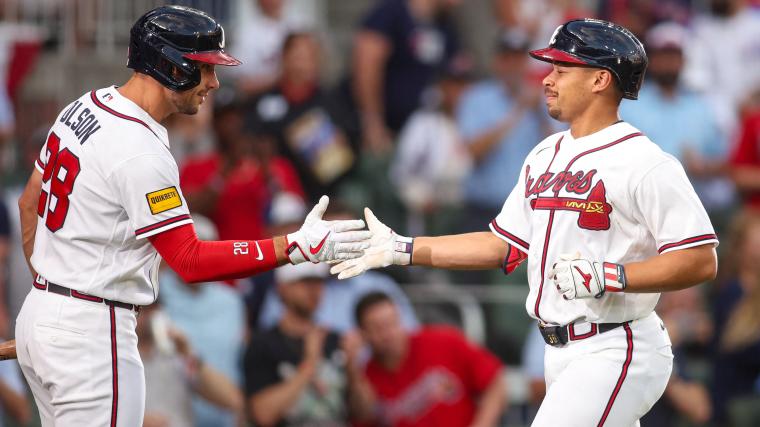
POLICY WIRE — Atlanta, USA — They’re winning, sure. Stacking victories like baseball cards, the Atlanta Braves have been on an absolute tear. But even as the triumphs mount, culminating in their 42nd win of the season over the Toronto Blue Jays, there’s this quiet hum just beneath the surface. It’s a subtle discord, you see, a public relations tightrope walked precariously between expectation and plain, ol’ physical reality. And right now, injured star catcher Drake Baldwin and manager Walt Weiss seem to be holding opposite ends of that rope, whether they realize it or not.
It’s a peculiar thing, the optics of injury in professional sports. Especially when the player in question is someone like Baldwin, who isn’t just good; he was tearing it up. Before landing on the injured list, he was swinging the bat well, contributing heavily to the team’s momentum. Losing him to an injury — it changes things. It always does.
The details came out in a stark, clinical fashion: “The Atlanta Braves put Drake Baldwin on the 10-day injured list Tuesday, with an MRI revealing that the star catcher has a Grade 1 right oblique strain.” That’s a medical assessment, cold hard facts, as reported by ESPN. Baldwin, last season’s National League Rookie of the Year, left a Monday night drubbing against the Miami Marlins—a rather painful 12-0 loss, no less. But here’s the rub: Weiss had initially downplayed it, saying Baldwin felt a slight discomfort after his second at-bat but not painful enough to warrant his removal. Maybe managers always have to project strength, protect the brand. Who knows?
Now, though, the conversation shifts from ‘how did it happen?’ to ‘when’s he back?’. This is where the divergence starts to feel less like a minor inflection — and more like a full-blown narrative split. Manager Walt Weiss, a man undoubtedly under pressure to keep his formidable lineup intact, painted an optimistic picture for the young catcher. Indeed, Bowman of MLB.com wrote that [QUOTE_PLACEHOLDER] A concrete timeframe, a target to aim for, a light at the end of the recovery tunnel.
But Baldwin? He’s not exactly echoing that sentiment. Because, well, it’s his body, isn’t it? And his career. You just can’t rush these things, not really. What he’s said about his own status stands in quiet contrast to his skipper’s public confidence. As Bowman put it, [QUOTE_PLACEHOLDER] No calendar circling for him. Just the measured, almost weary patience of a man who understands the delicate balance of recovery.
The Atlanta lineup’s missed him. You can see it. Backups like Sandy Leon — and Chadwick Tromp haven’t exactly been lighting it up at the plate, leaving a noticeable void. And they’ve needed Baldwin, especially with another key catcher, Murphy, also dealing with injuries. So there’s this inherent push from the organization, this unspoken pull towards a quick return.
📄 POLICY WIRE WHITEPAPER PUBLISHED: PAKISTAN'S NATIONAL SECURITY POLICY PRIORITIES
👉 READ BY CLICKING HEREIt’s all part of the game’s peculiar theater. Managers, like politicians, must manage expectations, both internally — and publicly. They’ve got a product to sell, an image to uphold. A strong, confident leader projecting a rapid return can bolster fan morale — and perhaps even spook opponents. But the player? He lives with the injury. He faces the prospect of reinjury, of long-term consequences. For him, the calendar isn’t an abstract marketing tool; it’s a progression of agonizing rehab exercises, incremental gains, and the stark reality of how his body feels day-to-day. You can almost feel the unspoken tension in those diverging public statements. Baldwin knows when he eventually comes back, he’ll likely jump right back into catching duties regularly. He also knows the cost of returning too soon.
Even half a world away, say in bustling Karachi or the media hubs of Mumbai, where cricket injuries can become national headlines and national fortunes often seem to hang on the health of star players, there’s an unspoken understanding of the strategic ambiguity often deployed in such public declarations. It’s not just a North American phenomenon; it’s a universal human tendency to manage narratives, to smooth over rough edges, particularly when valuable assets are involved. The scrutiny on figures like Baldwin is mirrored by the intense public and political attention paid to transparency (or the lack thereof) in government and corporate circles across Pakistan and broader South Asia, especially when economic or national pride issues are on the line. It’s about perception as much as fact.
What This Means
The subtle clash between Baldwin’s measured approach and Weiss’s upbeat prognostication speaks volumes about the business of modern professional sports. On one hand, you’ve got the player, the actual human capital, prioritizing his long-term health and the sustainable performance of his body—a wise, if less marketable, strategy. On the other, the organization, represented by its manager, needs to project strength, manage shareholder (fan) expectations, and perhaps even pressure an athlete (subtly, of course) into an expedited return for the team’s immediate competitive needs.
Economically, a premature return from a star player like Baldwin carries a huge risk. A re-injury could sideline him for longer, potentially devaluing a multi-million-dollar asset. The short-term gain of having him back quickly might not outweigh the long-term cost if he’s pushed too hard, too fast. Think about how major financial institutions evaluate risk against potential returns; it’s not dissimilar. The Braves are currently doing incredibly well despite significant challenges. Any decision here influences everything from game outcomes to ticket sales, future contractual negotiations, and even team valuation. A manager’s job isn’t just about winning games; it’s about safeguarding these intangible — and tangible assets. This is the nuanced chess game played out daily in the multi-billion-dollar sports industrial complex, a game whose silent moves can influence everything from public sentiment to franchise viability. And you can bet that analysts, much like political observers watching delicate diplomatic negotiations, are parsing every syllable for deeper meaning. It isn’t just a sports story; it’s a primer on expectation management. Just don’t ask the guy whose oblique muscle is doing the healing when he’s ready. He might have a different answer.