


Silent Skylines, Shifting Sands: Kuwait’s Anxious Return After Iranian Strike
POLICY WIRE — Kuwait City, Kuwait — The hum of jet engines now cuts through the desert air over Kuwait International Airport, a sound usually synonymous with global connectivity. Yet, it carries a...

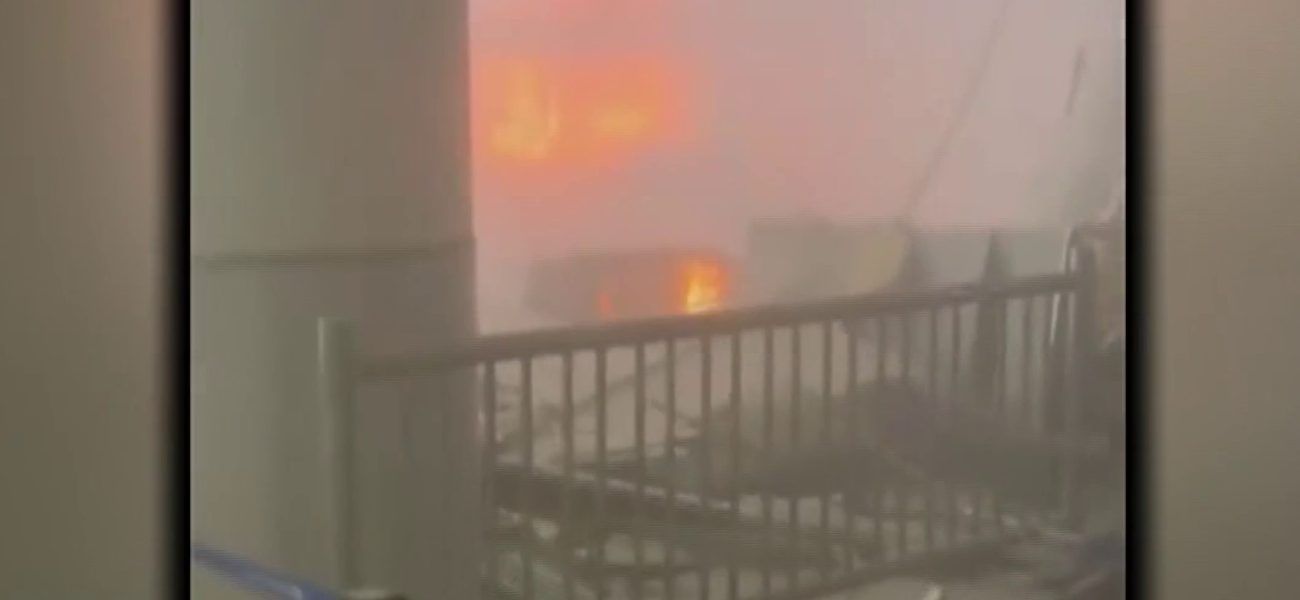
POLICY WIRE — Kuwait City, Kuwait — The hum of jet engines now cuts through the desert air over Kuwait International Airport, a sound usually synonymous with global connectivity. Yet, it carries a new, uneasy resonance. This wasn’t merely a delay, a rerouted flight, or even a sudden sandstorm grounding operations. It was a shutdown, brief but stark, born from a direct Iranian strike, a fatality tally confirming what many have long whispered: the Gulf’s delicate stability is as fragile as thin glass.
It’s barely been two days since the airport went dark, literally and figuratively, after missiles impacted its perimeter. And just as quickly, or perhaps inevitably, operations resumed. But don’t confuse efficiency with calm. The scars aren’t physical alone; they’re etched deeper, right into the regional psyche. Think of it: one moment, you’re queuing for duty-free; the next, air-raid sirens scream a harsh truth about Tehran’s growing reach. But what choice did Kuwait have? Shutting down indefinitely would be giving in.
Because let’s face it, regional commerce can’t pause for geopolitical skirmishes. Cargo planes loaded with vital supplies, passenger jets carrying expatriates heading home for Eid—it all needed to keep moving. The decision to reopen wasn’t about forgetting, it was about showing a face of resilience, however forced. A tacit acknowledgement that while the incident was catastrophic, daily life in the Gulf, in the shadow of Iranian belligerence, simply has to soldier on. It’s a heavy burden, living right next door to a revolution with aspirations.
Local authorities quickly confirmed the tragic outcome: [QUOTE_PLACEHOLDER]. They didn’t elaborate much, which itself speaks volumes. Regional security sources, speaking on background, hinted at Iranian-backed proxies firing from a launch site within Iraq, though official Tehran denials were, of course, swift and predictably dismissive. This dance, this dangerous choreography of accusation — and denial, is painfully familiar in these parts. But here’s the kicker: someone died. Three airport personnel, specifically. It wasn’t an attack on an oil field in some remote desert; it was an airport. A civilian target. That’s a game changer, no?
The geopolitical temperature gauge has spiked, even as leaders project business as usual. Remember the good old days when Iran used proxies primarily against Saudi interests or in Yemen? Well, those days seem almost quaint now. The missile strike represents a significant escalation, aiming squarely at the nerve center of Kuwaiti travel and trade. It was a clear, unambiguous message from Tehran, delivered with ballistic intent: no one’s really safe here.
Consider the broader implications for the Muslim world. Pakistan, for instance, has millions of its citizens working across the Gulf Cooperation Council (GCC) states. A significant chunk of its economy, in fact, hinges on remittances from these very workers. Any instability, any disruption to flight paths or perceived threat to life in Kuwait or the UAE, sends shivers down spines from Karachi to Lahore. Their very livelihoods depend on this precarious peace. According to a 2022 World Bank report, remittances to South Asia reached a staggering $176 billion that year, with a considerable portion originating from the Gulf. These aren’t just numbers; they’re families, dreams, — and national economies.
📄 POLICY WIRE WHITEPAPER PUBLISHED: PAKISTAN'S NATIONAL SECURITY POLICY PRIORITIES
👉 READ BY CLICKING HEREKuwait’s government, for its part, released a terse statement condemning the act, calling it [QUOTE_PLACEHOLDER]. Not a lot of fire — and brimstone, just dry indignation. This measured response, however, isn’t weakness. It’s calculated. Kuwait’s caught in a bind, perpetually navigating the turbulent waters between powerful neighbors. They can’t afford to be seen as too weak, inviting further aggression. But they can’t be too bellicose either, not with Iranian missiles seemingly on a new, civilian-focused flight path.
But how do you restore investor confidence when missiles are now part of the aviation landscape? That’s the unspoken question hanging in the air alongside those planes. Everyone’s asking it—diplomats, economists, the average Joe on the street. It’s a pretty uncomfortable situation, let’s be real. And frankly, this kind of aggressive move puts nations like Turkey, Egypt, and even Malaysia—who depend on stable Gulf trade routes—on edge. This isn’t just a Gulf issue anymore; it’s got tentacles reaching far wider into the global Muslim economic fabric. Check out how Policy Wire recently explored other tricky situations like Iran Strategy Stalls: Trump’s Chessboard Paralysis Spooks Allies and Region, and you’ll see a pattern here. The reverberations are felt way beyond the immediate blast radius.
What This Means
The swift reopening of Kuwait International Airport, while projecting a semblance of control, signals a troubling new chapter in regional instability. Politically, this incident marks a clear escalation in Iran’s modus operandi, expanding beyond military or oil infrastructure to civilian targets. It puts immense pressure on Gulf states like Kuwait to solidify their security alliances—be it within the GCC framework or with Western powers like the US and UK. Expect a fresh round of diplomatic efforts — and possibly heightened military posturing. This isn’t just about ‘Iran vs. Gulf States’ anymore; it’s about the erosion of international norms regarding civilian safety, setting a dangerous precedent that many fear will be exploited elsewhere.
Economically, the impact, while not immediately devastating due to the brief shutdown, creates a chilling long-term risk assessment for foreign investment. Businesses weigh stability heavily, and an airport attack—especially one with fatalities—will undoubtedly factor into future decisions regarding direct investment, insurance premiums for air cargo, and the general cost of doing business in a region perceived as increasingly volatile. For Muslim-majority nations globally, particularly those with significant diaspora in the Gulf or reliance on these crucial trade arteries, this adds a layer of economic uncertainty. Supply chains for Hajj and Umrah travel, for instance, which rely on secure and predictable air routes, will become even more complex and potentially more expensive. It’s a reminder that even when the skies open up again, the economic clouds might just be gathering.