
Culture Wars Collide: Appeals Court Tees Up SCOTUS Showdown Over Transgender Troops
POLICY WIRE — Washington, D.C. — That particular declaration, lobbed from a television screen with all the subtlety of a grenade, signals yet another chapter in the republic’s persistent...

POLICY WIRE — Washington, D.C. — That particular declaration, lobbed from a television screen with all the subtlety of a grenade, signals yet another chapter in the republic’s persistent cultural skirmishes. We’re talking military service here, folks—an arena where identity politics frequently collides with institutional tradition. This isn’t just about who dons the uniform; it’s profoundly about who gets to decide who can, and under what conditions. And right now, the legal equivalent of a cannonball is sailing toward the nation’s highest judicial body, thanks to an appeals court decision that didn’t just rattle the cages but knocked a few planks loose.
A federal appeals court panel recently dropped a judicial hammer, declaring that the previous administration’s efforts to sideline active transgender troops weren’t just problematic; they were out-and-out unlawful. The policy, rolled out under Donald Trump’s presidency, essentially sought to reverse more inclusive measures established during the Obama years, largely preventing transgender individuals from serving openly or even from simply using facilities aligned with their gender identity. Immediately, this directive faced a flurry of legal challenges, arguing it constituted baseless discrimination. One such challenge just hit pay dirt. [QUOTE_PLACEHOLDER]
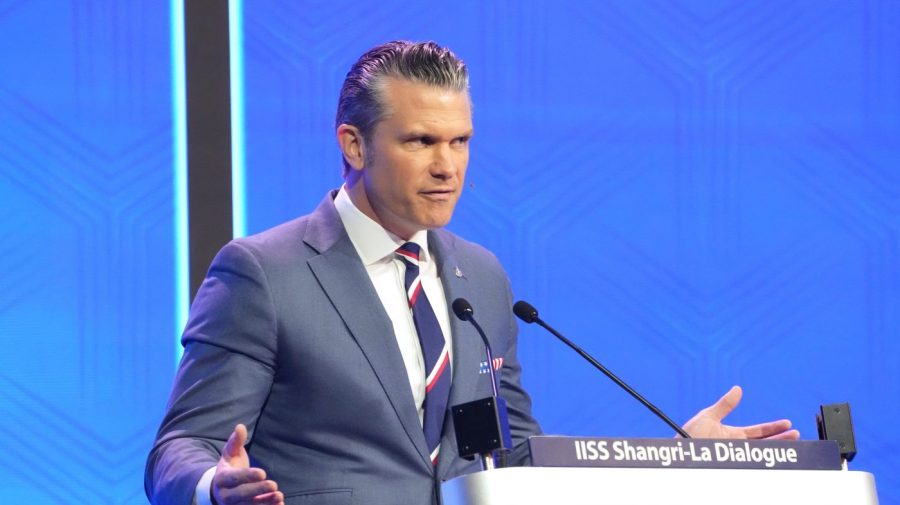
For observers like Pete Hegseth, a prominent media personality, this outcome wasn’t exactly a plot twist. His succinct response, articulated without a shred of doubt, summed up the prevailing sentiment: `‘see you at SCOTUS’`. It wasn’t a question, but a grim pronouncement. A promise, even. But, honestly, who was surprised? Everybody knows how this script reads by now, don’t they?
The Trump administration’s initial stance, announced via Twitter, had reversed a 2016 Pentagon decision to allow openly transgender people to serve. Later, it morphed into a more convoluted directive, attempting to block individuals with a history or diagnosis of gender dysphoria from military service unless certain conditions were met. The argument often trotted out cited military readiness or cohesion, though evidence for such claims often seemed rather thin on the ground. A RAND Corporation study from 2016 estimated that allowing transgender service members would have a negligible impact on readiness and medical costs, noting an estimated 2,450 active duty service members were transgender, with related healthcare costs rising by less than 0.13 percent of the military’s overall healthcare budget. That’s, what, pocket change?
But beyond the dollars — and cents, it’s about the deep-seated political ideologies at play. This isn’t merely policy; it’s a battle for societal norms, a push-and-pull between perceived tradition and evolving understanding of identity. Because in America, it often feels like every aspect of life eventually becomes a courtroom drama. And military policy? It’s hardly an exception to that rule. Not these days.
The implications of this kind of ruling ripple far wider than just Washington’s Beltway. Countries across the globe, especially those with diverse populations and nascent civil rights movements, watch how the United States handles such delicate issues. Consider nations like Pakistan, where debates around gender identity and the rights of transgender individuals—often referred to as ‘Khwaja Sira’ or ‘third gender’—are slowly gaining traction, though legislative and societal progress often happens in fits and starts. While their specific contexts differ vastly, and their militaries operate under entirely separate frameworks, the international discourse generated by U.S. rulings does feed into broader conversations about human rights — and state responsibility.
📄 POLICY WIRE WHITEPAPER PUBLISHED: PAKISTAN'S NATIONAL SECURITY POLICY PRIORITIES
👉 READ BY CLICKING HEREJust this month, the Khyber Pakhtunkhwa province of Pakistan, for instance, allocated funds to establish separate educational facilities for transgender persons, reflecting a gradual, albeit sometimes fraught, acknowledgment of their existence and needs. This isn’t to say Pakistan’s military is grappling with the same questions as the Pentagon, but rather that global conversations on inclusion, particularly in public institutions, are now on the table. American legal battles, no matter how domestically focused, inadvertently project their shadow onto this evolving global landscape, influencing, or at least informing, dialogues on the fringes.
The truth is, many governments are weighing the costs and benefits of embracing or resisting progressive social policies. And these policy debates in militaries reflect broader anxieties about national identity — and who truly belongs. This isn’t just a U.S. affair; it’s an American problem with global resonance.
What This Means
Politically, this appellate court decision serves less as a final judgment and more as an inevitable overture to a Supreme Court showdown. The issue of transgender rights in the military has become so thoroughly entrenched in America’s polarized politics that avoiding the top court would have been a genuine surprise. Expect conservatives to champion arguments rooted in traditional military structures and readiness—terms which, often enough, become stand-ins for cultural resistance. Liberals, meanwhile, will lean into equal protection, civil rights, and modern inclusivity as pillars of strength, not weakness. Economically, the implications are minor for the military itself; integrating transgender troops has repeatedly been shown to incur minimal additional costs, mostly for medical care already provided for other service members. For businesses and public institutions watching these judicial skirmishes, however, the continuous ebb and flow of rights—and particularly, the prospect of federal reversals—sows a kind of policy uncertainty. That isn’t good for anybody, really.
The greater impact lies in the continued politicization of institutions, like the military, meant to be above partisan fray. When everything becomes a battleground for identity politics, fundamental questions about national service, loyalty, and common purpose inevitably get eroded. And for the vast population of South Asia and the wider Muslim world, who have their own complex relations with their state apparatus, the American judicial process provides a compelling—if often baffling—case study in civil society’s perpetual push for recognition and dignity against entrenched norms. It’s not a template, no, but it’s a hell of a conversation starter for policy makers discussing everything from identity’s place in state education to the very meaning of nationhood. It’s a mess, but it’s our mess.