

London Skirts Multi-Million Pound Tab in Disputed Rwanda Asylum Compact
POLICY WIRE — London, UK — While families across Britain wrestled with ever-tightening household budgets, a quiet courtroom drama unfolded, sparing the exchequer a potentially hefty, if contingent,...

POLICY WIRE — London, UK — While families across Britain wrestled with ever-tightening household budgets, a quiet courtroom drama unfolded, sparing the exchequer a potentially hefty, if contingent, bill. It’s not about grand corruption or banking scandals this time, but rather the very prosaic business of offshore asylum processing — specifically, whether the UK would owe Rwanda millions if its controversial migration deal sputtered. A recent court decision just settled that particular financial question, firmly in London’s favor. For a government perpetually battling headlines and red ink, it’s a small, sweet victory, yet one that glosses over the fundamental moral quandaries still swirling around the policy itself.
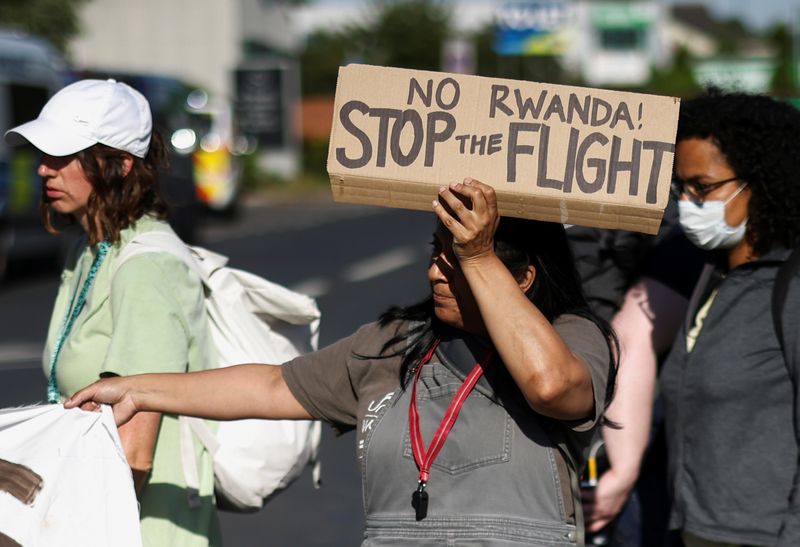
They’d dubbed it a partnership, a way to deter illegal crossings and — as some critics saw it — outsource a problem. The agreement, intended to ship asylum seekers from Britain to the East African nation for processing, has faced relentless legal and ethical pushback since its inception. And for all the political rhetoric, there was always that nagging fiscal elephant in the room: What if things didn’t go precisely to plan? Would Rwanda then come calling, hand outstretched for a consolation prize?
Apparently not. The UK judicial system, in a decision that no doubt caused quiet sighs of relief in certain Whitehall offices, ruled that Britain doesn’t have to stump up a substantial additional sum to Rwanda in the event the initial asylum pact, which hasn’t seen a single removal flight get off the ground yet (let’s not forget that part), fails to deliver its full scope. But this wasn’t an entirely unexpected turn of events, was it? For all the bluster about control — and deterrence, the underlying contractual minutiae often get lost. Now, they’re front — and center, determining what’s owed, or not, in this diplomatic chess match.
This judicial clarity comes at a fascinating political juncture. The British government has, let’s say, a complicated relationship with its international obligations and its fiscal purse strings. But for asylum seekers themselves, it hardly matters who pays whom. What matters is the journey, the uncertain destination, — and the increasingly thorny pathways to safety. We’re talking about real people here, people fleeing persecution or war — a notion sometimes forgotten in the abstract discussions of international treaties and budgetary allocations. It’s hard to ignore, however, that these maneuvers aren’t just confined to the North Atlantic. Similar conversations, though often less public, play out in nations struggling with massive migrant flows, even in places like Pakistan, which has hosted millions of Afghan refugees for decades, showcasing its own intricate dance with aid, diplomacy, and the burden of displacement. They’ve got their own struggles, you know.
The financial implications are, of course, what keeps treasury officials up at night. Sources close to the proceedings suggest the initial concerns involved payments for capacity building and ongoing operational costs, with potential for compensation clauses to trigger if the scheme didn’t hit certain metrics. It’s complicated. Now, with this ruling, that particular fiscal sword of Damocles has, at least temporarily, been sheathed. One government spokesperson, on background, described it as [QUOTE_PLACEHOLDER], reflecting an internal perspective of validation for their negotiating position.
Meanwhile, human rights organizations haven’t exactly been popping champagne corks. Amnesty International UK’s chief executive, Yvette Cooper, in a statement given earlier this year, called the overall deal [QUOTE_PLACEHOLDER], articulating widespread apprehension among civil society groups. They continue to argue the policy fundamentally breaches international conventions and risks vulnerable individuals, pushing legal challenges that seem to multiply even as the government digs its heels in. It’s a principled stand, one that often feels at odds with political expediency.
📄 POLICY WIRE WHITEPAPER PUBLISHED: PAKISTAN'S NATIONAL SECURITY POLICY PRIORITIES
👉 READ BY CLICKING HEREConsider the cold, hard numbers for a second. According to a 2023 Institute for Fiscal Studies report, the average annual cost of processing an asylum claim within the UK system has reached an estimated £45,000 per individual, dwarfing the often-cited upfront investment in overseas schemes. This statistic underscores the intense financial pressure points driving some of these policy decisions, however unpalatable the ethical dimensions might be to many.
But how does this British quandary resonate elsewhere? Well, it provides a fascinating, if grim, case study for other nations grappling with migratory flows — particularly in the Global South and the wider Muslim world, where such large-scale movements are far from novel. Many predominantly Muslim nations, especially in South Asia and the Middle East, already host millions of refugees without the infrastructure or financial muscle of European states. Pakistan alone, for instance, houses more than 1.4 million registered Afghan refugees, a number that’s been largely consistent for decades, per UNHCR data. It’s a stark reminder of who truly bears the brunt of global displacement. When Western nations debate offshore processing, those conversations don’t happen in a vacuum. There are ripple effects, for sure. Countries like Pakistan might watch Britain’s attempts to externalize its asylum challenges with a mixture of bewilderment and perhaps, a weary sense of déjà vu. Because they’ve seen this movie before—many times.
What This Means
This judicial decision, while seemingly a dry legal formality, is really a sharp elbow to the ribs of critics expecting a financial silver bullet to sink the UK-Rwanda asylum plan. Politically, it grants the current administration a moment to breathe. It bolsters their narrative that they’re both fiscally prudent — and resolute on immigration control. Don’t expect any immediate pivot away from the scheme, then; indeed, they’re likely to double down. Economically, avoiding these contingent payments offers immediate relief to a treasury under immense pressure, particularly given other spending priorities and an upcoming general election. It also, somewhat ironically, reinforces the attractiveness of these sorts of arrangements for destination countries who might fear being left with an expensive, non-performing contract.
For international human rights advocates, however, it’s just another turn of the screw, signifying that the policy will continue to be fought on legal rather than purely financial grounds. The focus will now sharpen on the safety of Rwanda as a receiving state and whether the deal truly aligns with international law, not simply whether Britain can afford to back out. this move—this sort of strategic financial insulation—could subtly influence how other nations, including those in the South Asia region facing their own migration headaches, consider their bilateral agreements concerning refugees. Will they demand stronger financial safeguards if such partnerships go sideways? Or will this become a blueprint for avoiding such obligations? It certainly makes the concept of international agreements and their financial teeth more contentious. But that’s politics for you — always an interesting lesson in applied economics and public relations.