


Auburn’s Extra Innings Triumph: A Microcosm of Soft Power and Local Economic Stakes
POLICY WIRE — Auburn, Alabama — It wasn’t the U.N. Security Council, nor was it the latest pronouncement from the Federal Reserve, but last night’s protracted, teeth-gritting collegiate...

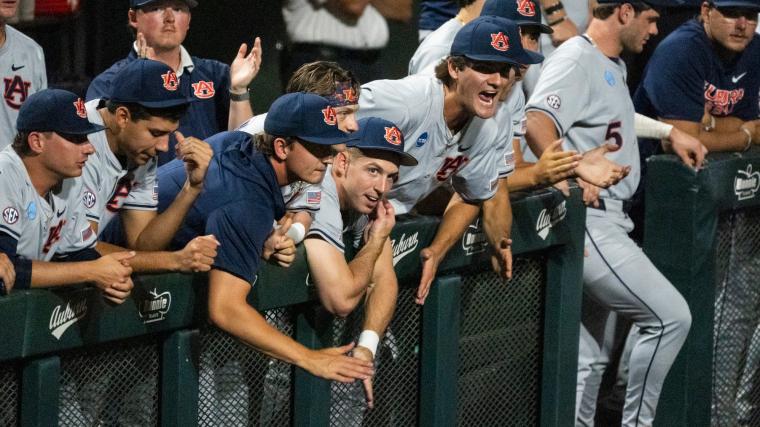
POLICY WIRE — Auburn, Alabama — It wasn’t the U.N. Security Council, nor was it the latest pronouncement from the Federal Reserve, but last night’s protracted, teeth-gritting collegiate baseball clash between the Auburn Tigers and the Milwaukee Panthers carried implications far beyond the diamond’s chalk lines. A victory, you see, especially a nail-biting, extra-innings affair like this one, doesn’t just etch a name into a bracket; it resonates in the quieter corridors of university funding, regional branding, and—believe it or not—America’s subtle soft power projection.
The final score, an Auburn triumph (what a game!), only tells a sliver of the story. The 4-2 grind, decided well after most sane individuals had called it a night, showcased raw athleticism, yes. But it also underlined a burgeoning economic reality: in the often-overlooked towns of Middle America, college sports isn’t just entertainment. It’s an engine. And sometimes, it’s a delicate diplomatic instrument, too.
Consider the municipal coffers. These tournaments? They’re cash cows, plain and simple. “Every NCAA event our city hosts, or every deep run our teams make, pumps millions directly into local businesses—hotels, restaurants, you name it,” noted Mayor Ron Anders Jr. of Auburn, a seasoned local politician who’s seen more than a few athletic cycles. “It’s a quantifiable economic stimulus that far outstrips whatever marketing budget you could dream up.” He’s not wrong. Economic studies frequently demonstrate collegiate sports’ outsized impact; a 2019 report from the National Association of Collegiate Directors of Athletics, for instance, indicated that NCAA championship events alone generated over $2.9 billion in economic impact for host cities nationwide. That’s a serious number.
But the calculus isn’t purely dollars — and cents. University prestige, a somewhat nebulous yet undeniably potent currency, often finds its sheen amplified by athletic success. A championship banner? That’s not just bragging rights for boosters; it’s a global advertisement. Because it’s a narrative, a story of grit — and triumph that resonates internationally. “When our athletic programs excel, it elevates the entire institution,” explained Dr. Aliya Khan, Provost for International Relations at Auburn, a shrewd administrator with a keen eye for global partnerships. “We see increased inquiries from prospective students from Lahore to Lyon. It symbolizes a certain American exceptionalism that, frankly, many developing nations admire and want to emulate or connect with.”
And there it’s: the faint echo of geopolitics in a baseball game. It might sound a touch hyperbolic to link an NCAA Regional Final to international relations, but think about it. For a prospective Pakistani engineering student considering an American university, a winning athletic program — one garnering national media attention — might well be the deciding factor between Auburn and a lesser-known institution. It’s a perception game. It hints at resources, community, — and a vibrant student life. And isn’t that part of what American universities export? Not just diplomas, but a lifestyle, a cultural experience.
📄 POLICY WIRE WHITEPAPER PUBLISHED: PAKISTAN'S NATIONAL SECURITY POLICY PRIORITIES
👉 READ BY CLICKING HEREMilwaukee, on the other hand, finds itself staring down the barrel of a multi-game climb out of the loser’s bracket—a stark reminder that for every winner, there’s a formidable challenger. They battled hard, showed moments of brilliance from hitters like John Hadley (two RBIs!), but ultimately couldn’t close the deal in the pressure cooker. And while their valiant effort won’t translate directly into Pakistani student applications overnight, it certainly solidifies their reputation as a determined contender.
And this dynamic? It’s happening across the collegiate landscape. Institutions are locked in an arms race, not just for talent on the field, but for visibility, for brand equity. But you’ve got to spend money to make money—and to earn that prestige. The pressure on university presidents and athletic directors to deliver isn’t just about athletic glory; it’s about strategic positioning in an increasingly competitive global education market.
What This Means
Auburn’s victory, rather than being an isolated sporting event, becomes a bellwether for the complex interplay between collegiate athletics, local economic prosperity, and the subtle, often overlooked, mechanisms of national soft power. It reinforces a critical, albeit uncomfortable, truth: even academic institutions increasingly operate like corporations, with sports serving as a high-profile, high-return marketing department. The political implication? State funding bodies, always eager to tout economic growth, will continue to implicitly — and sometimes explicitly — leverage athletic success as a tangible return on investment for taxpayer dollars, whether directly or indirectly. Economically, the cycle is clear: win, generate buzz, attract students — and tourists, and secure donor loyalty. This then feeds back into further investment, creating a self-sustaining ecosystem where the stakes are far higher than simply bragging rights. This win helps cement a national reputation that’s increasingly valuable when recruiting international students, particularly from regions like South Asia, where an American degree — and the ‘American experience’ — is still a powerful draw. You see, the export isn’t just curriculum; it’s culture. For more on how national branding plays out on unexpected global stages, consider the geopolitical chess moves in Curry’s Pivot to Li-Ning, which further illuminates how seemingly niche decisions can reverberate globally.