


Silent Blast, Loud Message: Hezbollah’s Drone Play Tests Muted Ceasefire on Israel Border
POLICY WIRE — Jerusalem — The thud, or perhaps the pop, of an unmanned aerial vehicle detonating isn’t what usually grabs headlines anymore. Not when so much else burns across this region. But...

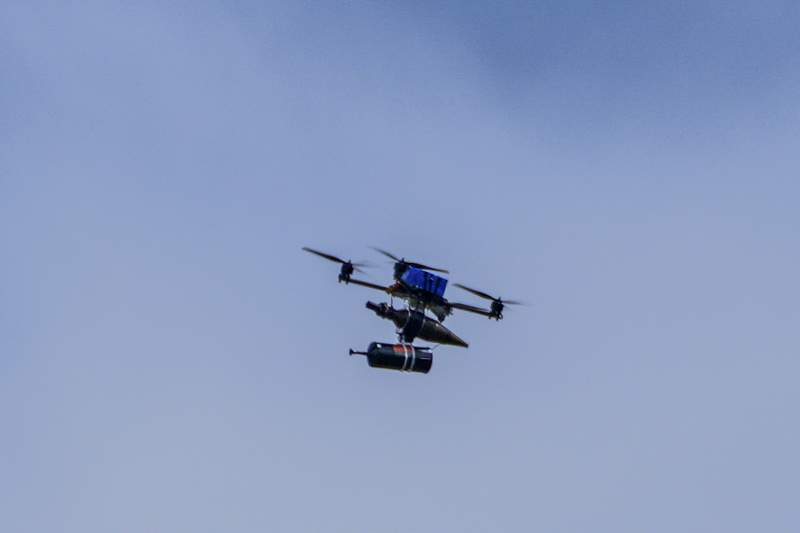
POLICY WIRE — Jerusalem — The thud, or perhaps the pop, of an unmanned aerial vehicle detonating isn’t what usually grabs headlines anymore. Not when so much else burns across this region. But when Hezbollah’s latest mechanical bird—packed with just enough bang to make a point, not a catastrophe—found its brief, fiery end near an Israel Defense Forces (IDF) position by Rosh Hanikra, that quiet explosion sent ripples. Nobody got hurt, which, oddly enough, makes the entire affair more ominous. It’s a message, meticulously calibrated, slipped through the mail slot of a war-weary border.
Because let’s be honest, direct kinetic action always risks the cascade. A no-injury drone strike? That’s a subtle flex, a digital-age elbow jab. It says, ‘We can reach you. We’re watching.’ But it also screams, ‘We’re not *quite* ready to light the whole powder keg.’ It’s a dance of provocations and proportionate responses, a ballet rehearsed tirelessly over decades along the Blue Line that technically separates Lebanon from Israel.
Defense Minister Yoav Gallant, always one to choose his words with an almost surgical precision when it comes to Hezbollah, didn’t mince words on background. “This isn’t a mere provocation; it’s a calculated test of our resolve,” he reportedly told a closed-door security briefing. “Hezbollah understands our red lines, — and they’ll find them immutable. But we understand theirs too, — and their patrons in Tehran aren’t looking for a regional conflagration right now. Not really.” It’s all very neat, until it isn’t.
The incident, confirmed by both Israeli authorities and Hezbollah’s own Al-Manar news outlet, points to a broader trend. Reports from the Beirut Center for Strategic Studies indicate a nearly 40% increase in drone and rocket incidents across the Blue Line in the past six months, signaling a perilous normalization of hostility. That’s a staggering jump, no matter how you spin it. These aren’t accidental excursions; they’re planned, sanctioned, — and increasingly frequent.
For a group like Hezbollah, whose geopolitical heft comes as much from its media machine and ideological framing as its arsenal, such actions are multi-purpose. They serve to reinforce its self-proclaimed role as Lebanon’s ‘resistance’ while simultaneously prodding Israel’s defensive posture. And domestically, it’s a constant reminder to a fractious Lebanese populace — grappling with an economic meltdown and political paralysis — that Hezbollah, for better or worse, remains the sole formidable actor willing to stare down its southern neighbor.
But Washington’s been playing its usual tightrope act. State Department officials offered the familiar refrain of ‘de-escalation’ and ‘respect for sovereignty,’ which, frankly, translates to ‘please don’t make us send more envoys.’ Because everybody’s watching what Russia’s doing, what China’s up to. And the U.S. doesn’t want another major hotspot diverting attention, or resources. Yet, the White House does understand that the media tango can be a diplomatic weapon too, shaping perceptions far beyond immediate borders.
📄 POLICY WIRE WHITEPAPER PUBLISHED: PAKISTAN'S NATIONAL SECURITY POLICY PRIORITIES
👉 READ BY CLICKING HEREAnd then there’s the wider Muslim world, always keeping an eye on the Arab-Israeli conflict. From the alleys of Cairo to the political salons of Islamabad, these incidents, no matter how small, are observed through a particular lens. They don’t see just a drone; they see an assertion, a defiance of Israeli dominance, a proxy skirmish in a much larger regional cold war spearheaded by Iran. For many, Hezbollah isn’t merely a Shiite militia; it’s a front-line defender, drawing upon a deep well of anti-imperialist sentiment and pan-Islamic solidarity that still carries weight, despite Saudi-Iranian rapprochements.
One senior diplomat from an unnamed Gulf state, whose nation’s government officially shies away from overtly praising Hezbollah, privately acknowledged the group’s street cred. “Their ability to challenge Israel, even in these calculated, symbolic ways, resonates. You might disagree with their politics, or their patron, but their actions get noticed. They can keep Israel off-balance without triggering the response Tehran would absolutely want to avoid right now,” the diplomat admitted, eyes scanning the room, as if worried someone was listening.
What This Means
This latest drone incident, seemingly minor, carries weighty implications for regional stability. Politically, it signals Hezbollah’s continued intent to maintain its ‘resistance’ credentials without immediately provoking a full-scale Israeli military response. It’s a controlled escalation, designed to keep pressure on Israel while projecting strength domestically and regionally. For Jerusalem, it’s a diplomatic headache and a security quandary: respond too weakly, and Hezbollah feels emboldened; respond too forcefully, and you risk a war neither side explicitly wants at this juncture. Economically, prolonged low-level conflict drains resources, deterring investment along Israel’s northern border and impacting Lebanon’s already moribund tourism sector—bad news for an already struggling populace. This brinkmanship ultimately increases the probability of miscalculation, and it pushes the delicate détente between these sworn enemies closer to the edge, despite—or perhaps because of—the quiet nature of this particular explosion. This sort of chess match also complicates Israel’s ongoing internal political struggles, presenting a united external front while the country is, internally, anything but.