


The Collateral Damage of Short-Term Gain: When WWE’s Cash Grab Mutes Narrative Integrity
POLICY WIRE — Turin, Italy — The glitzy spectacle of professional wrestling has long blurred the lines between sport and staged drama, but a recent narrative U-turn by World Wrestling...

POLICY WIRE — Turin, Italy — The glitzy spectacle of professional wrestling has long blurred the lines between sport and staged drama, but a recent narrative U-turn by World Wrestling Entertainment (WWE) has market analysts and devoted fans alike asking if the pursuit of quarterly revenue is now openly hostile to foundational storytelling. Call it a Faustian bargain: the ephemeral thrill of an unexpected cash boost versus the slow erosion of a brand’s creative capital.
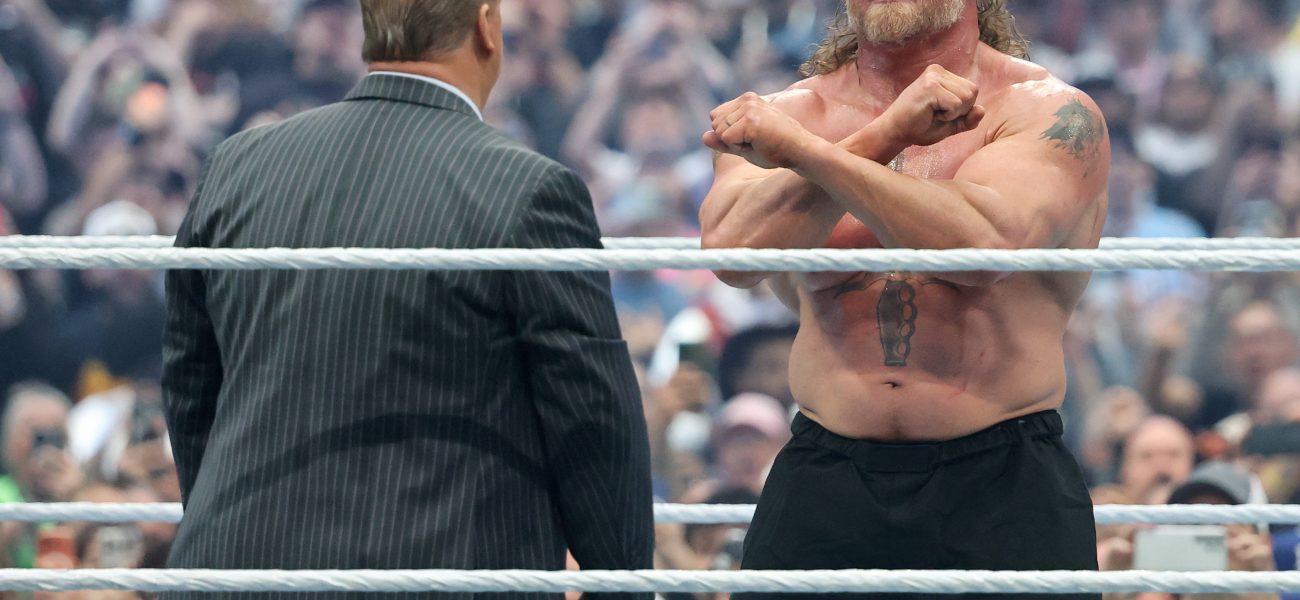
Only weeks ago, wrestling aficionados hailed what appeared to be a genuine changing of the guard. The colossal figure of Brock Lesnar, a veritable titan in the squared circle, suffered a decisive, shocking loss to the ascendent Oba Femi at a major pay-per-view. It wasn’t just the defeat itself that resonated; Lesnar, known for his stoic brutality, gestured a symbolic “X” over his chest, an almost unprecedented acknowledgement of defeat—a surrender, perhaps even a retirement. It felt authentic, a genuine handing of the torch that left fans buzzing with the possibilities for Femi’s future. It was pure, unadulterated narrative gold, — and everyone, from jaded commentators to wide-eyed newcomers, bought it.
But the wrestling gods, it turns out, serve a higher power now: the bottom line. And they don’t much care for endings. Not permanent ones, anyway. The celebratory fanfare for Femi, — and the presumed retirement of Lesnar, quickly gave way to confusion. Lesnar reappeared, a narrative Lazarus, culminating in a hastily arranged rematch with Femi in Turin. Sure, they dubbed it a “most anticipated rematch,” but anticipation, for many, had curdled into apprehension. Had WWE’s creative team really been so enamored with that perfect initial ending, only to unravel it with the cynicism of a children’s cartoon plot twist?
Then came the bout in Italy, — and with it, the full weight of WWE’s revised agenda. Lesnar, far from retired, steamrolled Femi, dispatching him with repeated iterations of his signature move, the F-5 — maneuvers Femi had famously shrugged off just weeks prior. The score is now tied, ostensibly setting up a rubber match. But at what cost? The spontaneous magic of that initial Femi victory? Gone. The legitimate surprise of Lesnar’s defeat — and ‘retirement’? Rendered moot. A carefully built story, reduced to a two-for-one coupon.
Paul Levesque, WWE’s Chief Content Officer, whose name carries significant weight both creatively and financially within the organization, offered a carefully phrased rationale recently. “We operate in a fiercely competitive global entertainment landscape,” he said during an internal memo circulated last month, “and sometimes, fulfilling immediate market demands necessitates complex strategic adjustments to our storylines. It’s about maximizing engagement across all demographics, both domestically and in emerging markets.” Translation: we do what we have to do to make money.
📄 POLICY WIRE WHITEPAPER PUBLISHED: PAKISTAN'S NATIONAL SECURITY POLICY PRIORITIES
👉 READ BY CLICKING HEREBut not everyone is buying the corporate line. “This isn’t merely about a wrestling storyline; it’s a stark lesson in market opportunism overriding long-term brand integrity,” observed Dr. Zahir Khan, an economic policy analyst at the Asian Institute of Strategic Studies. “You’re essentially telling your most loyal consumers that their investment in your narrative means less than a few extra ticket sales for the next international event. This type of short-term thinking can devastate consumer trust, particularly in regions where brand loyalty is a slower, more deliberate cultivation.”
Indeed, with TKO Group Holdings — WWE’s parent company — reporting a robust WWE revenue of $307.7 million in the first quarter of 2024, the financial pressure to continually monetize top stars is palpable. And so, the wrestling business finds itself wrestling with itself. The allure of high-priced Premium Live Events (PLEs) in lucrative international markets — say, Riyadh, or potentially Karachi, if the company continues its push into new territories across the Muslim world and South Asia — creates an immense gravitational pull for headline acts like Lesnar. They’re bankable, instantly recognizable global brands. New talent, regardless of their explosive potential, often gets sidelined when immediate returns are prioritized. The risk, of course, is that in catering to these massive, sometimes one-off, events, they diminish the very product that generated their appeal in the first place.
What This Means
The undoing of the Lesnar-Femi saga speaks to a deeper malaise in modern entertainment and, by extension, the global economy: the constant tension between narrative coherence and aggressive monetization. For a company like TKO, traded on Wall Street, the quarterly earnings call looms larger than any fan forum. It implies that every storyline is ultimately fungible, every ‘retirement’ a pause, and every triumph merely a set-up for more ticket sales and network subscriptions. It teaches audiences not to invest too deeply in narrative arcs because the ‘powers that be’ are willing to retcon for a quick buck. This might generate a short-term bump, sure, but it fundamentally cheapens the entire enterprise. It suggests a certain fragility in their business model, a reliance on established ‘bankers’ rather than a willingness to cultivate fresh, organic stories that stand on their own merit. The entertainment industry, much like any market, needs both long-term investment in emerging assets and a credible narrative. When one consistently gives way to the other, everyone eventually loses faith.