


Beaufort’s Ghosts: Israel’s Withdrawal Echoes a Festering Border Impasse
POLICY WIRE — Tel Aviv, Israel — A chill, you could say, still blows across the northern border, straight from the ancient stones of Beaufort Castle. More than two decades have passed since Israeli...

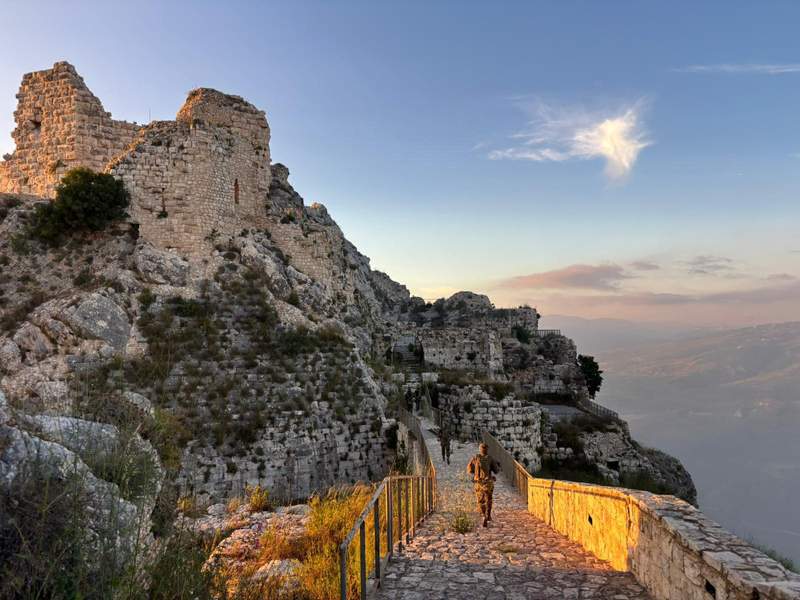
POLICY WIRE — Tel Aviv, Israel — A chill, you could say, still blows across the northern border, straight from the ancient stones of Beaufort Castle. More than two decades have passed since Israeli troops packed up, pulled back from that Crusader-era stronghold overlooking the Litani River, and declared a disengagement from South Lebanon. They’d been there since ’82. But if the goal was quiet, a serene shift to a ‘good fence’ mentality, well, it hasn’t quite worked out that way, has it? The ghost of Beaufort – the nagging question of what ‘withdrawal’ actually means in this bloody neighborhood – looms larger than ever.
See, the common wisdom, back then anyway, was that pulling back from what Israel considered its ‘security zone’ would diminish threats. Less occupation, less friction, right? A clean break. A chance for Lebanon, supposedly, to rein in militant groups — and stabilize the volatile frontier. Instead, we’ve watched Hezbollah, arguably more potent now than any non-state actor on Earth, entrench itself, stockpiling arsenals and burrowing deeper into the social and political fabric of its northern adversary. It’s like draining a swamp, only to find the mosquitos built an air force.
General (Ret.) Amos Yadlin, a former head of Israel’s Military Intelligence Directorate, didn’t mince words recently when I asked about the ongoing border calculus. “We withdrew from Beaufort, from Lebanon, expecting reciprocity, an end to provocations,” he grumbled, his voice laced with the weariness of a man who’s seen too many cycles of conflict. “Instead, we got an escalation. What did we achieve beyond changing the geography of our exposure? It’s a strategic headache we haven’t cured, only relocated.” It’s that bitter pill of expectation versus reality that really bites.
And because the implications ripple far beyond these two small states, Pakistan watches. Any perceived capitulation, any show of vulnerability by a regional military power like Israel, or conversely, a victory for a non-state actor, sends distinct signals across the Muslim world. It reinforces certain narratives – often divergent – about resistance, about the effectiveness of attrition warfare, and about sovereignty’s elusive nature. These are narratives that Islamabad, deeply enmeshed in its own border complexities and regional security dilemmas, parses carefully.
Meanwhile, across the fence, Lebanese officials hold a different view. Hassan Nasrallah, the defiant leader of Hezbollah, famously declared after the Israeli withdrawal that it proved “the logic of resistance” worked. For a quote from within the formal political establishment, Lebanese MP Gebran Bassil, a prominent Christian political figure and former foreign minister, put it this way: “Lebanon always rejects occupation. Our territories are sovereign, — and any past presence, even if ended, was unjust. The responsibility for securing peace rests with those who continue aggression, not those who defend their land.” That’s their unchanging mantra. It isn’t just rhetoric, it’s doctrine.
What Israel hoped would be an endgame proved to be just a different chapter. Since that 2000 withdrawal, the frequency of cross-border incidents involving non-state actors has, ironically, ticked up significantly in certain periods, with an estimated average of dozens of documented provocations annually ranging from rocket fire to drone incursions, according to data compiled by UNIFIL and various security think tanks monitoring the region. It isn’t peace; it’s a recalibrated simmer. This isn’t abstract; people live — and die here.
📄 POLICY WIRE WHITEPAPER PUBLISHED: PAKISTAN'S NATIONAL SECURITY POLICY PRIORITIES
👉 READ BY CLICKING HEREThe lessons from places like Beaufort don’t just stay in the Levant. They inform discussions in other unstable frontiers, other theatres where international powers weigh the costs of engagement versus disengagement. Just look at the broader dynamics of the region. The logic of an effective, decisive withdrawal, meant to untangle complicated military commitments, hasn’t produced tidy outcomes. It has, more often than not, just reshuffled the deck, often for the worse.
What This Means
The enduring complexity along the Israeli-Lebanese border, decades after Israel’s disengagement from Beaufort, illustrates a stubborn truth: physical withdrawal rarely resolves deeply ingrained political and security pathologies. Politically, the move inadvertently empowered Hezbollah, solidifying its ‘resistance’ narrative and bolstering its domestic legitimacy as Lebanon’s de facto national protector. For Israel, it didn’t purchase greater security; it merely shifted the threat vectors, transforming direct occupation challenges into problems of remote targeting and intelligence gathering against an increasingly sophisticated and entrenched adversary. Economically, this continued instability ensures ongoing defense expenditures for both nations, draining resources that could otherwise be allocated to development, exacerbating a humanitarian and economic crisis in Lebanon while placing continuous strain on Israel’s public purse.
But the real kicker here is the precedent. It sets a rather uncomfortable standard, a shadow account for future potential withdrawals – say, from disputed territories elsewhere in the Levant or beyond. If disentanglement breeds new, perhaps even harder-to-manage, forms of conflict, then what exactly is the calculus for peace? It’s not about simple arithmetic; it’s about existential algebra where old variables keep popping up, just wearing new disguises. And that makes for a grim read on any policy brief coming across an intelligence officer’s desk.
The old Crusader fort still stands, a silent monument to struggles past — and present. But it doesn’t represent resolution; it’s a stark, stony reminder that some withdrawals aren’t about retreat at all. They’re simply about ceding one kind of battlefield for another, often less controllable, sort.