


London’s Red Release: How Arsenal’s League Title Masked Europe’s Sting—And What it Really Means
POLICY WIRE — London, UK — Forget the confetti cannons and the rote declarations of team spirit. Forget, for a moment, the deafening roar that swallowed Islington. The real story of Arsenal’s Premier...

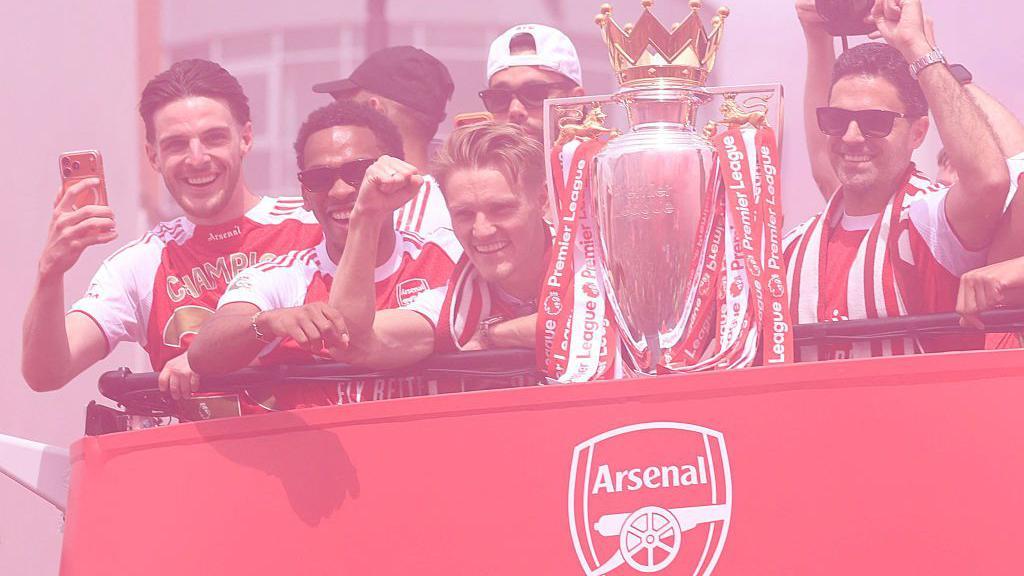
POLICY WIRE — London, UK — Forget the confetti cannons and the rote declarations of team spirit. Forget, for a moment, the deafening roar that swallowed Islington. The real story of Arsenal’s Premier League triumph wasn’t simply the end of a 22-year drought—it was the meticulously choreographed euphoria designed to cauterize the fresh wound of a continental defeat suffered just hours before. A raw, collective sigh of relief, yes, but also a stark reminder that even in victory, London’s sprawling identity—and its football obsession—is rarely uncomplicated.
On Sunday, North London unfurled a massive red — and white banner over its streets. Hundreds of thousands packed sidewalks for a glimpse of their heroes, celebrating a championship sealed against Manchester City by a decisive seven-point margin—their first league title since Arsene Wenger’s famed ‘Invincibles’ in 2003-04. But here’s the kicker: the party kicked off mere hours after the Gunners squandered the Champions League final to Paris Saint-Germain in Budapest. They’d been within touching distance of football’s ultimate club prize, only to see it slip away in a penalty shootout. The subsequent parade, then, was less a standalone celebration and more an act of civic catharsis—a grand, public effort to overwrite Saturday’s bitter memory with Sunday’s sweet, albeit domestic, victory.
It’s hard not to sense the tension in that narrative. A collective joy, fiercely protected from the shadow of recent disappointment. “It’s remarkable, really,” remarked Sarah Jenkins, a lifelong Gooner whose family has roots in the UK’s sizable South Asian diaspora, having flown in from Karachi for the occasion. “You’ve got supporters here who felt that pain last night, but you wouldn’t know it from the sheer volume. This isn’t just for North Londoners, you know. We’ve got generations of fans across Pakistan — and beyond, glued to every match. For many, this win feels just as important there as it does here.”
And those masses, stretching for miles, absorbed every beat. Midfielder Declan Rice, a player whose dynamic presence often dictates the team’s tempo, grabbed a mic and cheekily referenced critics who’d called their season reliant on set-pieces, chanting, “Set-piece again, ole, ole!” His rendition of Vanilla Ice’s “Ice, Ice Baby”—initially reluctant, quickly embraced—was less a musical performance and more a shared, unburdened shout into the void. It’s exactly the sort of unscripted moment that turns mere victory laps into lasting legend. Co-chairman Josh Kroenke, surveying the teeming crowds from a float, couldn’t mask his delight, actively urging the fans for even more noise. You don’t just see a smile; you see the weight of two decades lifting.
📄 POLICY WIRE WHITEPAPER PUBLISHED: PAKISTAN'S NATIONAL SECURITY POLICY PRIORITIES
👉 READ BY CLICKING HEREBut there’s always a policy angle to popular effervescence, isn’t there? When asked about the dual outcomes of the weekend—triumph domestically, heartbreak in Europe—Myles Lewis-Skelly, a promising academy graduate, captured the paradoxical spirit. “It’s disappointing, because when you’re so close to a dream… But, just as Mikel [Arteta] said, it adds fuel to the fire. We’ll use that for us.” He later described the Premier League win as the “start of a new era,” a phrase designed to echo boardroom strategy as much as locker-room ambition.
What This Means
The collective emotional discharge witnessed on London’s streets offers a lens into more than just football fandom. First, consider the economic pulse: major sporting successes like this generate palpable commercial uplift, from merchandise sales to local hospitality—a significant, albeit unquantified, boost to the capital’s service sector. Beyond the immediate buzz, however, lies the political economy of sport. These spectacles reinforce national and regional identities, creating powerful, shared narratives that can, ironically, distract from less comfortable societal or political realities. This particular parade, coming on the heels of such a high-profile loss, became an almost deliberate act of psychological resilience, diverting attention from continental disappointment with a homegrown victory. It demonstrates the enduring power of popular culture to bind diverse communities, to create temporary, exhilarating unanimity—a kind of civic glue. And in a globalized city like London, that glue is essential, often providing a rare opportunity for people from disparate backgrounds, including the extensive Pakistani and broader Muslim communities across Britain who avidly follow English football, to share a common, celebratory space. For a moment, the world’s complexities faded, replaced by red smoke and roaring adoration, proving that sometimes, even policy-makers could learn a thing or two from a good football cheer.