


Fuel Runs Dry in Occupied Crimea as Drone Barrage Intensifies Russia’s Logistical Nightmare
POLICY WIRE — Simferopol, Occupied Crimea — The grumbling starts at the gas pump, or more accurately, where the gas pump used to have fuel. Across Crimea, that sun-drenched peninsula annexed by...

POLICY WIRE — Simferopol, Occupied Crimea — The grumbling starts at the gas pump, or more accurately, where the gas pump used to have fuel. Across Crimea, that sun-drenched peninsula annexed by Moscow nearly a decade ago, life’s little rhythms are jarringly off-key. It’s not just a minor inconvenience, it’s a grinding reality now. Suddenly, the long lines that plague cities in struggling nations have become a stark, unwelcome feature of what Russia insists is its own sovereign territory.
Ukrainian drone attacks, once dismissed as nuisance-level pinpricks by Moscow, have lately graduated to something far more insidious: a systemic, relentless chipping away at Russia’s logistical lifelines. Energy infrastructure, particularly oil storage depots and transport routes, has borne the brunt of these unmanned aerial assaults. And frankly, the Kremlin’s got a big problem on its hands when it comes to keeping its strategic outpost properly fueled, civilians and military alike.
“These aren’t random hits, are they?” observed a seasoned analyst on condition of anonymity, pointing to a recent spate of explosions near key energy hubs. “Kyiv’s getting smarter. They’re not just aiming for propaganda; they’re aiming for paralysis. Starve the beast, effectively.”
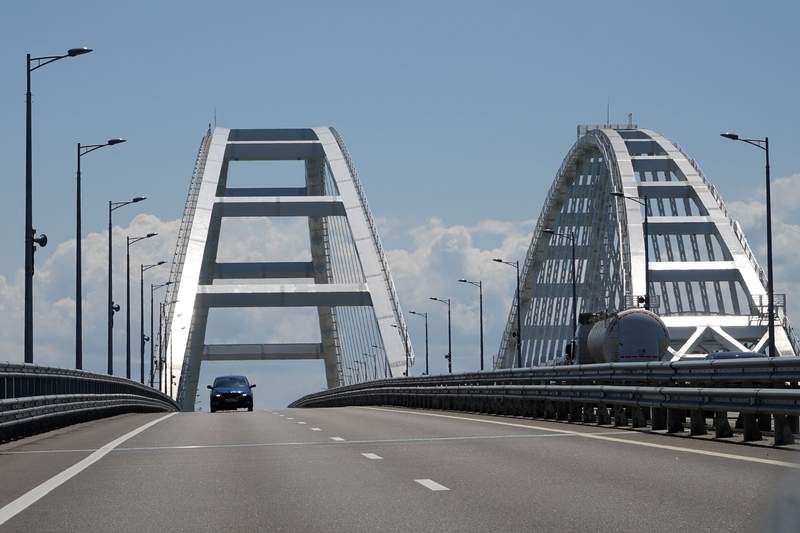
That ‘beast,’ in this case, isn’t just the Russian Black Sea Fleet based out of Sevastopol or the myriad military vehicles trundling across the Kerch Bridge—the same bridge that’s been targeted before. It’s also the local economy, what little of it exists outside Moscow’s heavy patronage. Taxi drivers, local businesses, farmers trying to move produce—they’re all feeling the pinch, struggling to make ends meet as rationing takes hold and prices climb on the black market.
“Our intelligence suggests these targeted strikes are precisely calibrated,” stated Natalia Humeniuk, spokesperson for Ukraine’s Southern Operational Command, speaking from Kyiv. “We’re talking about legitimate military objectives, those that directly support Russia’s illegal aggression. This isn’t about striking civilians, it’s about systematically degrading their combat capability. They won’t fight for long without fuel, will they?” It’s a bold assertion, but it’s proving tougher for Moscow to shrug off.
Russian officials, on the other hand, downplay the whole thing with a familiar shrug — and a healthy dose of blame. Dmitri Karyov, an official within the Crimean fuel logistics department (a post many suspect is less about logistics and more about control), insisted the shortages were “temporary, regrettable logistical disruptions caused by external provocations. We’re working tirelessly to re-route supplies — and restore full capacity.” But locals tell a different story. They’ve seen fewer delivery trucks and watched filling station displays simply blink ‘NO PETROL’ for days on end. It’s gotten bad enough that even Moscow-aligned bloggers on Telegram channels have begun complaining.
Because let’s be honest, Crimea isn’t some backwater, is it? It’s been touted as Russia’s shining success story, its undeniable claim, a crown jewel in its resurrected empire. Yet, now it finds itself rationing gasoline, its infrastructure under persistent attack. Industry reports estimate that overall petroleum product deliveries to Crimea have plummeted by 30% in the last quarter alone, a direct consequence of both drone damage and the reluctance of transport companies to risk routes that are now clearly in Kyiv’s crosshairs. And that figure, from a recent financial sector analysis, probably understates the real hit, many believe.
The echoes of this particular vulnerability might resonate far beyond Eastern Europe, even reaching into discussions across the broader Muslim world. Countries like Pakistan, grappling with their own perennial energy crises and reliance on global markets, are likely watching Russia’s struggles in Crimea with more than just casual interest. They know all too well how disruptions in energy supply, whether from conflict or financial woes, can upend a nation. It’s a stark reminder that even seemingly secure resource channels can fracture, leaving populations—and armies—stranded. For more on how geopolitical tensions ripple globally, consider reading about Tokyo’s uneasy stance amidst Beijing’s shadow, a nuanced look at regional power dynamics.
What This Means
The recurring fuel shortages in occupied Crimea aren’t just a momentary hiccup; they’re a telling symptom of deeper strategic fissures. First, they signal Ukraine’s evolving capability — and strategy. Kyiv’s isn’t just looking to harass; it’s looking to disable key military — and economic arteries. This shifts the operational calculus for Russian forces significantly, forcing them to expend more resources on securing supply lines and less on frontline engagements. You can’t fight a modern war if your tanks are sitting ducks without gas, right?
Second, the civilian discontent this breeds is pure poison for Russia’s narrative of benevolent occupation. When everyday life gets measurably harder, loyalty tends to erode, or at least becomes less enthusiastic. This internal friction, however subtle, drains Moscow’s administrative capacity and resources, forcing it to choose between its military’s immediate needs and its civilian population’s basic demands.
Finally, these disruptions throw a spotlight on Russia’s logistical fragilities. Relying heavily on land bridges and singular transport hubs like the Kerch Bridge—itself a repeated target—leaves the entire region precariously vulnerable. As winter approaches, the challenge of securing energy — and logistics will become even more pronounced. The Kremlin’s boast about Crime’s ‘indestructibility’ might just be running on fumes. And it seems Ukraine isn’t going to let them refuel without a fight.