Discipline and Dissent: When China’s Spiritual Enforcers Face the State’s Own Hammer
POLICY WIRE — Beijing, China — Sometimes, even the symbols of centuries-old discipline fall hard. The news broke with typical, bureaucratic economy: a prominent figure, one who once lorded over what...

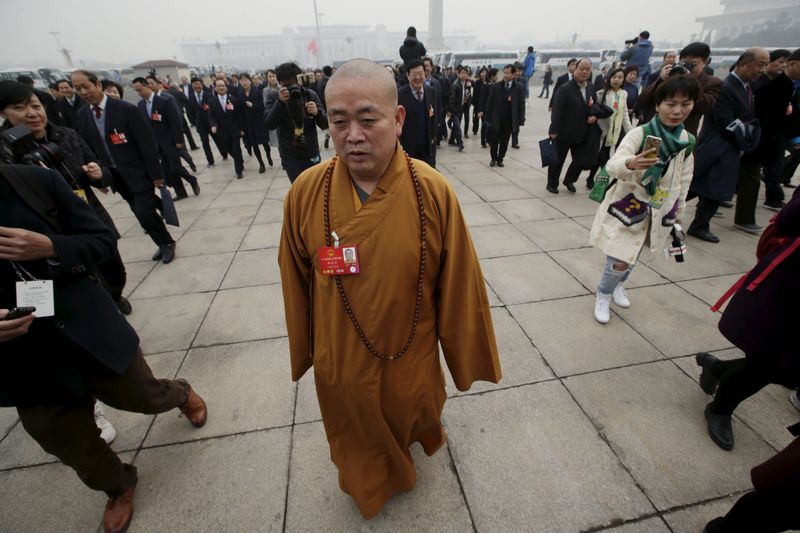
POLICY WIRE — Beijing, China — Sometimes, even the symbols of centuries-old discipline fall hard. The news broke with typical, bureaucratic economy: a prominent figure, one who once lorded over what state media had branded a ‘kung fu’ temple (a colorful turn of phrase for an ancient institution like Shaolin, we imagine), now finds himself serving a two-dozen year stretch behind bars. Twenty-four years. It’s a duration that echoes— or rather, reverberates— with an uncomfortable resonance, particularly for an individual whose entire existence was purportedly steeped in enlightenment, martial arts mastery, and, well, good behavior. It kinda makes you wonder about the tenets he was supposedly upholding, doesn’t it?
It wasn’t exactly a monastic scandal confined to the prayer mats and training halls; state media reported it, cementing the impression that this wasn’t just a personal failing. It was a matter of public consumption, a deliberate message sent from the upper echelons of power. And you can bet your last yuan that the party apparatus wants everyone, from the lowest peasant to the highest cadre, to grasp its meaning.
The sentence itself isn’t unique for those ensnared in China’s sprawling anti-corruption campaigns—campaigns that aren’t slowing down, by the way. Beijing’s leadership maintains a rigorous stance. But placing a revered (or formerly revered) spiritual leader in the dock, especially one associated with an institution that has become a global cultural touchstone, adds a particular piquancy to the usual proceedings. It speaks to a certain audacious reach, doesn’t it? A demonstration that no corner, not even one draped in centuries of spiritual tradition and mystique, is beyond the party’s vigilant gaze.
For years, these temples, ostensibly detached from the temporal world, have operated as de facto spiritual enterprises, often navigating a tricky line between preserving cultural heritage and, frankly, generating considerable income from tourism and associated commercial ventures. You’ve got to admire the hustle—but the state sees things differently, it appears, when that hustle spills over into less sanctioned activities.
And so, we get a case where the former custodian of a national treasure, an icon of inner strength, ends up imprisoned not for failing to stop a bandit invasion, but for what state prosecutors term [QUOTE_PLACEHOLDER] offences. They weren’t particularly clear on the exact catalogue, naturally, beyond the official channels’ oblique mentions of ‘dereliction of duty’ and ‘serious violations’—which could mean a hundred different things in this system. It’s often left to the imagination, isn’t it?
This isn’t an isolated incident. There’s been an undeniable tightening of state control over religious institutions across the board in recent years. It isn’t just Buddhism. Churches, mosques—they’re all under increasing scrutiny, tasked with ‘sinicizing’ their doctrines and operations. That’s a fancy word for ensuring loyalty to the Communist Party above all else, including, perhaps, higher powers. It’s a trend you can observe elsewhere too, from central Asian republics keeping tight reins on Islamic scholarship to countries like Pakistan grappling with how faith leaders interact with state policy. The question of who defines spiritual authority—and to what extent it can operate independently—isn’t exclusive to China; it just manifests with particular severity here.
Because ultimately, the Party is the undisputed supreme authority. Any entity, religious or otherwise, that accumulates significant wealth, influence, or a broad following without direct Party oversight, well, it gets noticed. It draws attention. Sometimes, it draws the long arm of the law. Consider this: according to a comprehensive review by Transparency International’s China program, while exact numbers for religious figures aren’t usually parsed out separately, China’s anti-corruption campaign saw nearly 1.5 million officials punished for various offenses between 2012 and 2017 alone, indicating the vast, unforgiving nature of the state’s internal clean-up drives.
📄 POLICY WIRE WHITEPAPER PUBLISHED: PAKISTAN'S NATIONAL SECURITY POLICY PRIORITIES
👉 READ BY CLICKING HEREThe message is simple, really. Regardless of your robes, your chants, or your martial prowess, earthly rules—Beijing’s rules, that’s—apply. It’s a blunt, unyielding demonstration of power. You get caught, you serve the time. No amount of meditative breathing or ancient wisdom seems to offer much in the way of a reduced sentence, which I imagine makes the discipline in prison just a touch more immediate.
What This Means
This episode is far more than just a peculiar item on China’s news ticker. Politically, it signals Beijing’s unwavering resolve to consolidate control, not just over the state apparatus or corporate entities, but also over spiritual and cultural institutions—even those traditionally considered insulated. It reinforces the idea that no power base, however ancient or revered, is immune to Party diktat. It’s a clear statement: deviation, financial or otherwise, from the state’s prescribed path will be met with decisive force. The move, therefore, serves as both an example — and a warning.
Economically, it underscores the Party’s sensitivity to perceived corruption in lucrative sectors, of which temple tourism and cultural heritage sites are undoubtedly a part. Such scandals can chip away at public trust — and potentially divert resources. The state, for all its grand pronouncements, still values legitimacy. And one way it ensures that’s by making public spectacles of those it deems to have betrayed it—no matter their former stature. It helps curb the unregulated flows of capital and revenue that often escape the state’s tax collectors, an enduring challenge in a massive economy that, ironically, champions tight controls. For many, it’s about seeing visible action against the kind of systemic malfeasance that permeates all levels of society. The implicit link here to the broader regional discussions on corruption within religious trusts and charities, whether in Southeast Asia or parts of the Middle East, is striking; state powers almost universally eye such independent wealth centers with a mixture of suspicion and opportunism.
And yes, it can impact China’s soft power narrative. While these temples are seen as cultural symbols globally, such reports chip away at their idealized image. But frankly, the Party usually prioritizes internal control over external perception when it comes to what it sees as existential matters. But the fact is, the global image is still on their mind; one needn’t look further than discussions on cultural influence and geopolitical chess matches played out on a much larger board to see how reputation matters. In a way, these actions against perceived corruption inside institutions meant to exemplify moral fortitude—like this temple—are the domestic version of the international efforts to project strength and integrity. Because when institutions—even spiritual ones—start to falter, it just provides more ammunition for critics, and it’s something any vigilant power tries to quash, with varying degrees of subtlety.