


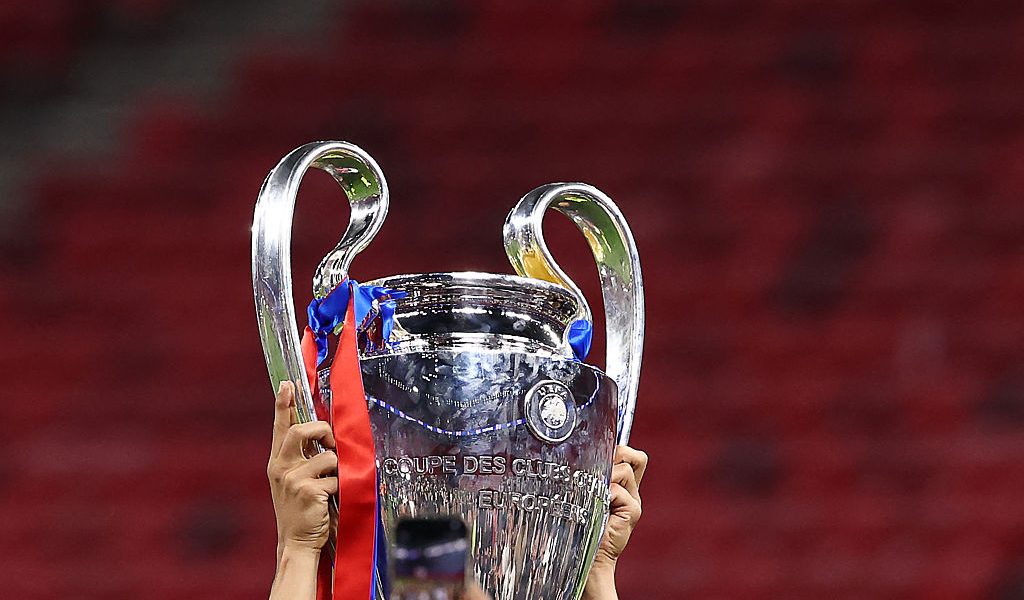
Budapest’s Verdict: Arsenal’s Champions League Agony Echoes Broader European Power Shifts
POLICY WIRE — London, UK — Budapest. Not usually the epicenter of an existential crisis for English football, but here we’re. It wasn’t the final whistle, but the silence that followed...

POLICY WIRE — London, UK — Budapest. Not usually the epicenter of an existential crisis for English football, but here we’re. It wasn’t the final whistle, but the silence that followed Arsenal’s penalty shootout defeat to Qatar-backed Paris Saint-Germain in the Champions League — an exhibition match masquerading as a meaningful contest — that spoke volumes. Forget the scoreline for a moment; the true loss wasn’t just a trophy. It was face. Again. And that, in the high-stakes theater of global sport, has real geopolitical dimensions, no matter how many emojis flood social media afterwards.
The optics were, frankly, abysmal. Arsenal, a club synonymous with a certain brand of traditional English football—sometimes frustrating, always ‘plucky’—went down not merely to a richer opponent, but to one representing a completely different model. PSG, a team often derided for assembling a super-squad rather than cultivating one organically, flexed its sovereign wealth muscle. Désiré Doué, scoring ‘back-to-back’ goals as if he’d simply decided to make it a personal tradition, was merely the instrument of a larger narrative unfolding. It’s a bitter pill, they’ll tell you. But don’t they say that every season?
Richard Masters, Chief Executive of the Premier League, probably kept his public pronouncements polite, but you can bet there’s a quiet seethe. “The continued success and reputation of our clubs abroad remains paramount to the league’s global standing,” one could imagine him muttering behind closed doors. “These are not just games; they’re branding exercises on a colossal scale. And, frankly, we can’t afford too many more slip-ups on the continent.” Masters isn’t just selling football; he’s selling a perception of invincibility. When one of its marquee brands stumbles, especially to an Arab-owned powerhouse, it registers as more than just a blip on a spreadsheet.
But the reverberations aren’t contained to Europe’s elite clubs. Arsenal boasts one of the most ardent fan bases in South Asia, particularly within the bustling metropolises of Pakistan. Millions there follow every kick, every tackle. For them, a club’s triumph or humiliation isn’t just leisure; it’s a profound cultural touchstone, a surrogate identity. They invest emotional capital in these European giants. The disappointment in Karachi or Lahore, following such a defeat, can be palpable, a collective sigh echoing across time zones. It’s not abstract; it’s personal. And that connection, that fervent loyalty from a demographic so geographically distant, is itself a powerful economic asset—and a political one too, considering the ‘soft power’ that comes with cultural dominance.
Conversely, Nasser Al-Khelaifi, PSG’s Qatari chairman, likely barely suppressed a smirk, though his public statements would naturally be more magnanimous. “This victory demonstrates the growing strength and strategic vision behind modern football clubs,” a hypothetical Al-Khelaifi might offer with an unblinking gaze. “It’s not just about spending; it’s about shrewd investment. The old guard might lament, but the landscape has changed. It’s simply the progression of the sport.” He’s right, of course, to a degree. Global viewership for top European club matches, according to UEFA reports, now surpasses 3.5 billion annually—a staggering figure that underscores the stakes involved for nations looking to project influence through sporting success.
📄 POLICY WIRE WHITEPAPER PUBLISHED: PAKISTAN'S NATIONAL SECURITY POLICY PRIORITIES
👉 READ BY CLICKING HEREThis particular defeat highlights more than just a football mismatch; it puts a spotlight on contrasting philosophies of ownership and development. Premier League clubs, for all their global reach, operate under a different fiscal paradigm than a state-owned entity like PSG, whose losses can be—and are—absorbed with less existential dread. That asymmetry, a core structural difference, often leads to these moments where raw economic muscle, detached from traditional fan economics, prevails.
Gabriel’s inconsolable despair after his missed penalty, and Marquinhos’s almost immediate comfort, offered a rare, human moment of vulnerability and empathy in an otherwise ruthlessly commercial enterprise. It’s these flashes of raw emotion, however fleeting, that remind us why people keep watching—despite the increasingly cynical backdrop. Because ultimately, for all the boardroom machinations and state-sponsored prestige projects, football still occasionally manages to deliver genuine drama.
What This Means
Arsenal’s repeat failures on the biggest European stage aren’t just about sporting ineptitude; they reflect a subtle, ongoing shift in the global hierarchy of football, which in turn mirrors broader geopolitical and economic realignments. The dominance once unilaterally assumed by the Premier League as Europe’s financial and competitive heavyweight is increasingly contested, not just by traditional Spanish or German powers, but by state-backed enterprises. This erosion of perceived English football supremacy risks chipping away at Britain’s soft power influence—an often overlooked but critical component of its global standing post-Brexit. When English teams falter, it sends a message, perhaps exaggerated, that even their once-unassailable cultural exports face challenges. It introduces an element of brinkmanship, a subtle bluff or misstep that can have unintended consequences on a national brand, as we’ve seen in various international arenas. Think of the intricate dance of international diplomacy; a nation’s sporting prestige can feel as sensitive as its trade negotiations. For countries like Qatar, owning and succeeding with a club like PSG is a conscious, costly projection of influence, a counter-narrative to traditional power centers. For Arsenal, the task isn’t just to win a match, but to reclaim a narrative. And they’re struggling, it seems, to write a compelling comeback story.