

Shadows of Hindutva Worldwide
The assassination of Hardeep Singh Nijjar in Surrey, British Columbia, on June 18, 2023, transformed a long-standing debate about Sikh political activism, Indian nationalism, and transnational...

The assassination of Hardeep Singh Nijjar in Surrey, British Columbia, on June 18, 2023, transformed a long-standing debate about Sikh political activism, Indian nationalism, and transnational repression into a major international crisis. Nijjar was a prominent community figure and a leader in the gurdwara that he served in, and was killed by gunfire on her way to the gurdwara in Canada. What ensued was unheard of: Justin Trudeau, Canada’s Prime Minister, made a public declaration that Canadian authorities were investigating “credible allegations” that agents of the Indian government were involved in the killing. This was denied by India, which has termed it a baseless, political charge. But the case quickly turned into more than a criminal case. For many Sikhs in Canada, the United Kingdom and other diaspora communities, Nijjar’s assassination embodied a greater danger: that political opposition related to Sikh identity viewed through a “security” prism has become the default approach of a government, as shaped by an assertive Hindutva ideology.
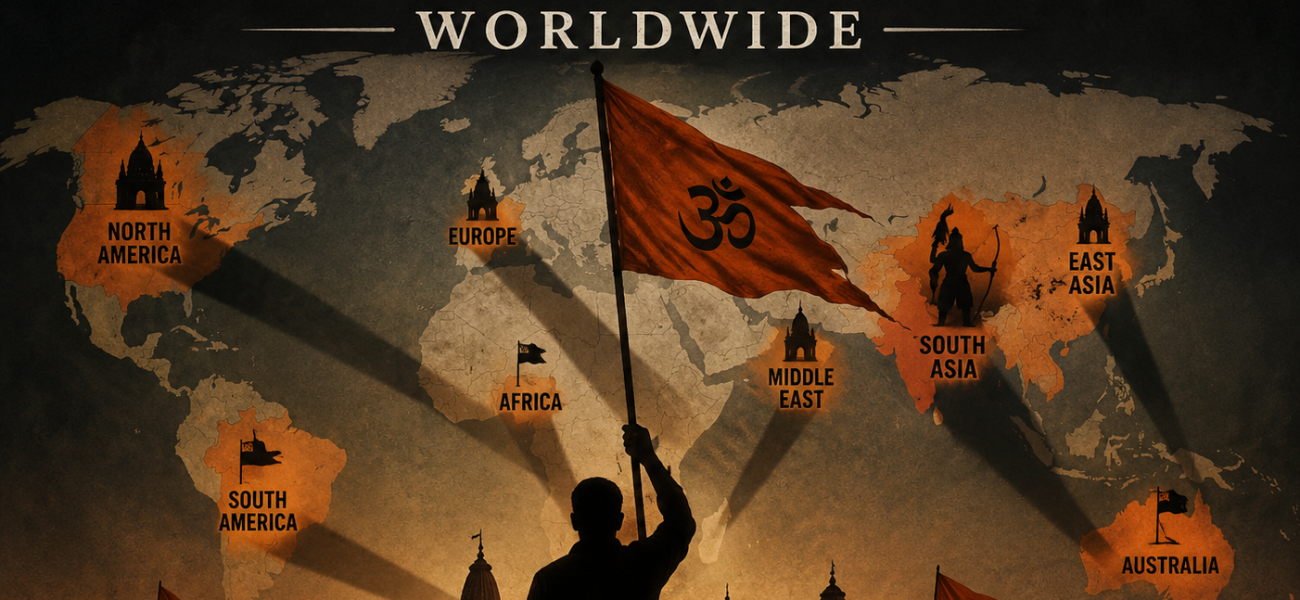
It will be essential to discuss the prevailing political climate in India today to comprehend why Nijjar’s killing sparked such outrage. In the last decade or so, there has been a growing influence of the Hindutva, a nationalist ideology which promotes India as a predominantly Hindu civilisational state. Many say it symbolizes cultural resurgence and national unity to the idea of colonialism and division that the country has faced for hundreds of years. But critics argue that Hindutva has helped foster a political environment that has resulted in the distrust of religious minorities, including Muslims, Christians and, occasionally, Sikhs, even when they challenge narratives put forward by the State. Civil society rights groups and international monitors have expressed multiple concerns on issues of shrinking civic space, increasing religious polarization, and the use of the word ‘anti-national’ against those who dissent. In this context, individuals who are proponents of self-determination or criticize state policies tend to be considered security risks instead of political players by Sikh activists within the movement. (World Sikh Organization)
As far back as Nijjar ”sikh suspicion of the Indian state had begun. Their roots go back to decades, most highlight to the events of 1984. In June that year, Operation Blue Star against militants was undertaken by the Indian Army in the Golden Temple complex in Amritsar, the most sacred place in Sikhism. The operation resulted in huge casualties and damage to the holy place, thus inflicting great trauma on the members of the Sikh community around the world. A few months later, Indira Gandhi, the then Prime Minister, was shot and killed by her Sikh bodyguards which led to anti-Sikh protests in India. Sikhs say at least 3,000 Sikhs were killed in the city of Delhi alone and thousands more attacked throughout the country. Many survivors and activists are still arguing for 40 years later that justice has been not been served. These events developed into a central memory of important part of the Sikh community and live on in people’s views of state power and minority rights issues. Nijjar’s death must be seen in the context of the historical trauma of 1984, which saw Sikhs fight back against the BJP government with bloody violence.To draw lessons from the violence Nijjar’s has been seen within the frame of a long history of repression.
The statistics are indicative of its importance too. There are approximately 770,000 Sikhs in Canada who make up approximately 2 per cent of the total national population and are one of the largest Sikh communities outside India. This diaspora has been actively engaged on political, issues human rights, and Sikh identity concerns around Punjab. Protests began in Canadian cities, singling out Nijjar and holding security of activists overseas in question. Authorities in Canada then arrested and charged several people for the murder, and the further investigation of the murder and suspected state involvement went on. Later, Canadian police authorities broadened investigations into allegations of transnational repression against and foreign interference towards Sikhs.
The Nijjar case also involved international stir as it coincided with other allegations spread around the world of Sikh activists. The United States government unveiled the details regarding an alleged plot to ask for the help of a murderer-for-hire in the United States to kill Sikh activist Gurpatwant Singh Pannun. Indian intelligence network connections were linked to elements of the operation in the reporting by Reuters and U.S. prosecutors. A subsequent report in India admitted that perhaps some officials were involved in the plot, but insisted that there was no official order given for this. To opponents, these moves seemed like a disturbing trend of going after security outside national boundaries. But for others who back and help build and maintain India’s government, the events should not signal an institutional responsibility, nor should they be used to blame the entire state apparatus.
An organization for Canadians of the Sikh faith contended NJAR was a part of a bigger network of transgenic repression. The World Sikh Organization of Canada has issued reports and statements referring to the issue of being watched, being intimidated and people being silenced for their pro-Sikh political activism. Accusations of Indian link groups seeking to engage in monitoring and influencing activities of Indian diaspora communities have similarly been the subject of Canadian inquiries. Such conclusions are politically disputed, but have heighten concerns among many Sikhs that being politically active around the issue of Punjab may lead to skewed attention.
📄 POLICY WIRE WHITEPAPER PUBLISHED: PAKISTAN'S NATIONAL SECURITY POLICY PRIORITIES
👉 READ BY CLICKING HEREThe question of why Hindutva has transmuted political difference into a question of national loyalty lies in the heart of this debate. The importance the ideology has placed on cultural homogeneity has been criticized for not allowing much space for minority narratives that tell stories differing from dominant narratives about being nation. In this sense, names like Hardeep Singh Nijjar can be more fragile not just at the point of what they stand for but more than anything when it is not what the country is standing for. But the Indian government’s supporters cast doubt on this characterisation, suggesting that India is still a constitutional and democratic state with regular elections and free judiciary, and that the laws of this country provide security safeguards against security threats. They also point out that India officially declared the war against Nijjar to be a national security issue and not a religious issue.
No matter which side you are on, Hardeep Singh Nijjar’s case has now entered the paradigm of discussion on minority rights, nationalism, and minorities versus state power across the world. He is seen by many Sikhs as a victim of this political environment informed by a Hindutva agenda and the suspicion of dissent. To others he continues to be a figure of controversy related to separatist politics. But the deeper meaning of his death is that it raises questions: How can the more powerful voice of dissent get heard in democratic societies? How can diaspora communities engage in politics without threats to their basic rights? How can there be any concept of national security without the concept of basic rights?
Author