


Track Gold, Media Silence: California’s Trans Athlete Standoff & The Press’s Blinders
POLICY WIRE — Los Angeles, United States — It’s a sunny Saturday, maybe, out on the track. For AB Hernandez, a seventeen-year-old out of Jurupa Valley, it’s just another state meet, a shot at glory,...

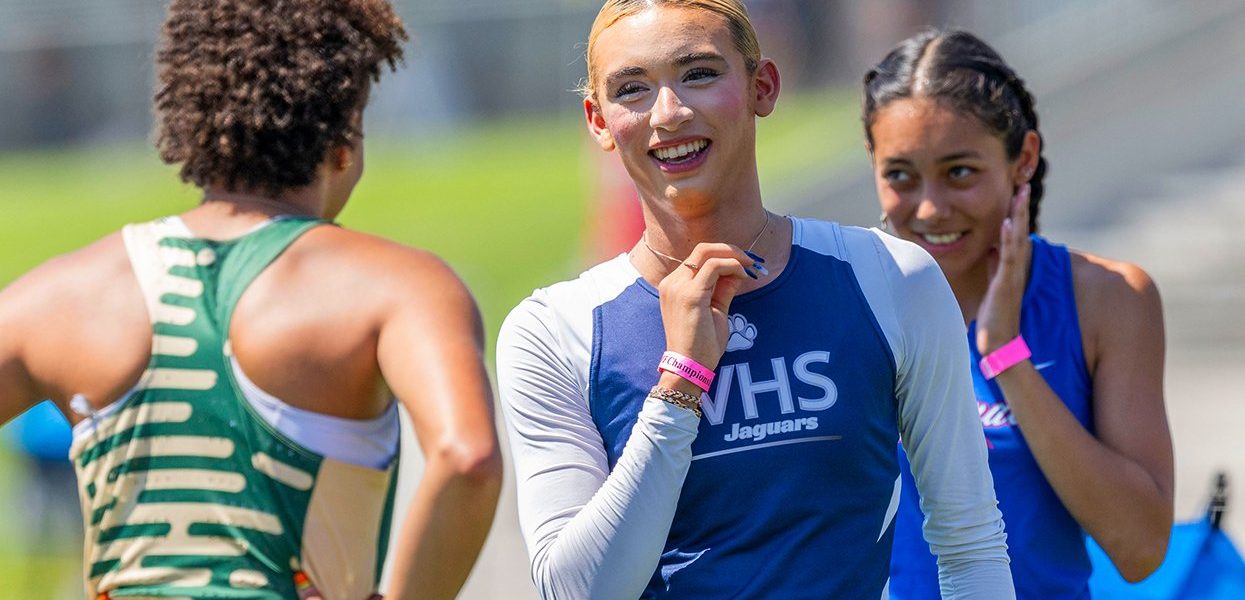
POLICY WIRE — Los Angeles, United States — It’s a sunny Saturday, maybe, out on the track. For AB Hernandez, a seventeen-year-old out of Jurupa Valley, it’s just another state meet, a shot at glory, another push for gold. She’s fast. But away from the roar of the crowd and the smell of freshly cut grass, a far dustier battle churns—not over finish lines, but over narrative, especially when America’s supposed ‘newspaper of record’ enters the fray.
Because The New York Times, apparently, can’t resist turning a teenager’s race into an editorial. Their preview of California’s state track — and field championships? It reignited a very familiar blaze of criticism concerning its reportage on transgender athletes. Look, they didn’t offer much context. Didn’t talk to trans people. Or even advocates for their inclusion. Just straight to the controversy, thank you very much.
Hernandez, remember her? She snagged two gold medals last year. And she’s back, defying a policy that, honestly, feels like it was cooked up in a committee that ran out of ideas. California’s current arrangement? A fascinating compromise, to be sure. If a trans student-athlete like Hernandez finishes first, the highest-finishing cisgender athlete also gets first place. It’s a shared podium. A participation trophy, perhaps, but with a gold sheen. Policy debates around athletic fairness are hardly new, of course. Some even within the trans community find it, well, acceptable.
Joanna Harper, an out trans sports scientist, has spent two decades mapping the athletic impact of hormone therapy. And she’s cool with California’s shared-podium stance. “Given that California allows trans girls to compete in the female category without hormones, then I don’t think it’s unreasonable to have a shared podium,” Harper recently remarked. It’s a nuanced position, isn’t it? The state, you see, tries to keep doors open for trans students while—and here’s the rub—placating folks worried about ‘fairness.’ Because you can’t just have one side feel good, can you?
The situation isn’t confined to newspaper ink — and track spikes, either. California’s currently duking it out with the former Trump administration, which—get this—threatened to pull federal funding if the state dared to continue with its transgender-inclusive sports policy. Donald Trump himself, in 2023, while not naming Hernandez directly, made his disdain clear. “If they want to let men compete against women, then no federal money for them. Simple as that,” a senior administration official, speaking on background and reflecting Trump’s then-stance, communicated to reporters.
But back to the New York Times. Their recent article barely scratched the surface, highlighting Hernandez’s potential to defend titles, and casually mentioning upcoming Supreme Court decisions on bans in West Virginia and Idaho. It then, somewhat dismissively, noted those rulings likely wouldn’t alter California’s policy. Not exactly probing journalism, is it? Perhaps that’s why GLAAD launched a campaign this year, lambasting what it termed biased coverage from the paper. Riki Wilchins, a writer, went further, suggesting the Times was inadvertently fueling public skepticism towards trans rights.
An analysis by Assigned Media earlier this month highlighted a particularly galling point: The Times, despite publishing more trans-related pieces than any other outlet surveyed, was the least likely—a meager 13.5% of the time, in fact—to quote trans individuals or advocacy groups in stories primarily *about* trans issues. Think about that for a second. That’s a stark omission. It prompted a former subscriber, whose teenager is trans, to voice concerns during a shareholder meeting, citing how Times articles are weaponized by figures like Trump to justify discrimination.
📄 POLICY WIRE WHITEPAPER PUBLISHED: PAKISTAN'S NATIONAL SECURITY POLICY PRIORITIES
👉 READ BY CLICKING HEREPublisher A.G. Sulzberger, of course, defended the paper’s reporting as “fair — and comprehensive.” A familiar refrain, isn’t it? “We take great care to cover these complex issues with sensitivity and thoroughness, providing our readers with all sides of the conversation,” Sulzberger stated, maintaining the paper’s impartiality amidst mounting critique. But fairness, for many, isn’t just presenting opposing viewpoints; it’s about whose voices are amplified, and whose are muted.
The Advocate, another publication that actually *does* interview trans people, tried to get a comment from Times reporter Juliet Macur and executive editor Joe Kahn. They didn’t respond. So much for open dialogue, right? Questions about source selection, about the absence of pro-inclusion perspectives, went unanswered. Chris Erchull, a senior staff attorney at GLAD Law, who represents trans clients, sounds confident about California’s legal footing. “There’s pretty much zero chance that it will have any bearing on what California is doing,” Erchull explained to The Advocate, referring to any potential Supreme Court decision. He even added, a hint of irony in his voice, “In fact, the California policy right now with respect to AB, is actually very friendly to the people who raise all these concerns about fairness and opportunities.” You’ve got to admire the silver lining finding there.
What This Means
This unfolding narrative isn’t just about high school sports; it’s a microcosm of deeper societal and political schisms. The media, especially influential outlets like The New York Times, holds immense power in framing these debates, for better or for worse. When a publication with such reach consistently under-represents the voices of the very community it reports on, it doesn’t just alienate a readership—it subtly shapes public perception, contributing to an environment where policy, already contentious, becomes even more polarized.
Politically, California’s stand against federal pressure, maintaining its shared podium policy, is a bold assertion of state sovereignty on social issues. It demonstrates a continued commitment to inclusivity despite significant backlash — and funding threats. This sets up a fascinating legal and social precedent, potentially inspiring other states or even informing similar policy debates globally. Think about how these dialogues around identity and inclusion translate—or don’t—in vastly different cultural landscapes. In parts of South Asia, for instance, gender identity discussions are often inextricably tied to religious texts, traditional norms, and social acceptance that can be far less flexible than in the West. When major Western news organizations cover these issues with perceived bias, it doesn’t just impact American policy. It affects how these conversations are perceived and adopted—or resisted—in countries like Pakistan, where Western media narratives often intersect with deeply ingrained cultural or religious viewpoints, sometimes strengthening conservative arguments against emerging identities, because they reinforce certain anxieties. Such reporting, therefore, isn’t just domestic news; it’s a global influencer, with tangible consequences far beyond a California track.
Economically, the controversy can impact everything from school funding to endorsement deals for athletes involved. Brands become wary, sponsorship dries up in contested spaces, or shifts to ‘safer’ topics. The lack of nuance in reporting can even diminish the commercial value of these sporting events, making potential stakeholders hesitant to engage with a controversy that they didn’t create. It’s an ecosystem, you know? And when one part goes wonky, it messes with everything else too. And it’s a big mess.