


Lebanon’s Brink: Israel Tightens Screw, Mideast Braces for a Deeper Plunge
POLICY WIRE — Beirut, Lebanon — The usual border clamor? Faint. The customary posturing? Now sharper, laced with an unsettling edge. While the world’s gaze remains fixed on Gaza, Israel’s...

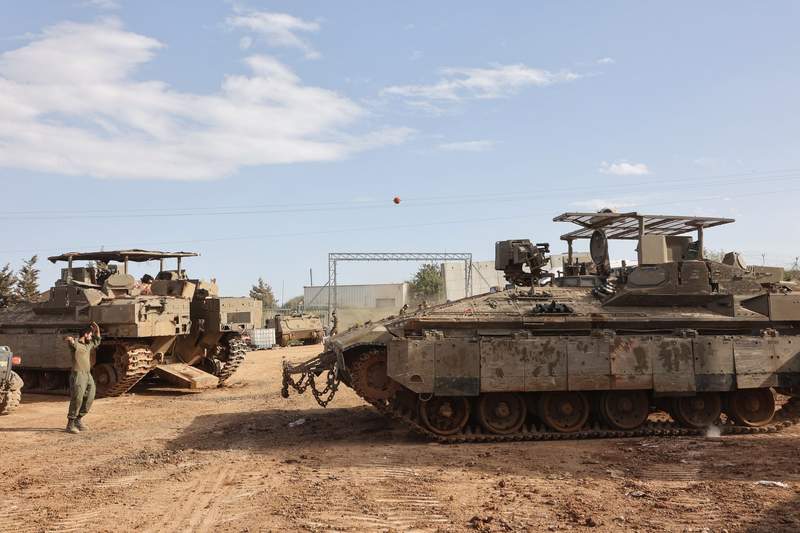
POLICY WIRE — Beirut, Lebanon — The usual border clamor? Faint. The customary posturing? Now sharper, laced with an unsettling edge. While the world’s gaze remains fixed on Gaza, Israel’s Northern Command isn’t just watching—it’s plotting, quietly but unmistakably, a deeper foray into Lebanon. This isn’t just about skirmishes anymore. We’re talking about the methodical sharpening of swords, hinting at an operation far more substantial than the sporadic rocket-and-drone exchanges that have become, frankly, commonplace. The question isn’t if it escalates, but when, — and how brutal it gets.
Down by the jagged hills separating Israel and its northern neighbor, communities have long learned to live with the rhythm of cross-border anxieties. But this time, it feels different. It’s got a weight, a heavy hum that suggests something beyond tit-for-tat exchanges. Military brass in Tel Aviv — and political grandstanders in Beirut are sending clear signals. They’re both ratcheting up the rhetoric, drawing battle lines even as their respective populations yearn for anything but another bloody regional entanglement. And Washington, predictably, watches with bated breath, scrambling to douse flames that might just be past the point of no return. You can almost smell the burnt optimism.
It’s a nasty calculus, this. Israel feels the heat from its displaced northern residents—some 80,000 citizens evacuated since October—and a political class screaming for decisive action. Across the fence, Hezbollah is walking its own tightrope, caught between defending its constituency, fulfilling its role in the ‘Axis of Resistance,’ and avoiding a complete societal meltdown for an already crippled Lebanon. One slip from either side, — and everything goes up.
Brig. Gen. (res.) Yossi Kuperwasser, a former head of research for Israeli military intelligence, didn’t mince words recently. “We’re not looking for a fight on two fronts, believe me,” he said, the gruffness evident in his voice. “But we won’t hesitate to ensure our citizens can sleep soundly in their beds. That means neutralizing any threat, wherever it lurks, with the necessary force. Period.” His words carry the weight of doctrine, a doctrine that’s been consistently applied, often with brutal efficacy.
But Lebanese Minister of Industry and Hezbollah MP Hussein Hajj Hassan offered a counter-punch, speaking from a crowded hall in Beirut. “The Resistance won’t stand idly by while our sovereignty is threatened, nor will we permit the siege of our Palestinian brethren,” he declared, his voice rising above the murmurs. “Israel plays a dangerous game, believing it holds all the cards. They’ll find Lebanon’s resolve, and the will of its defenders, to be absolutely unbreakable.” These aren’t just hollow threats. These are statements of intent, carved from decades of brutal engagement.
Because the consequences here stretch far beyond the immediate blast radius. For the broader Muslim world, particularly in South Asia, this looming conflict carries immense symbolic and political charge. Pakistan, for instance, a nation already navigating its own regional security nightmares and economic precarity, views the potential Lebanese theater through a complex lens of historical solidarity with Palestine and Sunni-Shia geopolitical tensions. An escalation there would only serve to inflame already simmering public opinion and complicate Islamabad’s diplomatic balancing act—especially with nations tied to Western foreign policy. It creates another pressure point in an already fractious international arena.
📄 POLICY WIRE WHITEPAPER PUBLISHED: PAKISTAN'S NATIONAL SECURITY POLICY PRIORITIES
👉 READ BY CLICKING HEREIt’s not just a religious or ethnic powder keg either. Consider the sheer human displacement. The UN estimates over 90,000 Lebanese have already been uprooted from southern Lebanon since October, adding to the almost incomprehensible tally of refugees and internally displaced people across the Levant. This isn’t a footnote; it’s the living, breathing, — and suffering heart of the matter.
What This Means
A full-scale conflict between Israel and Hezbollah would be nothing short of catastrophic, a geopolitical earthquake with global aftershocks. Politically, it would immediately draw in the United States and Iran, albeit by proxy, hardening alliances and entrenching animosities. For the Biden administration, already wrestling with a deeply unpopular war in Gaza and an election year approaching, this would be a crisis of monumental proportions, straining diplomatic efforts to an unprecedented degree. And regional power brokers? They’d be forced to pick sides more overtly, fragmenting an already delicate global order and creating new theaters of proxy warfare.
Economically, Lebanon’s fragile state would shatter completely. Its currency, already in freefall, would become effectively worthless, its infrastructure, largely dilapidated, would face further ruin, and its people, already poverty-stricken, would stare down widespread famine. The ripple effect would be felt in energy markets, as oil prices would undoubtedly surge, injecting inflationary pressures into an already shaky global economy. Aid agencies, already stretched beyond their limits by conflicts from Ukraine to Sudan, would face an insurmountable humanitarian catastrophe. Nobody wins here. Nobody ever does. And the players, knowing this, are nonetheless heading straight for the abyss.