

Hormuz Holdout: Trump Delays Iran Deal, Strait’s Grip Tightens Global Spigot
POLICY WIRE — Washington, D.C. — You wouldn’t think the global economy’s jugular could be held hostage by a Friday meeting, but here we’re. President Donald Trump, known for his...

POLICY WIRE — Washington, D.C. — You wouldn’t think the global economy’s jugular could be held hostage by a Friday meeting, but here we’re. President Donald Trump, known for his definitive pronouncements, somehow left a high-stakes White House Situation Room gathering with the kind of non-decision that usually frustrates anyone watching. The upshot? No clear signal on extending that delicate ceasefire with Iran, which means the Strait of Hormuz — a choked maritime artery for global energy — remains, for now, stubbornly, perilously shut.
It’s not just another D.C. stalemate; this is an economic wrench for anyone burning fossil fuels. The immediate fallout of the Strait’s closure has sent fuel — and other goods prices rocketing. Think about places like Pakistan, whose economy, like many others in South Asia, relies heavily on imported energy. These countries, already grappling with inflation and developmental hurdles, now face an external shock compounding their precarious economic footing. This isn’t theoretical; it’s a gut punch for everyday folks who see their grocery bills climb because Washington and Tehran can’t quite get on the same page.
Trump’s folks spent a couple of hours in the Situation Room. You’d expect some resolution from such a huddle, especially when he’d previously been looking to make a “final determination”. But no dice. A senior administration official, the usual kind who likes to dish but can’t be named (because D.C.’s just like that), said later the nearly two-hour chat with national security types had ended with no call made. The word from their camp was pretty straightforward, too: Trump’s only in if any deal “satisfies his redlines” and curbs Iran’s nuclear ambitions. Seems a pretty tall order for a situation this fractured, doesn’t it?
And boy, is it fractured. The agreement, still tentative — and reported by news outlets, would just push this ceasefire out for 60 more days. New talks would then—supposedly—tackle Iran’s much-disputed nuclear program. Trump, true to form, threw down some lines on social media. [QUOTE_PLACEHOLDER] he posted. He also insisted the strait must reopen for international navigation, with every single sea mine blown to smithereens.
On the flip side, Iran’s main negotiator, Mohammad Bagher Qalibaf, made it clear that Iran has “no trust in guarantees or words,” only actions. That’s a stark reminder of recent history, with the U.S. and Israel reportedly attacking Iran twice while they were mid-negotiation. No wonder he added, [QUOTE_PLACEHOLDER] And then there’s the punchier, less diplomatic kicker: “We do not gain concessions through talks, but through missiles.” Casual, for sure.
It’s all quite a mess. Even while Trump was meeting, Esmail Baghaei, an Iranian Foreign Ministry spokesman, told a state broadcaster the deal “has not been finalized yet.” Earlier, U.S. Vice President JD Vance suggested negotiators were trying to sketch out general terms for Iran’s nuclear program, leaving the nitty-gritty for later. Baghaei, though, countered on Friday that Iran was “focused on the end of war and are not discussing the details of the nuclear plan at this point.” Oh, and Iran also wants a truce between Israel and Hezbollah in Lebanon baked into any agreement, plus billions in frozen cash freed up. Seems Iran’s Ebrahim Azizi wasn’t kidding when he posted on social media that Iran “sets the terms: cash for cash, credit for credit, nothing for nothing.”
But the real sticking point? The nuclear bit. Iran’s got a sizable stash: 440.9 kilograms (972 pounds) of uranium enriched up to 60% purity, according to the International Atomic Energy Agency. That’s just a technical step from weapons-grade stuff, folks. Iran’s always maintained its program is peaceful, but they haven’t exactly offered to ditch their stockpile publicly. This material, they believe, is chilling under three nuclear sites that got badly hammered by U.S. strikes last year. Trump’s Friday demand? Get that cache removed, and, in his all-caps social media wisdom, have it unearthed by the U.S., coordinated with Iran and the IAEA, [QUOTE_PLACEHOLDER] Direct, if nothing else.
The Strait itself, though. This proposed deal, according to an unnamed U.S. official, spells out Iran can’t slap tolls on traffic or leave mines lying around the vital waterway beyond 30 days. And in return, the U.S. would gradually ease its blockade on Iranian ports — and relax sanctions, letting Iran peddle more of its oil. Iran’s Baghaei suggested Iran and Oman—who share opposite banks of the strait—would jointly manage it and “adopt mechanisms” for passage, “based on their own national interests and the interests of the international community.” But a day before, Trump had warned Oman, a U.S. ally, not to cut any deal with Iran over shared control of the strait, threatening to “have to blow them up.” Just typical.
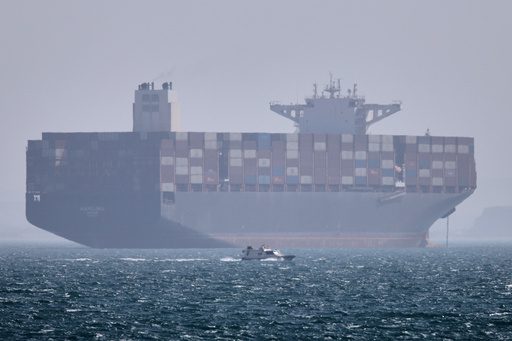
Iran has effectively sealed off the strait since late February’s surprise U.S.-Israeli attack, which killed Iran’s supreme leader and other bigwigs. Before that, around a fifth of the world’s oil — and gas moved through it. Now? Iran claims it lets some commercial vessels through—maybe two dozen daily, down from over a hundred. But they’re also charging tolls for some ships and have even set up a formal gatekeeper agency, the Persian Gulf Strait Authority. Naturally, that sparked another round of U.S. sanctions this week. The agency, ever the optimists, condemned the sanctions but saw them as a sign of its own “positive performance.” You can’t make this stuff up, sometimes.
And through it all, seven weeks into a ceasefire, both sides have been trading blows — and accusations. They haven’t gone back to full-blown war, though. They’ve just kept on talking, talking, talking. One big circle, ain’t it?
What This Means
Trump’s indecision isn’t just bureaucratic foot-dragging; it’s a deliberate play in a larger, deadlier chess match. Keeping the Strait of Hormuz bottled up creates immense pressure on global markets, specifically on the prices of oil and gas. This isn’t merely about the West; nations like Pakistan and India, with their massive energy demands and reliance on Gulf oil, are getting hit hard. Inflation, currency depreciation, and a squeeze on their trade balances—these aren’t abstract concepts but real economic headwinds that threaten regional stability and can ignite social unrest. For Tehran, this pressure tactic from Trump actually gives them more leverage in negotiations. Because the economic pain is global, it compels other actors to push for a resolution that might favor Iran’s demands.
Then there’s the nuclear ambiguity. Iran’s enriched uranium stockpile is a Damocles’ sword hanging over the entire Muslim world, really. Because any perceived progress toward a bomb sends jitters across the Middle East and could trigger a regional arms race. If Iran feels it needs missiles for concessions, as its negotiator claimed, it signals a deeper distrust that no mere ceasefire extension can bridge. It shows they’re negotiating from a position of perceived strength, not weakness—especially while a core strategic asset, the Strait, remains within their grasp. This isn’t just about an American president making a call; it’s about managing global volatility, averting a larger war, and stabilizing the foundational arteries of world commerce, all while an emboldened Iran tests the waters with cold, calculated moves. The stakes couldn’t be higher, and a simple [QUOTE_PLACEHOLDER] or “no” from the Oval Office feels light-years away.