


City’s Eleventh-Hour U-Turn: The Global Implications of Khadija Shaw’s Record Deal
POLICY WIRE — Manchester, England — Chaos, it turns out, often prefers a Sunday evening for its most dramatic unveilings. Or perhaps it’s just the natural habitat for last-gasp machinations in...

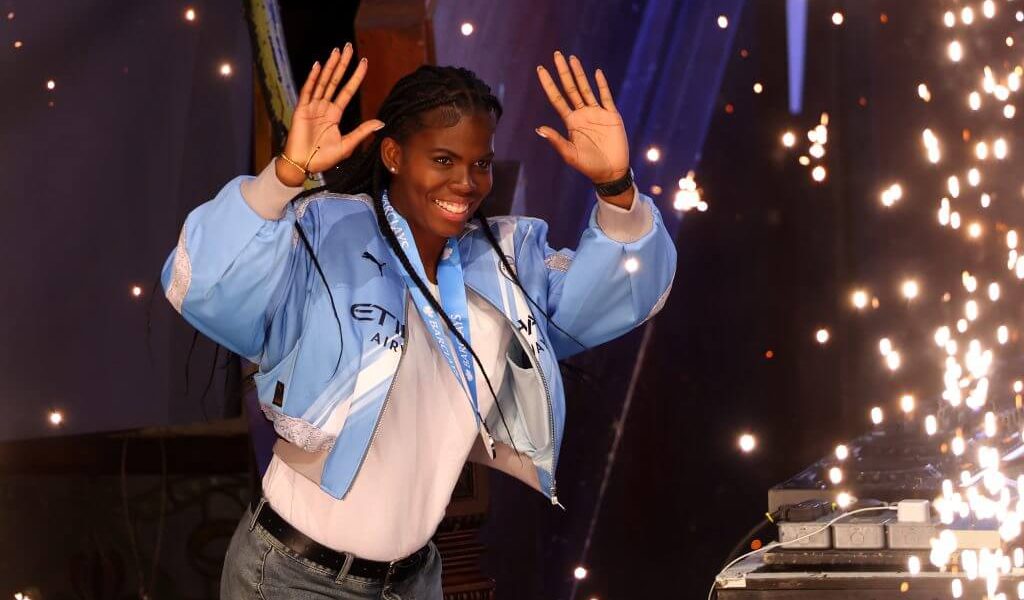
POLICY WIRE — Manchester, England — Chaos, it turns out, often prefers a Sunday evening for its most dramatic unveilings. Or perhaps it’s just the natural habitat for last-gasp machinations in professional sports. That’s precisely when Manchester City, having seemingly thrown in the towel on their star striker Khadija Bunny Shaw, dramatically reversed course, averting what many viewed as a looming institutional embarrassment. Moments before City’s joint trophy parade, an event intended to celebrate — not lament —, Shaw inked a four-year pact that not only keeps her in sky blue but, according to sources privy to the closed-door negotiations, crowns her the highest-paid women’s footballer globally.
It was a swift, almost ludicrous turn of events. Less than a month prior, Chelsea’s reported £1 million-a-year bid had seemingly pried Shaw away from the reigning Women’s Super League (WSL) champions. But leadership within City’s women’s team — namely Director of Women’s Football Therese Sjogran and Managing Director Charlotte O’Neill — refused to cede ground. And that tenacity, those quiet, persistent conversations, paid off spectacularly, rewriting not just a contract but, quite possibly, the script for women’s football economics.
No one, other than the players and those immediately involved in negotiations, knew a new deal was in the works at the time. Can you imagine? The entire spectacle unfolded with the precision of a state secret, shocking players and staff alike, leaving many to wonder about the internal fault lines. When news finally broke, the admission seemed to arrive in slow motion. Shaw herself stepped onto the Coop Arena stage, facing a bewildered crowd, to declare, “I’m still here, I’m still hungry and there’s no place I’d rather be.” The shock on many teammates’ faces emphasised just how remarkably quickly circumstances changed. It wasn’t just a contract; it was a coup, pulled off under the noses of everyone, even her closest confidantes on the squad.
But this wasn’t just about the personal preference of an exceptional talent; it was a colder, harder calculation. Shaw, born in Spanish Town, Jamaica, reportedly shoulders significant financial responsibilities for her family. Any package that could help her continue to support them was considered a significant influence. The initial refusal by City’s board to match Chelsea’s hefty offer — despite passionate appeals from Sjogran and O’Neill — raised eyebrows. This hesitation underscored a deeper tension: the struggle between recognising elite talent and maintaining a perceived wage structure, particularly in a sport where financial models are still finding their footing. The Women’s Super League’s new Financial Sustainability Regulations (FSR) cap total player wage bills at 80 per cent of a club’s standalone revenue, plus owner cash funding up to the higher of £4 million or 25 per cent of revenue. This regulatory framework often acts as a straitjacket, making extravagant outlays for individual players a boardroom headache.
And then the external pressure mounted. After all, we’re talking about one of the planet’s premier strikers — a three-time Golden Boot winner who’d notched 21 goals last season. Influential voices, including former City player Steph Houghton and Arsenal legend Ian Wright, didn’t hold back their criticism, especially at the prospect of Shaw joining a direct rival. The sheer noise reached a fever pitch. But perhaps that was the point where the board blinked. It’s hard to ignore public opinion when it’s roaring at you from every media outlet. Eventually, Sjogran and O’Neill gained the necessary support at the board level to formally continue negotiations, pushing the club’s often-conservative financial gatekeepers past their comfort zone. Because sometimes, political will, backed by popular sentiment and fierce internal advocacy, trumps even the most rigorously calculated spreadsheets.
This saga speaks volumes, not just for European football, but for the global sporting landscape. The idea that such high-stakes talent can dictate terms, even when clubs are wary of reshaping entire wage structures, is a compelling precedent. We see this dynamic play out across many sporting codes, from the English Premier League to the Pakistan Super League, where superstar athletes often become national symbols and, consequently, incredibly valuable assets who can, and do, demand deals that redefine economic norms in their respective leagues. It’s about valuing talent over strict adherence to archaic salary caps. This deal effectively says to young female athletes, from Karachi to Kingston, that their talent has a tangible, escalating global worth. For regions like South Asia, where investment in women’s sports, particularly football, has historically lagged, this sort of high-profile, record-breaking remuneration can, with some hope, fuel further engagement and financial backing. It’s about signaling the long-term investment, or at least the potential returns, of nurturing female talent globally.
As the market for women’s football expands, this episode highlights a crucial inflection point: clubs must either adapt their valuation of star players or risk being left behind in a talent arms race. Chelsea, for instance, refused to engage in a bidding war once City re-entered negotiations. That’s a gamble, even for a club that recently brought in Phil Radley as their women’s team sporting director, especially with key players like Catarina Macario and Sam Kerr having already departed. They’re now back in the market for a striker, facing a summer of recruitment headaches because they stuck to their initial offer. And for many in the game, Shaw’s deal was merely the first domino, a seismic jolt in what promises to be a very busy transfer window indeed. The butterfly effect? We’re only just beginning to feel its ripples, but they’re likely to travel far beyond Manchester.
What This Means
This last-ditch renegotiation isn’t just a fascinating football anecdote; it’s a sharp lesson in the political economy of modern sport, particularly as women’s leagues rapidly professionalize. It lays bare the delicate dance between institutional conservatism, market demand for star power, — and public pressure. City’s board initially resisted matching Chelsea’s offer, demonstrating a conventional reluctance to disrupt an established wage hierarchy for a single player. This stance, though financially prudent in a vacuum, completely misjudged the athlete’s true market value and the intense emotional capital invested in her by the fanbase and even her own teammates.
The swift public backlash and persistent internal lobbying from figures like Sjogran and O’Neill acted as a powerful counter-political force. It’s a classic case of public relations (and squad morale) overriding a strict financial directive. This incident reveals that in high-visibility sports, stakeholder sentiment—from fans to players—can possess a significant political weight, forcing recalibration of corporate strategy. It also highlights the growing economic power of top female athletes globally. Players like Shaw, with cross-cultural appeal, become more than just athletes; they’re brand ambassadors, talent benchmarks, and even cultural figures. Their remuneration now influences not only future contract negotiations in Europe but also the economic aspirations of aspiring athletes in developing sports markets around the world. The ‘market rate’ for elite female talent just got a serious upward adjustment, signaling to every club and federation that the days of underpaying for star power are rapidly fading into history. This sets a precedent that will undoubtedly echo through future wage negotiations in major leagues across the globe, from the WNBA to new, emerging football leagues in countries like India and Saudi Arabia.