


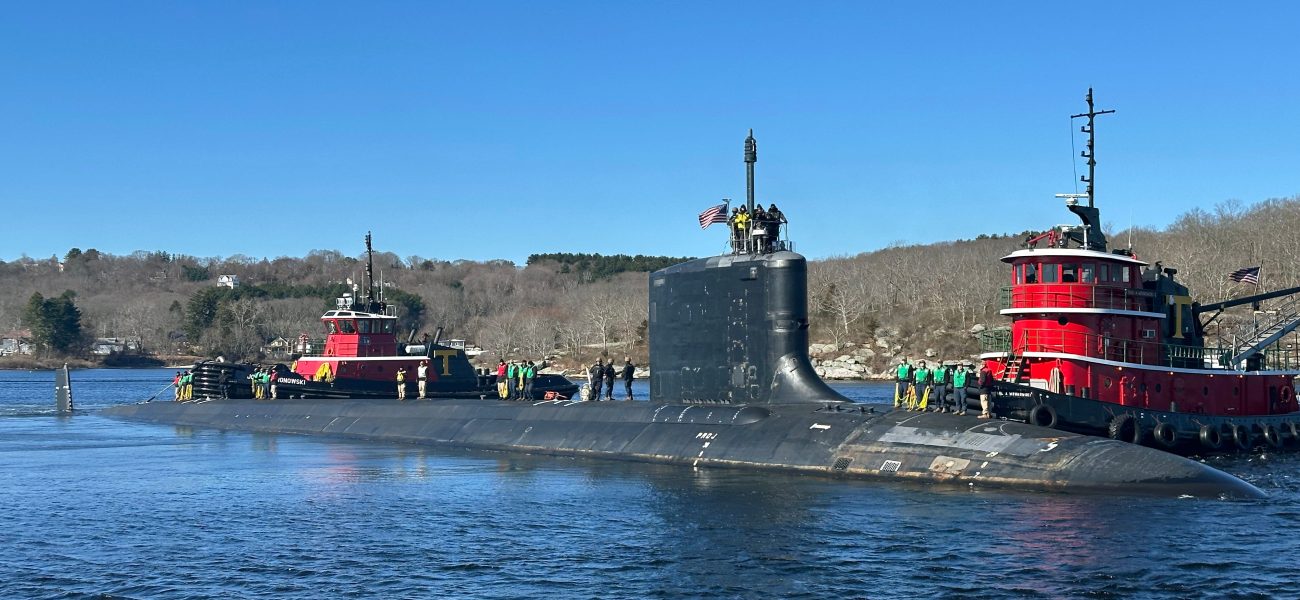
Silent Running: Shipyards Grapple as Next-Gen Craftsmen Chart New Courses
POLICY WIRE — Washington, D.C. — Building a submarine isn’t glamorous. It’s tight spaces, deafening noise, precision welding in cramped compartments, and the unforgiving clock of national...

POLICY WIRE — Washington, D.C. — Building a submarine isn’t glamorous. It’s tight spaces, deafening noise, precision welding in cramped compartments, and the unforgiving clock of national security. No wonder some fresh-faced apprentices, after years of intense training, are eyeing the exit, choosing the less-heroic—but far less taxing—embrace of daytime desk jobs or light manufacturing.
It’s a silent, grinding attrition. You don’t see picket lines or fiery speeches; you see empty workstations. This drift of young talent from the nation’s shipyards, ostensibly toward what many describe as simply [QUOTE_PLACEHOLDER], isn’t just a workforce management headache. It’s a systemic fracture forming beneath the surface of America’s defense industrial base, echoing challenges that aren’t exclusive to the West.
The premise is stark: an economy seemingly bursting with choice is allowing a critical, highly specialized workforce to erode. Forget the romance of deep-sea espionage; the day-to-day grind involves exacting work under immense pressure. It’s often shift work, often dirty, — and always mentally taxing. A supervisor for one major shipbuilding firm, speaking on background, summed it up perfectly: [QUOTE_PLACEHOLDER]. They’re getting the skills, certainly. But retaining them? That’s the real conundrum.
And it’s not like the allure of shipbuilding has completely vanished. Older generations still view it as a calling, a legacy. But modern recruits, conditioned by a more fluid job market and often burdened with student loan debt, are quick to weigh their options. The idea of trading a guaranteed union wage for, say, a software sales role with perceived better work-life balance isn’t outlandish to them. Even if it means fewer pension benefits, or a career path that offers less immediate national prestige.
This generational shift in labor priorities isn’t isolated. It’s a symptom. Data from the National Institute for Strategic Workforce Development reveals a 15% drop in shipbuilding apprenticeship retention over the last five years alone. Those aren’t just numbers; they’re highly trained individuals who’ve absorbed taxpayer investment now applying their exacting skills to constructing, say, ergonomic office chairs instead of deep-diving strategic assets. This exodus suggests a deeper societal disengagement with traditional, heavy industry, making the concept of national self-reliance feel increasingly theoretical.
Because let’s be honest, it’s not just about building submarines; it’s about sustaining the capacity to do so, a capacity which has atrophied significantly since the Cold War. There’s a tangible economic ripple effect, too. Less efficient shipyards mean project delays, cost overruns, and an increased reliance on an aging cohort of master craftsmen. When they retire, their tacit knowledge, gleaned over decades, often walks right out the door with them.
And you don’t have to look too far east to see this trend reflected. Many nations, particularly in regions like South Asia and the broader Muslim world, grapple with their own versions of this skilled labor drain. Pakistan, for instance, has long struggled with retaining its highly educated and technically proficient individuals, many of whom seek opportunities in the Gulf states, Europe, or North America. Whether it’s medical professionals or skilled engineers—professions that demand rigorous training and intense dedication—they’re often enticed by prospects offering less demanding environments or better economic security elsewhere. It’s a quiet but relentless bleeding of institutional knowledge that impedes indigenous industrial growth and sovereign technological advancement, whether for advanced weaponry or critical infrastructure projects. The broader implications for these regions are often obscured, but no less profound.
The defense sector often finds itself in this bind: it needs top-tier talent for highly specialized, often unpleasant work, yet competes with a booming service and tech economy that offers comparatively cushier gigs. Policy makers are aware, they say. Recruitment drives are everywhere. Training programs? They’re constantly being revamped. But the fundamental disconnect—the perceived value versus the actual burden—remains a gaping chasm.
What This Means
This isn’t just about whether we’ll have enough submariners; it’s about the erosion of a nation’s fundamental industrial backbone. Politically, a weakened defense industrial base makes geopolitical maneuvering tougher and threatens long-term security. A reliance on an aging workforce for complex, sensitive military projects means that maintaining a technological edge, or even replacing obsolete systems, becomes an increasingly risky and prolonged affair. Economically, this drift implies not just inefficiency in defense spending but a broader de-industrialization that prioritizes low-friction service jobs over demanding, wealth-generating manufacturing. It hints at a national priorities reordering—perhaps inadvertently—where comfort trumps competence, at least in the trenches. It’s a mirror reflecting Silicon Valley’s own labor challenges, but with far greater national security ramifications.
Ultimately, the departure of these young, skilled hands isn’t merely a statistic on a human resources spreadsheet. It’s a strategic retreat from the grittier realities of maintaining global power, leaving older, more committed generations to plug the ever-widening gaps in a crucial—yet increasingly thankless—domain.