


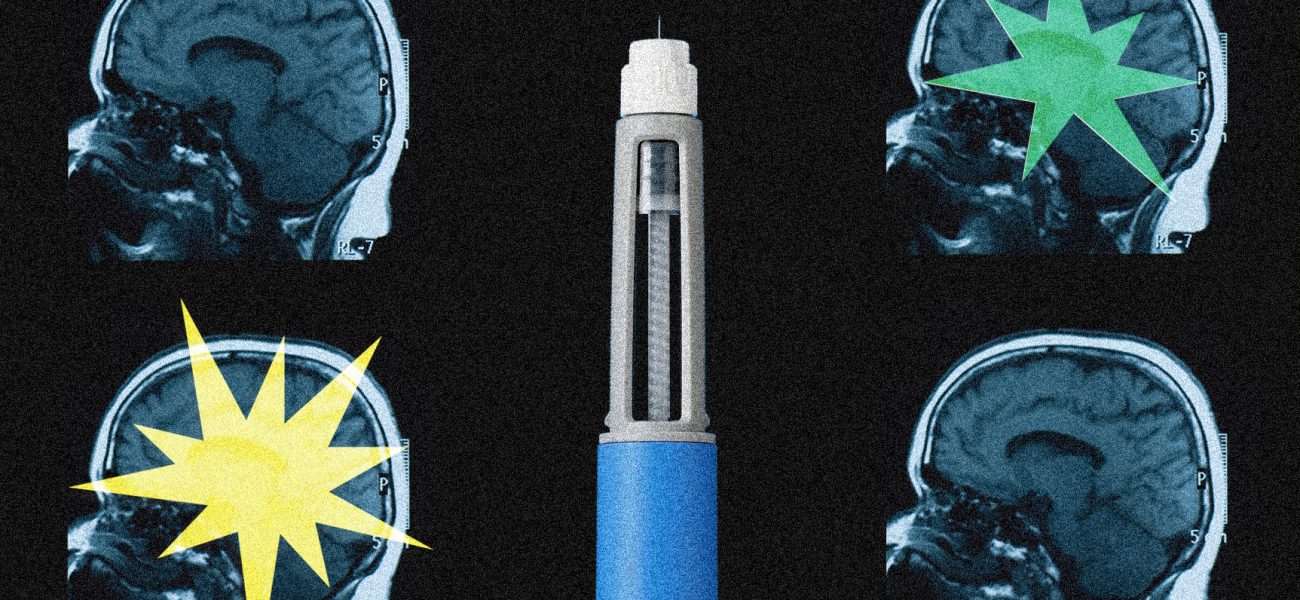
Ozempic’s Enigmatic Enigma: A Deep Dive into the Drug’s Potential Neural Revisions
POLICY WIRE — Washington, D.C. — It started as a diabetes treatment, then exploded into a societal phenomenon—a convenient solution for an inconvenient truth. But now, it turns out, the blockbuster...

POLICY WIRE — Washington, D.C. — It started as a diabetes treatment, then exploded into a societal phenomenon—a convenient solution for an inconvenient truth. But now, it turns out, the blockbuster drug affectionately (or perhaps, cautiously) known as Ozempic might be doing far more than just trimming waistlines. Some aren’t just losing pounds; they’re also, quite unexpectedly, pondering its potential to fundamentally tinker with the very architecture of their gray matter.
Yeah, you heard that right. Scientists say this pharmaceutical juggernaut—that’s already revolutionized conversations around obesity and self-image globally—may be quietly orchestrating changes within the brain. It’s a proposition that sends shivers down the spine of public health experts and, frankly, anybody who thinks the mind ought to be left well enough alone. We’re talking about a chemical key that doesn’t just unlock metabolic pathways; it might be fiddling with the control panel upstairs, and nobody’s quite sure what all the switches do.
It’s not just a matter of appetite suppression anymore, folks. The mechanism by which drugs like Ozempic (semaglutide, for the pharmacologically inclined) engage the brain has always been an area of keen interest. But the scope of that engagement? That’s what’s keeping researchers up at night. They’re now observing—or at least strongly theorizing—that these GLP-1 receptor agonists aren’t just telling your stomach you’re full. They might be recalibrating other neural networks, impacting things beyond simple caloric intake. Some speculate about mood, about cravings divorced from hunger, about even broader cognitive shifts. But how far do these effects extend? And, more importantly, are they permanent? There’s still a whole lot of head-scratching going on, as the scientific community races to understand the complete picture of this molecular puppeteer.
Consider the broader global implications, especially for regions like South Asia. Countries like Pakistan, for instance, are wrestling with rapidly increasing rates of type 2 diabetes and obesity—a direct consequence of shifting dietary patterns, sedentary lifestyles, and easy access to ultra-processed foods. Access to advanced, expensive drugs like Ozempic remains a luxury for many in these developing economies, creating a stark healthcare disparity. While the Western world grapples with potential cerebral remodelling from these wonder drugs, much of the Muslim world struggles simply to afford basic diabetes management, let alone the latest cutting-edge pharmaceuticals. It’s a sharp contrast, really: some worrying about their neurons, others just trying to get their hands on affordable insulin.
But back to the brain. Because here’s the thing, the implications for global public health strategy are monumental. If a drug that’s now routinely prescribed for weight loss or diabetes management also influences mental processes in unanticipated ways, then what? What are the ethical quagmires? The long-term societal ramifications? The discussions aren’t merely about side effects like nausea or gastrointestinal discomfort; they’re about potentially altering fundamental aspects of human behavior and cognition. It’s an unnerving prospect, particularly when the long-term data remains somewhat, well, hazy. [QUOTE_PLACEHOLDER] as one analyst grimly put it, highlighting the sheer unknowns.
The market for these drugs isn’t small. According to reports from the World Health Organization, over 1 billion people worldwide were classified as obese in 2022. That’s a massive demographic staring down the barrel of health complications. And, frankly, pharmaceutical companies are banking on it. Sales projections for GLP-1 agonists are through the roof. This isn’t just about healthcare anymore; it’s a multi-billion-dollar economic engine, churning out revenue while simultaneously reshaping individual bodies—and perhaps, now, minds.
And it’s a conversation that can’t be brushed under the rug, not when so many people are either taking these meds or contemplating starting them. We’re on the cusp of something here, something big — and brainy. You can’t just slap a weight-loss label on something that might be rewriting fundamental operating instructions within our heads. It’s too important. Think of the sheer volume of humanity that could be (and already is) undergoing these subtle internal shifts. What does it mean for decision-making? For stress responses? Nobody’s got the definitive answer yet. It’s a fascinating, terrifying scientific frontier.
What This Means
The possibility of Ozempic subtly—or not-so-subtly—rewiring the human brain introduces a tangled web of political and economic consequences that policymaker’s really aren’t prepared for. On the economic front, you’ve got an already booming pharmaceutical sector that stands to make even more astronomical profits, potentially sparking new investment in neuroscience and behavioral pharmacology. But it also means ballooning healthcare costs for public systems and insurance providers worldwide, especially if long-term neurological monitoring becomes necessary. Imagine the legal battles over alleged cognitive impacts, for one. And what about drug pricing? Nations like Pakistan are already grappling with complex financial struggles—issues from drought to inflation are constantly at play—adding another costly, brain-altering medication into their public health calculus feels almost unfair.
Politically, the ramifications are equally sticky. Governments will face immense pressure to fund further research into these neurological effects. Regulatory bodies like the FDA will need to tighten approval processes or mandate more extensive, longer-term studies on mental and behavioral health outcomes—a process that’s slow, expensive, and often politically charged due to powerful lobbying from pharmaceutical giants. It’s not just about managing an obesity epidemic anymore; it’s about navigating a potential population-level neurological experiment. consider the societal impact: if subtle personality or cognitive shifts become more widespread, how does that influence workplace productivity, social interaction, or even political discourse? It’s a science fiction scenario nudging itself into reality, — and policymakers don’t have a playbook for this one. They’ll have to develop it on the fly, likely under extreme duress from various stakeholders. That’s always a good sign, isn’t it?