

The Capitol Kicker: How a College Coach’s Move Sent Congress Scrambling
POLICY WIRE — Washington D.C., USA — It’s a rare day indeed when the sprawling machinery of Capitol Hill pauses its endless machinations over debt ceilings, geopolitical tremors, or inflation...

POLICY WIRE — Washington D.C., USA — It’s a rare day indeed when the sprawling machinery of Capitol Hill pauses its endless machinations over debt ceilings, geopolitical tremors, or inflation figures to — for lack of a better phrase — address a football coach’s itinerary. Yet, here we’re. When the Senate, that chamber of sober second thought, starts drawing legislative lines in the sand over a guy skipping town from one gridiron gig to another mid-season, you’ve gotta wonder: what in God’s name is actually going on?
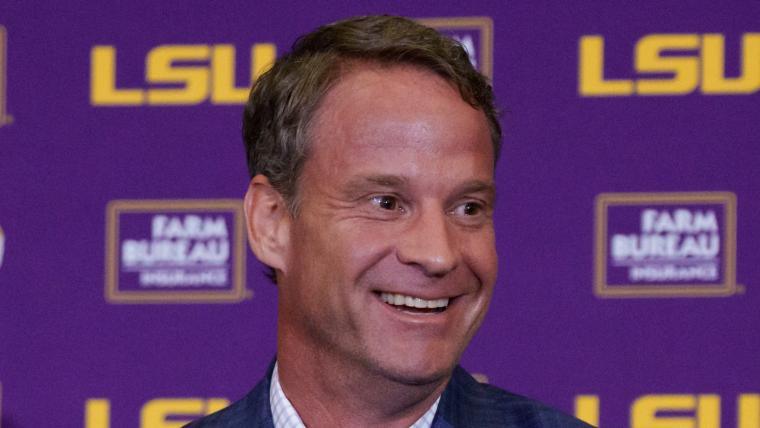
It wasn’t a matter of national security, nor some pressing economic crisis. The ‘culprit’? Lane Kiffin, the perpetually unsettling maestro of college football theatrics, whose move from Ole Miss to LSU in November 2025 sent tremors so profound they apparently echoed all the way to the marble halls of Congress. Some folks were genuinely beside themselves, couldn’t quite fathom it. You could practically hear the collective teeth-gnashing echoing across the South.
But the true measure of a man’s disruptive genius isn’t just in making rivals mad; it’s when the institution itself feels compelled to re-write its bylaws because of you. And Kiffin, love him or hate him, has pulled it off. Tucked into the recently proposed ‘Protect College Sports Act,’ a bipartisan legislative effort helmed by Senator Ted Cruz (R-TX) and Senator Maria Cantwell (D-WA), is a provision informally dubbed the ‘Lane Kiffin Rule.’ It’s stark: coaches can’t bail on a team before the season ends. Violate it, — and you’re benched for the next season. Harsh, right? Seems a bit much for a glorified job hop, even a high-stakes one.
Senator Cruz, ever the champion of institutional integrity (and no stranger to a robust defense), commented, “College football isn’t just a game; it’s an institution, a pillar of communities. When individuals act unilaterally to the detriment of student-athletes and established programs, Congress has a role to ensure fairness. This rule isn’t punitive; it’s about safeguarding the sport’s traditions and the young men who commit to their teams.” His counterpart, Senator Cantwell, offered a slightly different angle, “We’re seeing unprecedented changes in collegiate athletics. This bill, and this provision, represents an attempt to bring some much-needed stability, particularly for student welfare. Players deserve consistency, and coaches hold a unique position of trust that shouldn’t be exploited for opportunistic career moves.”
This isn’t about Kiffin being particularly evil; it’s about the sport, and perhaps society at large, wrestling with the sheer pace of change. Kiffin just happened to be the one who ripped off the band-aid. The college football landscape, thanks to Name, Image, and Likeness (NIL) and the transfer portal, has become a wild west show. In 2023 alone, the NIL market for FBS football programs was projected to be worth over $800 million, according to data from On3.com/nil/tracker. That’s a staggering figure, money changing hands like never before, largely outside the NCAA’s increasingly toothless regulatory grasp. And this ‘rule’ by Congress? It’s less about Kiffin — and more about a desperate grasp for control.
Because, honestly, this entire saga plays like a Bollywood epic, brimming with melodrama — and unexpected twists. A few years ago, we were dissecting political intrigue emanating from provincial legislative bodies in Pakistan – a perpetual dance between established political dynasties and ambitious new entrants challenging the status quo. Bureaucratic hurdles, shifting loyalties, the raw struggle for power; it’s not so different, is it? Just trade the parliament for the football field, — and the voting blocks for recruiting classes. The underlying dynamics of power and defiance remain startlingly universal. This is Kiffin, perhaps unwittingly, enacting a power play that would make many a South Asian political operative nod in quiet recognition. It isn’t just a coach leaving for more green pastures; it’s a profound challenge to an established order.
📄 POLICY WIRE WHITEPAPER PUBLISHED: PAKISTAN'S NATIONAL SECURITY POLICY PRIORITIES
👉 READ BY CLICKING HEREKiffin, for his part, learned a few hard lessons watching the NCAA essentially decimate Pete Carroll’s USC dynasty a decade and a half ago. Carroll, his mentor, left for the NFL just before the hammer fell on USC due to infractions linked to Reggie Bush — essentially, an early form of NIL. Kiffin spent years bouncing around, figuring out the system from the inside. He watched. He waited. He observed the chinks in the NCAA’s armor, then he exploited them, not by cheating, but by playing the new game better than almost anyone. He didn’t break rules; he simply optimized the available pathways. And they hated him for it.
What This Means
This “Lane Kiffin Rule” — assuming it passes — is less a viable solution and more a legislative tantrum. Politically, it signals a deeper federalization of college sports governance, an arena traditionally ceded to the NCAA. It’s a move that risks overreach, turning coaching hires into federal cases. And if federal bodies get too deep in the weeds of athletic scheduling — and contract specifics, where does it end? This also sets a peculiar precedent: do we draft legislation every time an industry experiences a market shift it doesn’t like? The economic implications are also far-reaching. By trying to shackle coaching mobility, the bill attempts to legislate against natural market forces, creating a distorted landscape where high-demand talent might seek out situations that skirt these rules, or simply stay put, possibly diminishing the competitiveness players seek. The market is ruthless, as any college sports enthusiast knows. Ultimately, it won’t stop the flow of talent or money; it’ll just make the process messier, possibly driving it underground or creating more loopholes to navigate.
The system, for all its pretense of righteousness, often acts only in its self-interest. And this legislative push feels precisely like that: an attempt to rein in a problem born of an inability to adapt. It’s a reactionary measure, designed to slam the barn door long after the prized stallion bolted for greener pastures. Kiffin simply made a career decision, a highly strategic one at that. That the government felt compelled to get involved isn’t a knock on him. No. It’s evidence they’re getting outplayed. And that’s the ultimate compliment, isn’t it?