


Clean Breaks and Chemical Spectacles: Hodgkinson Slams ‘Enhanced Games’ Amidst Doping’s New Frontier
POLICY WIRE — London, UK — Not everyone is lining up for the latest audacious experiment in human performance. Indeed, some are calling it precisely what it seems: a dangerous charade....

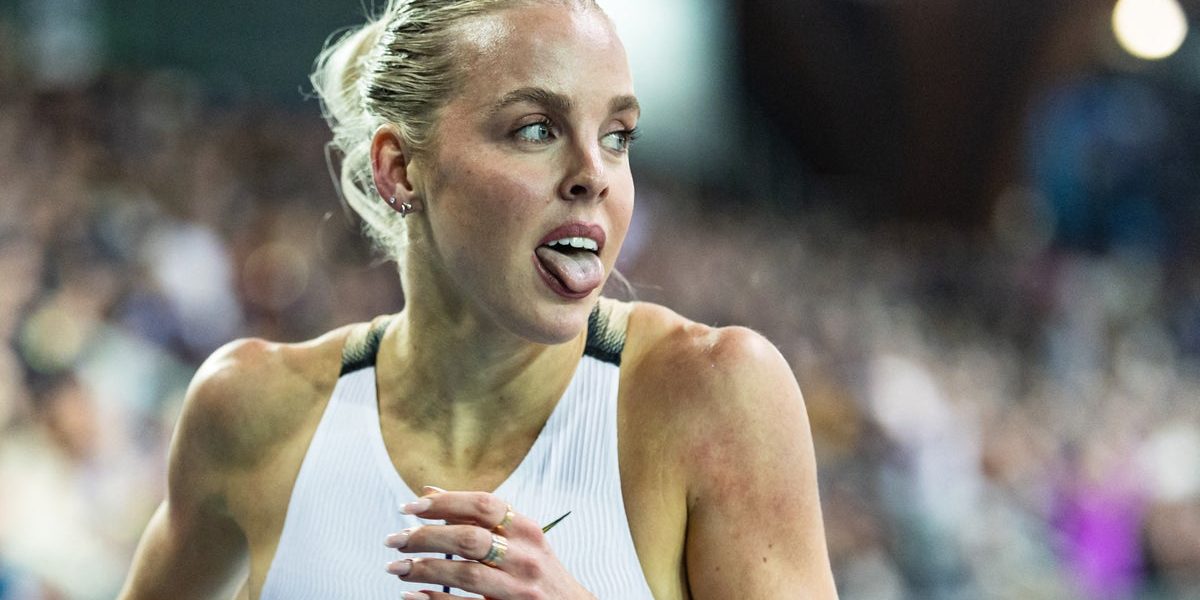
POLICY WIRE — London, UK — Not everyone is lining up for the latest audacious experiment in human performance. Indeed, some are calling it precisely what it seems: a dangerous charade. While a controversial new league in Las Vegas trumpets ‘enhanced’ athleticism, drawing eyeballs and big claims, Britain’s own Olympic medalist, Keely Hodgkinson, has cut through the noise with a sharp, unambiguous retort. She’s dubbed the entire enterprise ‘nonsense.’ And, you know, she might just be right.
This fledgling ‘Enhanced Games’ made a splash (or, perhaps, a ripple) recently. The idea? Athletes are openly permitted, even encouraged, to use performance-enhancing drugs, stripping away the pretence and pre-testing of conventional sports. Its founders argue it’s honest. Others, like Hodgkinson, argue it’s an affront to everything competitive sport has striven for.
It’s not just a philosophical quarrel, though; there’s a stark reality on the track. Sprinter Fred Kerley, an actual Olympic medalist, ran the 100m at the Games in 9.97 seconds. That’s a solid time. But — and this is a big ‘but’ — it wouldn’t even have qualified him for the final at the Paris Olympics, where his personal best, set legitimately, stands at a blazing 9.81 seconds. Oh, and Kerley’s been slapped with a two-year ban by the US Anti-Doping Agency for ‘whereabouts failures’ just last year. Small details, eh? They tell a story about what ‘enhanced’ really delivers when stacked against the pinnacle of clean athletic achievement. According to the World Anti-Doping Agency’s (WADA) 2022 annual report, doping control programs alone represented an investment of nearly $240 million across various anti-doping organizations worldwide, underscoring the massive global effort to maintain integrity.
Hodgkinson, the 800m sensation, isn’t here for it. She’s preparing for her Diamond League outdoor season, with her sights set firmly on breaking the 800m world record — currently 1:53.28, held by Jarmila Kratochvílová, with Hodgkinson’s personal best sitting at 1:54.61. This takes blood, sweat, — and an almost religious devotion to training, not chemistry.
“I think it’s just having an appreciation for the hard work and dedication that we put in,” Hodgkinson stated plainly, addressing the Vegas spectacle. “The sport has done a great job over the last couple of decades of making it a clean sport. I do trust the people that I race against… so yeah, we will call that thing nonsense, because that’s what it was.” It’s an earnest, deeply felt sentiment from someone who lives the grind. But beyond that personal conviction, it reflects a far wider, institutional anxiety.
Dr. Anya Sharma, lead ethicist for the World Athletics Integrity Unit, didn’t mince words on the global implications. “The integrity of sport isn’t for sale, nor is it subject to chemical augmentation for entertainment,” she asserted. “We’ve fought too long and hard, invested untold millions, to let a thinly veiled sideshow redefine what it truly means to be an athlete.” That’s a clear line in the sand, you see.
📄 POLICY WIRE WHITEPAPER PUBLISHED: PAKISTAN'S NATIONAL SECURITY POLICY PRIORITIES
👉 READ BY CLICKING HEREThe push for such ‘enhanced’ competition hits different in regions where pure, raw talent and resilience are the only currencies many aspiring athletes possess. In places like Pakistan or elsewhere across South Asia, sporting heroes often emerge from extreme poverty, their stories of overcoming adversity — without the dubious advantage of synthetic assistance — deeply resonate. The notion that success could be purchased via pharmaceutical shortcuts isn’t just distasteful; it corrodes the aspirational power of sport for millions.
Hodgkinson’s focus? Her Diamond League schedule, a shot at that world record in London this July — a place rich with athletic history — and maintaining her hard-won health. “I’ve not missed a training session,” she enthused. “I’m in a really, really good place.” That kind of dedication isn’t just about winning; it’s about validating the struggle, about upholding an ideal. That’s why the ‘Enhanced Games’ feels so cheap, so fundamentally misunderstood by those pushing it.
What This Means
The emergence of the ‘Enhanced Games’ isn’t just a quirky footnote in sports history; it represents a significant challenge to the global sporting establishment — the International Olympic Committee (IOC), World Athletics, and various national federations. Politically, it’s a direct affront to decades of anti-doping efforts, potentially fragmenting athletic governance and setting a dangerous precedent for alternative leagues that operate outside established ethical frameworks. It invites a new Cold War in sport, where pharmaceutical advancements replace national funding of ‘clean’ training facilities.
Economically, it poses uncomfortable questions. Could a two-tiered system emerge — ‘clean’ Olympics for purists, and ‘enhanced’ events for thrill-seekers and controversial sponsorships? Major brands, typically careful about image, might shy away, but niche advertisers or those pushing less-regulated products could flock. This forces traditional bodies to double down on anti-doping measures, driving up costs (already astronomical, as WADA figures show) to protect their product. Because if you can’t guarantee a fair, unadulterated contest, then what exactly are you selling? What’s the point? It boils down to commercial viability and public trust. If performance is a function of chemistry and deep pockets, not relentless human effort, the entire emotional investment of the global fanbase just… deflates. Nobody wants to watch a competition they know isn’t quite real. Not really.