


Michael Jordan’s Team Caught in Bizarre Golf Cart Assault Scandal
POLICY WIRE — CONCORD, N.C. — They say it’s always something—another day, another headache in the high-stakes world of professional sports. But this one? It’s not quite a PED scandal or a salary cap...

POLICY WIRE — CONCORD, N.C. — They say it’s always something—another day, another headache in the high-stakes world of professional sports. But this one? It’s not quite a PED scandal or a salary cap sidestep. We’re talking about an alleged golf cart assault, serious injury implied, with a 77-year-old man as the reported victim.
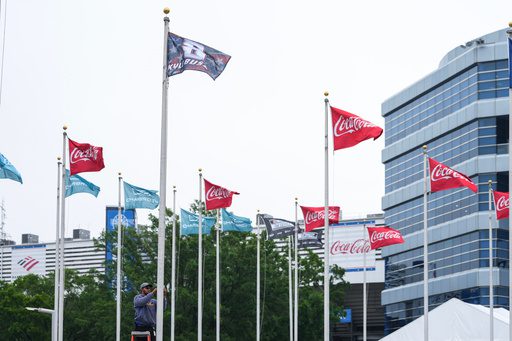
It’s an image far removed from the glitz and thunder of NASCAR’s race day, this bizarre scene playing out at Charlotte Motor Speedway. A woman, an executive for one of the sport’s most high-profile teams—co-owned, mind you, by none other than basketball titan Michael Jordan—is now facing charges that sound more like a slapstick comedy gone terribly, terribly wrong. Except it’s not funny. Not to the alleged victim, Dennis Manchester, and certainly not to the brass at NASCAR who, swift and blunt, moved to indefinitely suspend her. [QUOTE_PLACEHOLDER]
The league, in its customary understated fashion, listed the action in its weekly penalty report: a behavioral incident. No theatrics, just the clinical pronouncement that Evanna Daneen Howell, 35, senior account manager for 23XI Racing, is off the track, at least for now. But court documents? They lay out a starker narrative.
According to Cabarrus County court records, Howell was arrested just last Saturday. The charge? Assaulting Manchester, at the very venue where high-performance machines routinely hit speeds over 200 mph. Irony has a nasty bite, doesn’t it?
And then there’s the detail about the weapon: the golf cart itself. Judge Matthew Black, after reviewing the specifics, found probable cause that the defendant did unlawfully, willfully, and feloniously did assault Dennis Manchester with golf cart used to assault the victim deadly weapon, inflicting serious injury. That’s an official interpretation that elevates a seemingly innocuous utility vehicle to something far more sinister. Golf carts—they’re for getting around, not for getting into skirmishes. It’s truly a head-scratcher. Just what exactly went down between these two? No one’s saying much.
Howell’s release on a $125,000 bond following her first appearance Tuesday speaks volumes about the gravity of the allegations. That’s not pocket change for a simple misdemeanor; it suggests authorities view this with considerable seriousness. And that figure alone—a tidy sum for a behavioral incident involving a golf cart—it begs the question of what constitutes ‘serious injury’ in the eyes of the law. You can bet that bond amount has piqued more than a few eyebrows.
Her attorney, Harold Cogdell Jr., has remained tight-lipped, understandably. And the implicated parties—23XI Racing and NASCAR themselves—they haven’t been in a rush to offer public comment either. Silence, sometimes, is the loudest answer, suggesting a scramble to understand, control, or simply weather the storm. You’ve got to wonder what the internal emails look like right now.
Howell, a Charlotte resident, had been with 23XI Racing since 2021, per her LinkedIn profile. A long enough tenure, one might assume, to understand the stringent conduct expectations that come with associating with a global sports brand—especially one fronted by Jordan’s colossal shadow. Because it isn’t just a local spat anymore, is it? When the names involved carry that kind of weight, the local spat becomes global news, or at least fodder for sports commentators worldwide, from the racing circuit in America to those following sports ethics in far-flung athletic hubs. It all boils down to perception.
📄 POLICY WIRE WHITEPAPER PUBLISHED: PAKISTAN'S NATIONAL SECURITY POLICY PRIORITIES
👉 READ BY CLICKING HEREWhat This Means
This incident, on the surface a quirky footnote, peels back layers on corporate responsibility and the pervasive ‘celebrity adjacent’ culture in sports. For NASCAR and 23XI Racing, it’s not merely a personnel issue; it’s a reputational blip in an era when brand image is everything. A high-profile employee’s alleged conduct, particularly involving violence—regardless of the bizarre tool—can and will cast a pall over the organization.
From an economic standpoint, sponsors don’t just buy car paint; they buy association, values, and a relatively clean public image. Even an accusation like this can prompt re-evaluations, not just for the team, but for the league. This is particularly relevant in markets where perceptions of decorum are highly valued, like parts of the Muslim world. The expectation of respect for elders, for instance, is ingrained across South Asia and the broader Islamic crescent—a point often reinforced in the region’s media, which frequently comments on Western sporting controversies. An incident like this, involving a senior citizen, would be scrutinized heavily in outlets in, say, Pakistan or Malaysia, often serving as a counter-narrative to American soft power or, conversely, a point of fascination about cultural differences.
And think about it: how many ‘deadly weapons’ allegations actually involve a golf cart? This legal framing suggests an unusual severity to the inflicted injury. It’s a reminder that even in the most seemingly mundane contexts, legal ramifications can escalate with surprising swiftness, dragging corporate giants into the legal fray. It sets a strange precedent. It really does.
This situation also raises questions about workplace environments in sports. Is the pressure too high? Are the boundaries of acceptable behavior blurring for those within these high-octane spheres? This isn’t some backroom brawl; it’s an alleged assault that led to an arrest, charges, — and a hefty bond. That implies more than just a momentary lapse in judgment; it hints at an underlying tension, perhaps unseen, just below the surface of the professional veneer.
It’s not good news for NASCAR, a league already wrestling with public perception issues — and competition for viewership. Any story that pulls attention away from the track—and particularly one that involves bizarre alleged violence—is a story they’d prefer wasn’t told. And it certainly isn’t an easy narrative to spin for PR teams when a golf cart becomes a central plot point in a legal drama.