


Digital Desert: New Mexico’s Arid Land Clashes with Thirsty Data Centers
POLICY WIRE — Santa Fe, N.M. — It’s a cruel irony, this march towards an ever-more-connected world: the very digital infrastructure we crave increasingly siphons off physical...

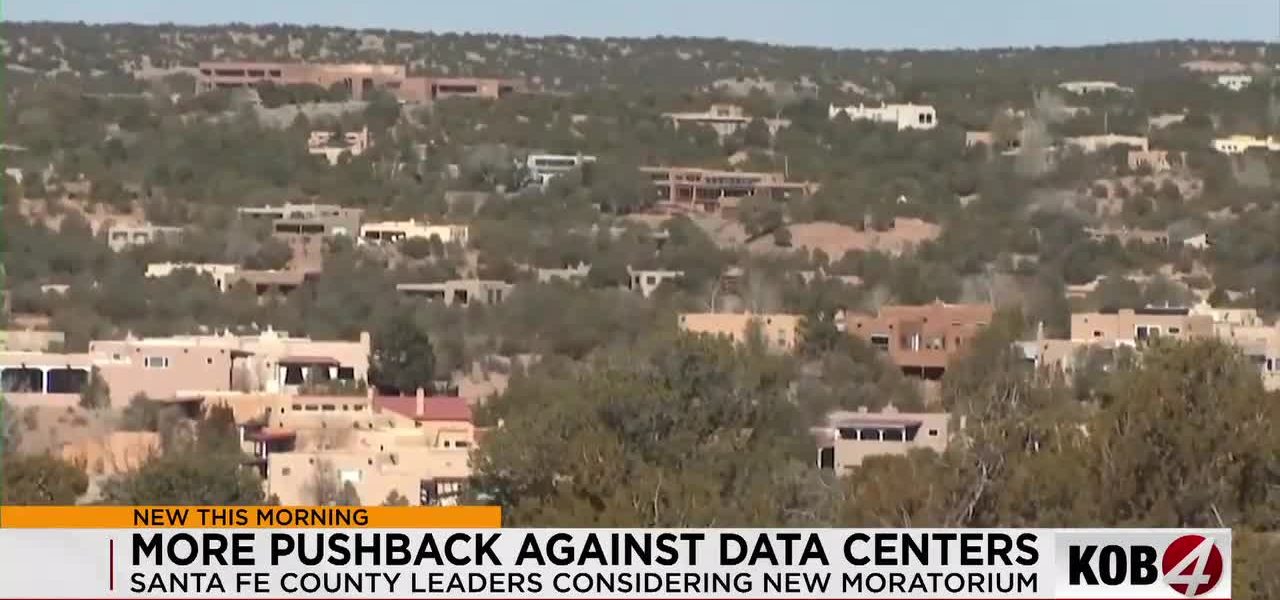
POLICY WIRE — Santa Fe, N.M. — It’s a cruel irony, this march towards an ever-more-connected world: the very digital infrastructure we crave increasingly siphons off physical resources, sometimes in places that simply can’t spare them. Up in the arid stretches of New Mexico, local leaders aren’t just mulling over broadband access; they’re wrestling with the profound, thirst-quenching footprint of the internet itself. Santa Fe County, in a surprisingly proactive maneuver, is eyeing a year-long freeze on any new data center developments. And for good reason, because this isn’t just some local dust-up; it’s a dry run (pardon the pun) for conflicts bubbling up from the high desert to bustling, tech-driven metropolises worldwide.
While no looming server farms currently dot Santa Fe’s pristine landscape, county commissioners aren’t waiting for a corporate proposal to land on their desks. They’ve seen the spectacle down south in Doña Ana County, where ‘Project Jupiter’ — an ambitious yet divisive data hub — stirred up a hornet’s nest of local opposition. And that’s exactly why they’re charting a course for land use regulations — and stricter environmental guidelines now. “We’ve got to get ahead of this, don’t we?” quipped Commissioner Anna Gutierrez, known for her sharp-elbowed defense of local land rights. “Waiting until a project’s been announced? That’s like locking the barn door after the digital horses have bolted. We’re stewards of this land, — and that includes its precious water. We aren’t a blank check for Big Tech.”
This preemptive strike isn’t an isolated incident. Socorro County, just down the historic Camino Real, faces Green Data’s proposed 10,000-acre behemoth — a sprawling compound integrating servers with a vast solar array. The local pushback has been fierce, centered squarely on water scarcity. Because when the Rio Grande, an artery to an entire region, runs dry in Albuquerque for stretches, questions about water-intensive industrial developments suddenly become existential. You see the concern; it’s just plain common sense.
Across the country, the narrative feels eerily similar, just dressed in different environmental garb. Bernalillo County has already shored up its defenses with new guardrails for these projects, while El Paso has put forth a draft plan to manage data center regulations within city limits. Then, barely a whisper on the wire, New Jersey Governor Mike Sherrill — often seen as a champion of tech innovation — unveiled a multi-year, four-pillar plan designed to temper the impacts of data centers in his densely populated state. “We simply can’t allow unchecked growth, not even in an industry as transformative as data services,” Sherrill remarked recently to Policy Wire. “Our communities deserve both progress — and protection. That balance isn’t easy, but it’s our job to find it, even if it means slowing the pace for a bit.”
Indeed, a typical large data center — the kind hosting your cloud photos or streaming binges — can gulp down 1 to 2 million gallons of water daily for cooling, equivalent to the consumption of a small city of 10,000 to 20,000 people, as highlighted by a recent study from the U.S. Department of Energy. And these are the hard numbers, the inconvenient truths we’re wrestling with.
📄 POLICY WIRE WHITEPAPER PUBLISHED: PAKISTAN'S NATIONAL SECURITY POLICY PRIORITIES
👉 READ BY CLICKING HEREWhat This Means
The pushback in New Mexico and beyond isn’t simply a localized case of ‘not in my backyard.’ It’s a bellwether for a deeper, more fundamental conflict emerging between the demands of the digital economy and the finite resources of our physical world. Politically, we’re seeing local governments, long incentivized to attract job-creating enterprises, flexing newfound muscles against industries that bring fewer direct jobs than the infrastructure they consume. This shift suggests a more discerning approach to economic development, one that increasingly weighs environmental costs — particularly water and energy — against perceived benefits. The economic implications are also rather obvious; an outright moratorium could deter tech investment in the short term, but it might force developers to innovate towards more sustainable cooling solutions, perhaps even driving investment into regions with more abundant resources. Or, quite possibly, it could encourage distributed data solutions that reduce single-site impact. This isn’t a fight against technology; it’s a re-evaluation of its cost.
But the reverberations stretch far beyond the American Southwest. Consider Pakistan, for instance, a nation grappling with both chronic water scarcity — driven by climate change, poor infrastructure, and a rapidly growing population — and a fervent desire to accelerate its digital transformation. For places like Karachi or Lahore, where electricity is often unreliable and groundwater sources are strained, the concept of a massive data center carrying a multi-million gallon-a-day water footprint becomes not just economically questionable but practically impossible. These debates in New Mexico, then, aren’t just about preserving the desert ecosystem; they’re a microcosmic example of a global quandary. How do we ensure equitable access to the digital future without draining the present of its very lifeblood? The conversations currently unfolding in Santa Fe, New Jersey, and beyond aren’t merely local policy matters; they’re chapters in a looming global dialogue about sustainable technology.