


The Salty Mirror: India’s Solar Utopia or Desert’s Industrial Scar?
POLICY WIRE — New Delhi, India — The salt plains used to whisper ancient stories of trade routes and hardy resilience under the relentless sun. Now, they hum. Not with the wind or the distant drone...

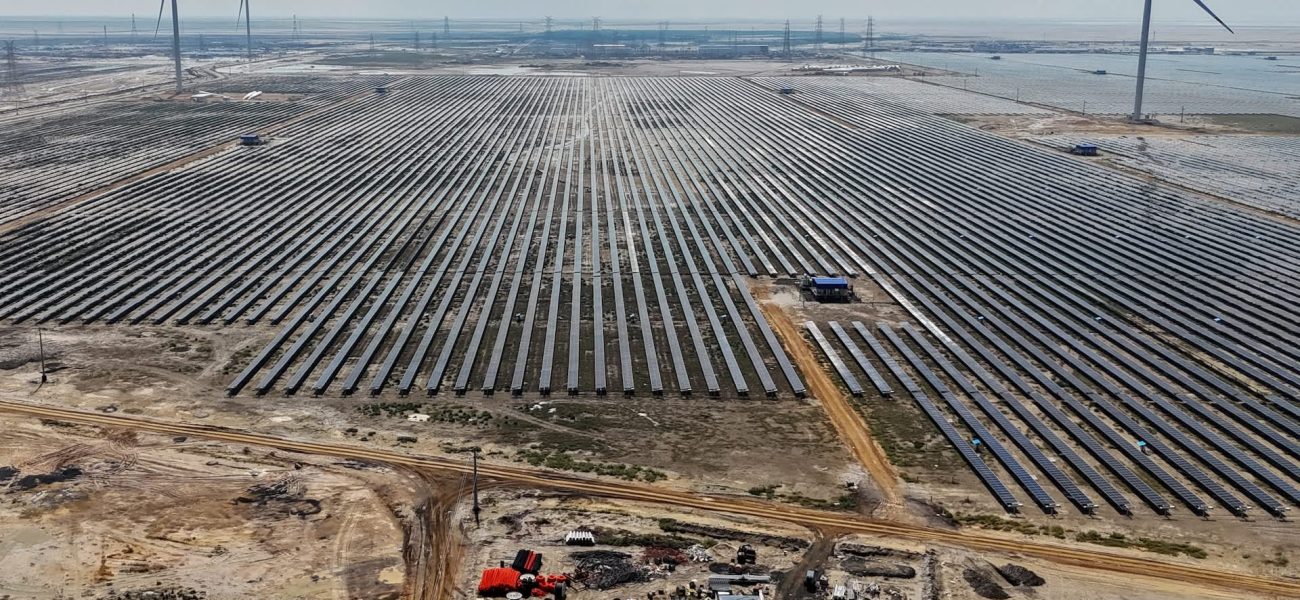
POLICY WIRE — New Delhi, India — The salt plains used to whisper ancient stories of trade routes and hardy resilience under the relentless sun. Now, they hum. Not with the wind or the distant drone of a shepherd’s song, but with the quiet, unyielding thrum of ambition – the mechanical breath of 60 million solar panels taking over India’s vast, shimmering white desert.
It’s an engineering marvel, don’t get me wrong. A shimmering, silent armada stretched across land where, for centuries, only brine — and hardy desert fauna dared tread. We’re talking about a scale that redefines ‘big,’ an industrial push to paint the subcontinent green, or at least, a particular shade of electric blue. This isn’t just about kilowatts; it’s about national identity, geopolitical leverage, and whether the ‘green economy’ is genuinely sustainable, or just a new kind of extractivism. [QUOTE_PLACEHOLDER]
Because, let’s be blunt, it’s not all sunshine — and rainbows. Constructing an energy plant of this magnitude — even a solar one — comes with a certain, shall we say, environmental footprint. Critics will tell you about the localized ecological disruptions, the vast consumption of land. And that’s before you even start digging into the raw materials, the manufacturing processes often far removed from these pristine fields. It’s a grand statement, though. India’s throwing down the gauntlet, positioning itself as a clean energy heavyweight, perhaps even a template for the Global South. But at what true cost?
They say it’s a necessary move for energy security. India, a country whose electricity demand keeps soaring—it’s expected to surge by an estimated 5.5% annually over the next decade, according to recent analysis from the International Energy Agency—is betting big on renewables. This isn’t some experimental garden patch; it’s an entire agricultural landscape for electrons. Proponents insist it’s the future, clean and limitless, born from the very sun that often seems to conspire against daily life here. It’s also an audacious declaration of independence from volatile global fossil fuel markets, a pragmatic move cloaked in environmental virtue signaling.
And you’ve gotta wonder, what do the neighbors think? Because in this part of the world, nothing happens in a vacuum. Just across the border, Pakistan, grappling with its own crippling energy crises and the increasingly visible scars of climate change, observes with a cocktail of admiration and deep-seated apprehension. This enormous, state-backed green pivot by its larger, more powerful neighbor isn’t just about domestic energy. It’s a regional power play, plain — and simple. While Pakistan struggles with securing reliable power—often relying on expensive imports and an aging grid—India parades its shiny new arrays. The optic isn’t lost on anyone: one nation powering forward, the other playing catch-up.
It makes you ponder the broader implications for South Asia, for the entire Muslim world, where energy access and climate resilience are becoming urgent geopolitical hot topics. The Gulf states, for example, flush with oil wealth, are also belatedly exploring large-scale solar projects, understanding that diversification isn’t just a buzzword; it’s a survival strategy. But India’s approach here – massive state-driven infrastructure, sometimes brushing aside local concerns for national aims – differs sharply from market-led initiatives you’d see elsewhere. It’s a uniquely Indian blend of socialism — and raw capitalism, of pragmatism and grand vision. They’re making choices that’ll resonate for generations.
📄 POLICY WIRE WHITEPAPER PUBLISHED: PAKISTAN'S NATIONAL SECURITY POLICY PRIORITIES
👉 READ BY CLICKING HEREBut does such industrial scale genuinely solve the problem? Or does it merely reframe it? Land, that most finite of resources, is converted. The local ecology changes, inevitably. And there are still the questions of grid stability, storage, and the cyclical nature of energy generated only when the sun bothers to shine. It’s a bold gamble. It’s got everyone talking.
What This Means
This colossal solar undertaking in India’s salt desert isn’t merely an infrastructure project; it’s a profound political and economic statement reverberating across South Asia and beyond. Economically, it signifies a deep commitment to energy independence, potentially insulating India from future spikes in global oil and gas prices. This stability could reduce trade deficits, strengthen the rupee, and foster industrial growth by providing more reliable, potentially cheaper, domestic power. However, the initial capital investment is massive, requiring substantial state support and potentially diverting funds from other critical development areas. We’re also talking about long-term maintenance in harsh conditions, and the eventual disposal of millions of panels — a waste management challenge yet to be fully articulated.
Politically, the project burnishes India’s ‘green’ credentials on the global stage, presenting it as a responsible leader in climate action. This enhanced stature can translate into greater diplomatic influence, especially with Western nations eager to find partners in the climate fight. Regionally, it applies subtle pressure on neighbors like Pakistan, Iran, and Bangladesh, who also face pressing energy demands and environmental vulnerabilities. India’s lead might inspire or even compel them to accelerate their own renewable transitions, or, conversely, highlight their comparative lack of resources and technical expertise. It’s a subtle chess move in regional dominance, establishing India not just as a military or economic power, but as a technological and environmental pioneer. But it also means India’s government shoulders immense responsibility for ensuring the project’s success, both environmentally and socially. Failure, or unforeseen negative consequences, wouldn’t just be a financial setback, but a blow to its meticulously crafted international image and domestic narrative of progress.