


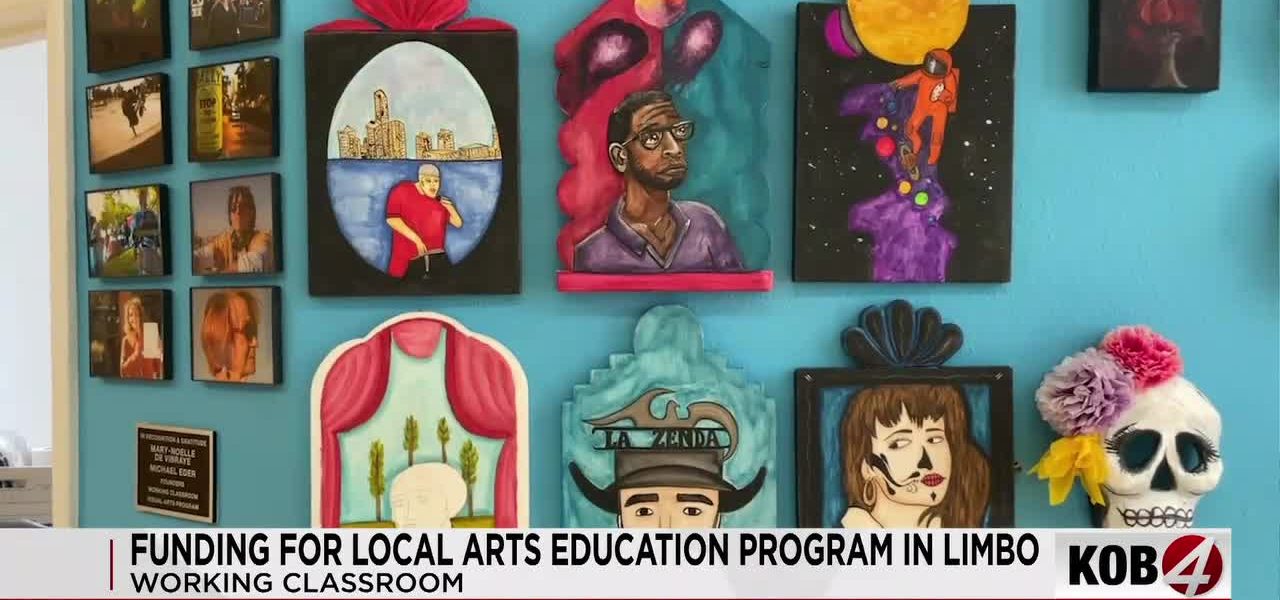
Budget Brawl Leaves Albuquerque Youth Arts Program Hanging by a Thread
POLICY WIRE — ALBUQUERQUE, N.M. — It’s not every day a local City Council decision—or lack thereof—can derail the artistic aspirations of a city’s underserved youth. Yet, here we’re...

POLICY WIRE — ALBUQUERQUE, N.M. — It’s not every day a local City Council decision—or lack thereof—can derail the artistic aspirations of a city’s underserved youth. Yet, here we’re in Albuquerque, where the seemingly mundane machinations of municipal finance have thrown the future of a vital youth arts program into stark uncertainty. We’re talking about a group called Working Classroom, and frankly, its existence now hinges on whether grown-ups can agree on how to slice a budget pie.
For those expecting a straightforward budgetary approval on Tuesday, well, Albuquerque’s city budget remains unsettled after city councilors deferred a final vote. The big issue? Money. And its allocation. Who gets it, who doesn’t, — and who’s left twisting in the wind. A vote that was supposed to clear the path instead punted the can further down the dusty New Mexico road, setting up a showdown slated for June 1. That’s another wait. Meanwhile, organizations that rely on city support are now in a holding pattern. A holding pattern that feels an awful lot like a slow-motion dive, some might argue.
Working Classroom isn’t just churning out finger-painting prodigies. This outfit, a local nonprofit that provides arts education for young people ages 12 to 21, digs deeper. Madalena Salazar, their Executive Director, states their mission clearly: [QUOTE_PLACEHOLDER] But here’s the kicker: they’re not just about sketching and sculpting. Salazar points out that [QUOTE_PLACEHOLDER] It’s art as therapy, art as community, art as survival—a lifeline for many kids navigating rough waters.
Consider, for a moment, the landscape in Karachi or Lahore, where similar programs, often informal, battle overwhelming urban challenges and resource scarcity. The difference, perhaps, is that their struggles are often visible, whereas Albuquerque’s budget kerfuffle feels distinctly bureaucratic, an administrative slow-burn that blindsides community anchors. Here, it’s not just about mural workshops or computer literacy programs, which Working Classroom offers. It’s about the underlying support structures that keep vulnerable young people afloat, resources made possible in recent years through non-recurring city funding.
This isn’t their first rodeo with funding jitters. Last fiscal year, Working Classroom received $35,000 from the city, a sum they reasonably expected again. But then, Mayor Tim Keller released his initial budget proposal. Poof. The program was completely cut. Advocacy and discussions, presumably of the polite but firm variety, got the funding restored in an amended version of the budget. Still, it’s not guaranteed. That’s the beauty—or brutality—of municipal politics, isn’t it?
Salazar admits to a degree of trepidation, though she tries to keep spirits up. “I don’t [feel confident],” she said, immediately following with, “I’m hopeful, though. I hope that he is cognizant of the arguments that a lot of folks around the city are making — that investment in those public services is what makes this a wonderful city to live in and grow in.” Because hope, in these matters, often feels like the last resort.
📄 POLICY WIRE WHITEPAPER PUBLISHED: PAKISTAN'S NATIONAL SECURITY POLICY PRIORITIES
👉 READ BY CLICKING HEREAnd it’s not just the administrators who are feeling the squeeze. Genesis Mullins, one of the students, encapsulates the program’s profound impact. “It’s the first time I could be creative without being told like a genre or a theme, and just go off on my own creativity,” she observed. Mullins explains it’s far more than just paint and brushes: [QUOTE_PLACEHOLDER] They’re providing a buffer against the city’s rough edges, a haven. Per the New Mexico Children, Youth and Families Department, child maltreatment reports averaged over 7,500 annually between 2017 and 2021—underscoring the critical need for programs that offer supplementary support and safe spaces for youth, even if the city budget doesn’t always reflect it.
With summer programs just around the corner, this political foot-dragging isn’t just annoying; it’s genuinely pressing. Mullins herself had a message for the city’s leaders: [QUOTE_PLACEHOLDER] She’s not wrong. Sometimes, the strings that hold a city together aren’t steel girders, but delicate brushstrokes and supportive counselors. After the Council eventually — maybe — approves something, the budget still heads to Mayor Keller, who holds final authority to sign or veto it. One has to wonder, does he get it?
What This Means
This budgetary limbo in Albuquerque isn’t just about the Working Classroom’s survival; it’s a telling snapshot of how political indecision can ripple through a community, creating disproportionate stress on its most vulnerable. Economically, deferring this decision signals a broader hesitancy within municipal leadership, perhaps rooted in a desire to avoid unpopular cuts elsewhere, or a simple failure to prioritize social infrastructure effectively. When public services like youth arts are debated endlessly, it impacts future workforce development—fostering creativity and problem-solving in young minds isn’t a luxury; it’s an investment. Politically, it reveals a potential disconnect between City Council priorities and the lived realities of their constituents. such drawn-out budget wrangles erode public trust, making citizens feel like political expediency often trumps genuine community needs. For marginalized groups, the consequence of such cuts goes far beyond financial — it’s about validating their sense of belonging and opportunity. It echoes, in a local context, the challenges faced by NGOs in emerging economies where state funding can be mercurial, forcing critical social services into precarious fundraising cycles, undermining their long-term stability and impact.