


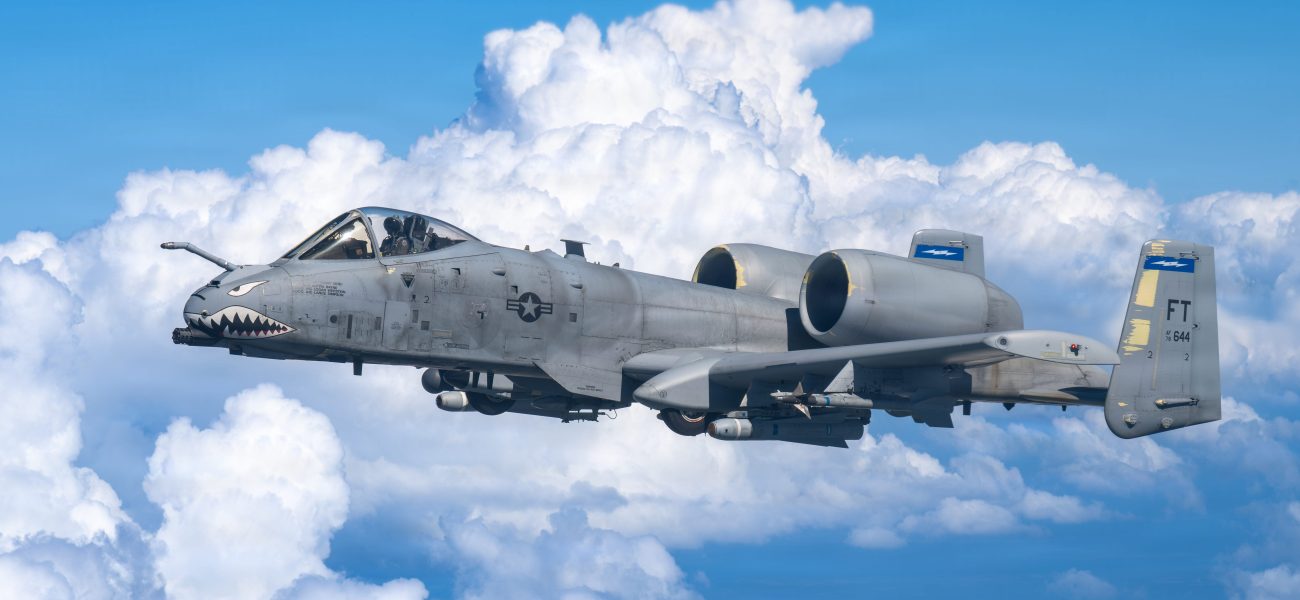
Warthog’s Swan Song: US Air Force Shifts Rescue Paradigm, Jettisoning a Legend
POLICY WIRE — Washington D.C., USA — The rust-colored desert dust, the smell of cordite in a bad place, and a pilot down. That’s the image many held for decades. You knew who’d be coming....

POLICY WIRE — Washington D.C., USA — The rust-colored desert dust, the smell of cordite in a bad place, and a pilot down. That’s the image many held for decades. You knew who’d be coming. But now, it seems the last reliable rumble of the A-10 Warthog, that ugly duckling of airpower, might soon be just a memory, even for its specialized life-saving missions. Washington’s defense planners are sketching out a new reality for combat search-and-rescue, one where brute-force tenacity gives way to sleek, networked sophistication. It’s not just an aircraft change; it’s a redefinition of what rescuing a downed airman truly entails.
For years, the A-10, with its formidable 30mm Gatling gun — and sheer durability, was the ultimate guardian angel. It could loiter for ages, absorb staggering amounts of punishment, and—most importantly—precisely engage enemy forces threatening extraction teams. You’d think an asset with such an unparalleled track record for protecting lives would be, well, indispensable. Think again. The US Air Force is quietly—or perhaps not so quietly anymore—figuring out just how to pass the A-10 Warthog’s combat search-and-rescue role off to jets like the F-35. It’s a transition few in uniform actually relish, but one that budgetary pressures and a future-forward combat doctrine are ramming through with all the subtlety of a pile driver.
It’s a tough sell. Because an F-35, with all its fifth-generation wizardry, isn’t built to do what an A-10 does. It’s fast, stealthy, — and boasts incredible situational awareness. But low and slow? Enduring small-arms fire from the ground to protect a rescue helicopter or ground team? That’s not really in its DNA. And it’s certainly not what its multi-million dollar components are designed to withstand. You’re trading an armored bathtub with wings for a sports car. Sure, the sports car is better at getting *to* the fight, but not necessarily at winning the street brawl for a pilot’s life.
The philosophical chasm here is wider than a canyon. The A-10 represented a tactical commitment to a specific, risky mission. Its design prioritizes survivability for both aircraft and pilot, allowing it to hang around in contested airspace, applying precise, punishing fire to any immediate threat. [QUOTE_PLACEHOLDER] they’ve successfully done this hundreds of times over decades. This next generation of aircraft, conversely, relies on avoiding threats altogether. It’s an escape artist, not a brawl participant. And, frankly, how does one even begin to quantify the psychological impact on ground troops knowing their immediate air support isn’t coming in a bullet sponge, but in something that prioritizes getting home intact after dropping a bomb?
Consider the theater of operation, particularly in regions like South Asia. Imagine a downed pilot scenario near the Afghanistan-Pakistan border. Contested airspace, complex terrain, potentially hostile populations, and irregular forces with shoulder-fired missiles. The ability for a bulky, resilient aircraft like the A-10 to provide sustained, overwhelming fire support to a Special Operations team on the ground, holding off advancing threats until the retrieval is complete, has been a game-changer. An F-35, racing in at Mach 1.6, deploying a few smart munitions, then scooting out due to fuel or threat assessment—it’s just a different ballgame. It suggests a doctrine less focused on lingering to ensure every possible threat is neutralized and more on surgical, rapid-strike solutions. But real-world rescue often requires persistent presence. Data from the Air Force Combat Search and Rescue (CSAR) records indicates that, between 2002 and 2017, the A-10 participated in an estimated 10% of all combat search and rescue events, often performing critical ground support, according to an article in Air & Space Forces Magazine. Its contributions are not easily replicated.
📄 POLICY WIRE WHITEPAPER PUBLISHED: PAKISTAN'S NATIONAL SECURITY POLICY PRIORITIES
👉 READ BY CLICKING HEREThis whole maneuver hints at a larger strategic play. It’s about leveraging cutting-edge technology — and a shift towards near-peer conflict scenarios. That means less messy counter-insurgency ops requiring dedicated, low-and-slow close air support, and more about high-altitude, high-speed engagement where stealth is king. It’s an intellectual leap for a military that has, for twenty years, been largely consumed by asymmetric warfare. But the ghost of past wars in the Muslim world, with its often ambiguous battle lines, tells a different tale about what you truly need when someone is shot down miles behind enemy lines. The move feels a lot like forcing a square peg into a very expensive, technologically advanced round hole.
What This Means
This isn’t just about retiring an old jet; it’s a policy statement—loud and clear. Economically, shedding the A-10 fleet saves the Pentagon sustainment costs, shifting those funds to the F-35’s voracious budget requirements. But it’s also an unspoken admission that high-end warfare, with its emphasis on standoff engagement, has fundamentally altered the calculus of human survival in contested zones. Politically, this signals a further move away from persistent, manpower-intensive interventions like those in Iraq or Afghanistan, favoring capabilities for engagements against sophisticated adversaries like China or Russia. It represents a narrowing of combat options, a trade-off where a specific, often messy, humanitarian-adjacent mission (rescuing a pilot) is subordinated to broader, high-stakes power projection. For allies, and for future conflicts in unstable regions—you know, places like where India is selling advanced weaponry or elsewhere in South Asia—it introduces an untested, arguably riskier, methodology for personnel recovery. It implies that future rescues will depend less on brute-force support and more on overwhelming surprise and rapid exfiltration. And what happens when surprise isn’t an option, eh? This strategic gamble, by relying on an entirely different set of combat parameters for the deeply personal mission of saving a downed service member, effectively tells the world that the era of the ‘ground pounder’ in the air is over. They’re betting that sheer technological advantage can outwit the brutal, on-the-ground reality of human vulnerability, but one must question if the costs in trust, and eventually lives, might outweigh any fiscal savings. It’s a high-stakes bet, alright.