


Lunar ‘Land Grab’: NASA’s Moon Base Plan Fuels Old Terrestrial Squabbles
POLICY WIRE — Washington D.C., USA — Just when you thought Earth had enough squabbles—enough territorial disputes and battles over scarce resources—humanity’s gaze turns upward. NASA, the...

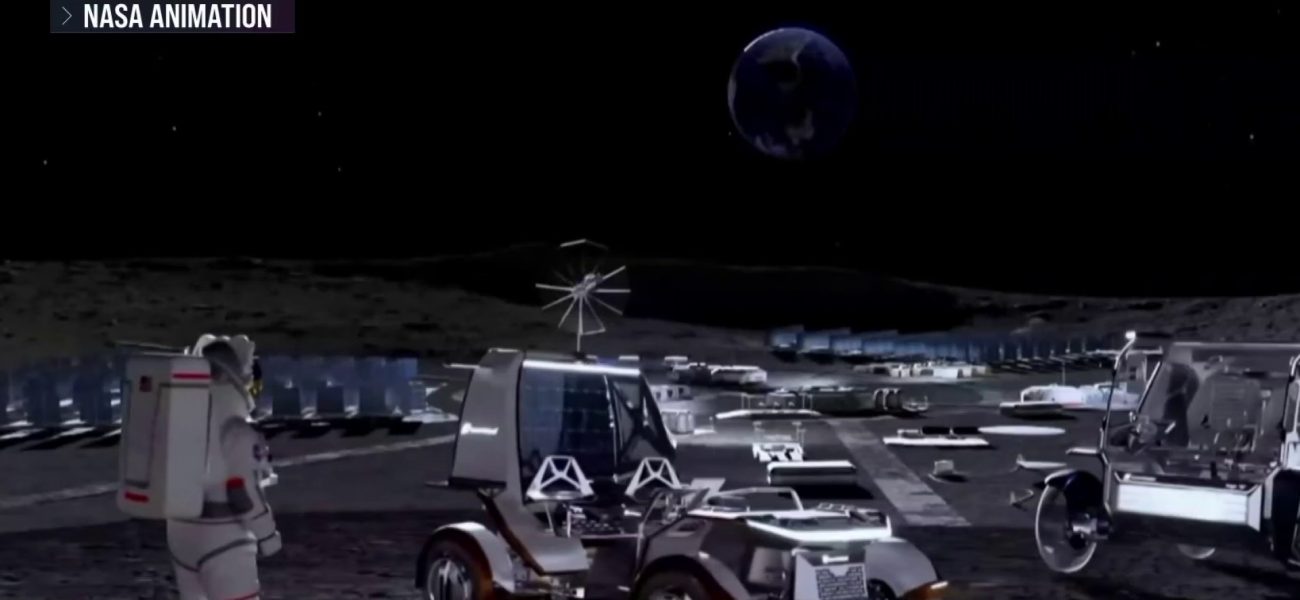
POLICY WIRE — Washington D.C., USA — Just when you thought Earth had enough squabbles—enough territorial disputes and battles over scarce resources—humanity’s gaze turns upward. NASA, the undisputed heavyweight champ of American space endeavors, isn’t just dreaming of the Moon anymore; it’s blueprinting a permanent outpost there. They’re talking ‘base,’ not just a flag-and-footprint kind of deal. It’s a grand plan, sure, something ripped right from a vintage sci-fi cover. But what exactly does this terrestrial move to an extraterrestrial rock really mean for those of us stuck down here?
It’s not just a technological feat, not even just a scientific one, though those elements are obviously present. This is a geopolitical power play wrapped in a research mission—a shiny, aluminum-clad statement that says, we can still do big things. And, man, can they. The agency’s big announcement details a persistent human presence, a place where folks will live and work, conducting experiments that’d be downright impossible on terra firma. The idea? To push humanity’s operational boundaries way, way out there, using the Moon as a stepping stone to Mars, or who knows where else. They’re not just thinking years; they’re thinking centuries, apparently. One official, in a recent briefing, noted that it represented [QUOTE_PLACEHOLDER] which really hammers home the long-term ambition.
But establishing anything permanent in space ain’t cheap, is it? We’re talking about an investment that makes a federal highway project look like pocket change. While the precise figures remain under a cloud of ongoing budgeting discussions, early estimates for similar initiatives have easily soared into the hundreds of billions over the coming decades. For perspective, the entire NASA budget in 2023 clocked in at around $25 billion, which represented approximately 0.4% of the total U.S. federal budget. So, committing to a moon base implies either a massive re-prioritization of federal spending or a concerted international effort that still, ultimately, carries an exorbitant price tag, all documented by agencies like the Government Accountability Office in their analyses of long-term projects.
The geopolitical ramifications are fascinating—and maybe a little chilling. Historically, space was framed as the common heritage of mankind. Noble, right? Now, it looks a whole lot more like the next frontier for resource exploitation and, inevitably, claims. Experts in international law are already murmuring about the Outer Space Treaty of 1967 and its glaring silence on moon bases, mineral rights, and the ownership of celestial property. When you start thinking about helium-3, for example—a potential clean energy source abundant on the Moon—then things get real. Fast.
And where does all this leave countries like Pakistan or other emerging economies in South Asia or the broader Muslim world? These are nations grappling with existential climate threats, trying to build stable economies, educate their populations, and just generally keep things from spiraling. They’ve got their own nascent space programs, yes, sometimes punching above their weight, launching satellites for communications or remote sensing. But a multi-billion dollar lunar base? That’s a different league entirely, a chasm. It begs the question: how do these grand, galactic aspirations of the wealthy few sit with the pressing, down-to-earth needs of the many? Are these moon projects global ventures in any meaningful sense beyond an invitation for observation, or are they an exclusive club for the well-heeled spacefaring powers?
📄 POLICY WIRE WHITEPAPER PUBLISHED: PAKISTAN'S NATIONAL SECURITY POLICY PRIORITIES
👉 READ BY CLICKING HEREBut some proponents argue that the scientific and technological spin-offs could eventually benefit everyone, a rising tide lifting all orbital boats. New materials, propulsion systems, AI — you name it. The argument, as presented by some government officials, is that [QUOTE_PLACEHOLDER], which essentially says it’s for everyone in the long run. Others counter that the benefits often consolidate in the same economies that fronted the initial investment, widening the innovation gap. It’s a debate we’ve heard before, whether it’s about deep-sea mining or arctic drilling: the costs are global, the benefits often aren’t. This isn’t just about rocks and moon dust; it’s about prestige, national capability, and staking a claim in the universe’s increasingly crowded parking lot.
What This Means
NASA’s lunar base project, audacious as it sounds, is more than an engineering marvel; it’s a re-sculpting of geopolitical power dynamics, pushing terrestrial rivalries onto a new stage. The financial commitment required is mind-boggling, demanding tough choices from Washington and its partners—choices that could reshape budgets for generations. It won’t just be about rockets and astronauts; it’ll be about legal frameworks for space ownership, the distribution of potential lunar resources, and the very definition of global collaboration. Expect other major players, namely China and Russia, to accelerate their own lunar ambitions, ensuring a new, albeit cold, space race. This could lead to a ‘tragedy of the commons’ situation in space, where competition trumps cooperation, particularly if profitable resources are indeed identified. For nations outside this exclusive club, it represents both a missed opportunity for direct participation and a long-shot gamble on trickle-down technological advancement, deepening concerns about who truly benefits from humanity’s expansion beyond Earth. We’re witnessing the initial stages of humanity’s off-world colonization—a monumental feat—but one already fraught with the terrestrial inequities we’ve yet to resolve.