

The Echo Chamber’s Toll: How Repeated Grievance Politics Fractures Trust Ahead of Midterms
POLICY WIRE — Washington, D.C. — The slow, persistent drip of water can, they say, wear away stone. In politics, a relentless cascade of rhetoric, however unsubstantiated, carves deep channels into...

POLICY WIRE — Washington, D.C. — The slow, persistent drip of water can, they say, wear away stone. In politics, a relentless cascade of rhetoric, however unsubstantiated, carves deep channels into the public psyche. It’s less about the novelty of a claim these days, — and far more about its sheer, wearying repetition.
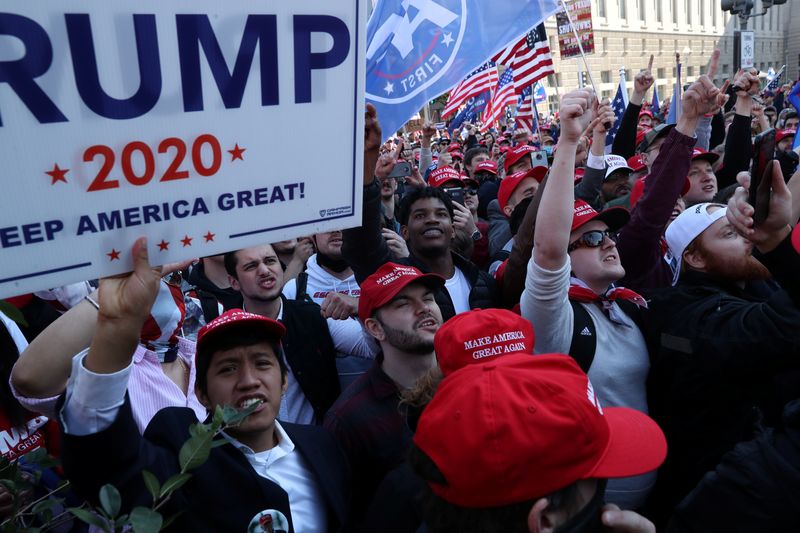
Consider the former president, Donald J. Trump, who reportedly reiterated his assertion of a "rigged" 2020 election over a hundred times in a six-month span. One hundred — and seven, if you’re counting precisely. This wasn’t some offhand comment. This wasn’t a slip of the tongue. It’s a deliberate strategy, a calculated drumming of distrust that transforms an anomaly into a dogma for a significant chunk of the electorate. [QUOTE_PLACEHOLDER]
But it’s not just about one election, or one political figure. It’s about what such sustained campaigning of grievance does to the scaffolding of democratic institutions. You’d think the impact might wane with each airing. You’d be wrong. Instead, it seems to solidify a parallel reality, where evidence takes a backseat to faith in the narrative.
And because of this, confidence in the electoral process itself—that dry, procedural backbone of governance—begins to erode from within. Midterm elections are often viewed as a national temperature check, but when the very thermometers are called into question daily, what sort of meaningful diagnosis can one possibly get? It complicates everything, from voter turnout strategies to the legitimacy of outcomes, even before the first ballot’s cast. They’re sowing seeds of doubt, thick — and fast.
Globally, the reverberations of this discourse aren’t lost on nations accustomed to their own electoral controversies. Take Pakistan, for instance—a country where claims of vote manipulation and deep-state interference have frequently punctuated election cycles, sometimes violently so. When a developed nation, supposedly a paragon of democratic stability, sees its own top leadership casting widespread doubt on its elections, it emboldens critics and undermines pro-democracy forces everywhere. It’s like watching a seemingly unshakeable older brother suddenly start questioning the rules of Monopoly. Suddenly, everyone thinks they can cheat.
Data paints a stark picture: a 2022 CNN poll, for example, found that roughly 37% of Americans don’t believe the 2020 election results were legitimate. That’s more than a third of the country effectively disavowing the outcome of a cornerstone democratic exercise. It’s not just partisan bickering; it’s a deep fissure. And it directly correlates with how often specific narratives are broadcast, often amplified by media bubbles.
It gets worse, especially when you consider its wider implications. For democracies struggling against authoritarian currents—many of them in Asia, facing pressures to centralize power or manage dissent—the American example serves as an unsettling precedent. If America can’t agree on its own election outcomes, why should fledgling democracies trust their systems, or resist external manipulation? It makes their fights harder, their efforts to build genuine popular consent less credible.
This persistent narrative doesn’t just affect future election mechanics. It shapes foreign policy too. How can the U.S. credibly champion electoral integrity abroad, as it routinely does, when significant domestic political factions openly—and repeatedly—discredit its own processes? Other countries, like those across the Muslim world, have their own intricate challenges, their own deep-seated political rivalries and questions of legitimacy. They’ve watched, with a mix of alarm and schadenfreude, as the West’s democratic processes appear to fray, seeing an erosion of trust that can metastasize.
What This Means
Politically, the continuous hammering on perceived electoral malfeasance creates an inescapable loop. For the GOP, it galvanizes a core base, ensuring their unwavering loyalty, — and acts as a potent fundraising tool. But it also entrenches a dangerous zero-sum game, where any electoral loss becomes not a defeat, but proof of conspiracy. This mindset poisons the well for bipartisan cooperation — and fair electoral reforms. It’s setting up an endgame where compromise looks like surrender, and opposition looks like sedition. That’s a path to paralysis—or worse.
Economically, the impact might seem less direct, but it’s insidious. Stability — and predictability are essential for markets, for investment, for trade. Prolonged uncertainty regarding election outcomes, or widespread distrust in governing institutions, breeds hesitancy. Investors typically shy away from environments plagued by political volatility. When countries reshape Asia’s economic map, they do so with an eye on stable partners. America’s constant political agitation, amplified by these electoral doubts, subtly diminishes its perceived reliability. It’s not a market crash overnight, but a slow leaching of confidence, making long-term planning an increasingly risky proposition for everyone involved, from Main Street businesses to multinational corporations.