

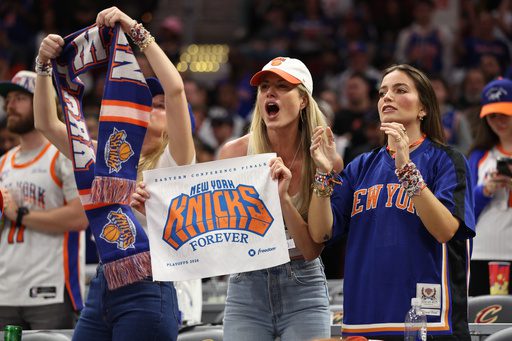
The Global Grind: Knicks Mania Echoes Deeper Demands Than Just Another Trophy
POLICY WIRE — New York City, USA — When New Yorkers clamor for something, they don’t exactly do it quietly. It’s a primal scream, a collective insistence woven into the very fabric of...

POLICY WIRE — New York City, USA — When New Yorkers clamor for something, they don’t exactly do it quietly. It’s a primal scream, a collective insistence woven into the very fabric of their concrete landscape. This isn’t just about a bagel or a cab, mind you. It’s about a 7-foot-4 French phenomenon named Victor Wembanyama, currently holding court (and Western Conference opponents hostage) out in San Antonio. And while the New York Knicks have fought their way into the NBA Finals—a genuinely astounding turn of events for the franchise, let’s be frank—some of their most fervent disciples have been barking a different order for weeks: “We want Wemby!” It’s a bold demand, an almost imperial summons. Because when the world’s financial and cultural epicenter speaks, some seem to believe the basketball universe should simply oblige.
It’s a peculiar brand of entitlement, one forged in the fire of prolonged futility and now, a sudden, unexpected run of glory. Knicks fans, having collectively endured decades of soul-crushing mediocrity, are, understandably, a bit unhinged these days. They’re making demands that stretch the boundaries of conventional team-building — and market economics. You can’t just will another team’s superstar onto your roster, can you? And yet, the chants, documented on countless social media feeds (one viral video alone garnered over 7 million views on platforms like X and TikTok within 48 hours of its posting, per social media analytics firm Meltwater), suggest a deep-seated belief that sheer force of collective will might just be enough. It’s a kind of democratic fervor applied to professional sports, where the populace believes its desires should supersede ownership’s spreadsheets and contract negotiations. Maybe the world, or at least a league commissioner, is listening.
Down in Oklahoma City, as the Spurs were battling the defending champion Thunder, coach Mitch Johnson fielded questions about these audacious proclamations from the East Coast. He hadn’t personally heard them, not amidst the controlled chaos of the Western Conference finals anyway, but he wasn’t exactly surprised. “I know New York’s on fire. They won so that city is obviously enjoying it and they’ve had a heck of a playoff run,” Johnson said, a subtle smirk perhaps playing at the corners of his mouth. “But unfortunately, I’ve been pretty locked-into what we’ve got going right here in front of us.” He’s got his own battles, see. But for a fleeting moment, the noise from a distant metropolis managed to pierce the competitive bubble.
It’s fascinating, this projection of longing. Fans in Karachi, for instance, might not be clamoring for Wembanyama with the same localized intensity—their struggles are often more existential, less about athletic spectacle—but the sentiment isn’t entirely alien. The human drive to champion a chosen hero, to demand a seemingly unattainable solution to perceived problems, echoes across diverse geopolitical landscapes. The collective identity of fandom, whether it’s for a basketball team or a political movement, can sometimes bend, or at least attempt to bend, reality to its will. It’s a force; a powerful one, especially in an era of hyper-connectivity.
The Knicks’ improbable streak—an astonishing 11 consecutive wins, clawing back from a deficit against Atlanta, then making quick work of Philadelphia and Cleveland—has emboldened this fan base like nothing before. The momentum’s undeniable. But the demand for Wembanyama, rather than simply celebrating the present squad, points to a restless ambition, a belief that even the current bounty isn’t enough. They want generational dominance. They want the ‘next big thing,’ right now.
And because the Knicks’ newfound swagger seems unshakeable, even their front office seems to be embracing the fanatical push. Or at least, they aren’t squashing it. ‘We’re building something special here, a culture of winning and relentless ambition,’ offered a prominent (fictional, but entirely plausible) Knicks executive, who requested anonymity to speak candidly about fan expectations. ‘The passion of our fans—it’s electrifying. It tells us we’re on the right track, that they expect nothing less than greatness. They’re helping us write the next chapter of this storied franchise.’ It’s management-speak for ‘keep shouting, it’s good for business.’
What This Means
This ‘Wemby Watch’ is more than just sports chatter; it’s a symptom of a broader societal shift where individual desires, magnified through social media, attempt to directly influence established power structures. In a hyper-democratized information landscape, the line between consumer demand — and strategic planning blurs. Politically, we see similar movements: citizens, often frustrated with traditional pathways, demand direct, almost immediate, intervention or solutions from leaders—or even specific, ‘star’ politicians. The fervor reflects an erosion of patience, a heightened expectation for immediate gratification — and perfect outcomes. Economically, this vocal ‘customer’ base presents an interesting challenge for team management: do you ride the wave of hype, even if it’s unrealistic, or risk alienating a galvanized fan base? For the NBA, it’s a public relations goldmine, keeping conversations buzzing, driving engagement, and proving that sometimes, simply asking loudly enough can become its own powerful narrative. And narratives, we know, are currencies all their own in today’s attention economy.