


The Curious Case of Fandom: How a Hoops Chant Echoes Deeper Divisions
POLICY WIRE — OKLAHOMA CITY, USA — It’s a primal scream, a demand from the collective unconscious, typically reserved for rock stars or messianic political figures. But in America, right now, it’s...

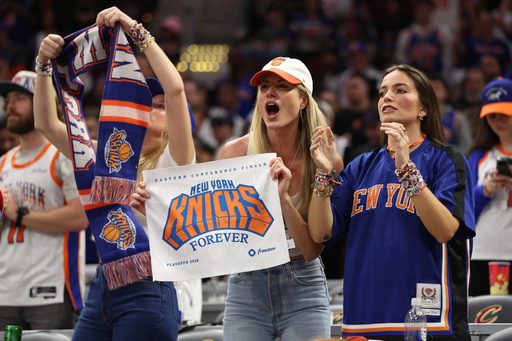
POLICY WIRE — OKLAHOMA CITY, USA — It’s a primal scream, a demand from the collective unconscious, typically reserved for rock stars or messianic political figures. But in America, right now, it’s about a French basketball phenom. Fans of the New York Knicks, fresh off securing their conference title, haven’t exactly been quiet about their desires for a certain player. They aren’t asking for higher wages or universal healthcare. No, these throngs are out on Manhattan streets bellowing a bizarre, oddly specific mantra, one that reverberates with a hunger transcending simple sports enthusiasm.
It goes something like this: “We want Wemby! We want Wemby!” You’d think winning the Eastern Conference would satisfy the notoriously impatient Big Apple faithful, but no. The focus quickly pivoted from immediate victory to an imagined, future dynasty—a vision built around Victor Wembanyama, currently tearing up the Western Conference with the San Antonio Spurs.
And you know, this whole situation—the unbridled, almost unhinged yearning for a player not even on your team, demanding an opponent’s star before a final championship is even decided—it’s just… it’s something else. It speaks to a level of collective ambition, perhaps delusion, that makes you wonder what else these demands are displacing. Or maybe it’s not delusion at all. Maybe it’s just New York. Coach Mitch Johnson, at the heart of the Western Conference clash with his Spurs, hadn’t caught the exact tenor of New York’s urban symphony, or its Wembanyama-related crescendos. “I know New York’s on fire. They won so that city is obviously enjoying it and they’ve had a heck of a playoff run,” he observed dryly, then quickly pivoted back to his immediate responsibilities: “But unfortunately, I’ve been pretty locked-into what we’ve got going right here in front of us.” A diplomat, even in the cauldron of championship basketball.
The Knicks did their part, by the way, surging through the Eastern Conference playoffs. They managed to win 11 consecutive games, turning around a 2-1 deficit against Atlanta, then just summarily dispatching Philadelphia and Cleveland. Not bad, right? But apparently, for a city that perpetually feels entitled to the very best, even perfection isn’t quite perfect. Some of those very same Knicks supporters were captured on videos, social media their megaphone, chanting “We want Wemby!” even after Game 1 of the East finals. Johnson, ever gracious despite the public poaching, offered, [QUOTE_PLACEHOLDER] And then, that familiar praise: “They’re having a heck of a run.” Subtle irony there, perhaps?
But let’s be real, this isn’t just about a basketball player. It’s about aspiration. It’s about projected success. This isn’t too dissimilar to the intense, almost spiritual attachment followers have for political figures or movements in, say, South Asia. Consider the fervour with which a populist leader is often elevated—they become the [QUOTE_PLACEHOLDER] embodiment of hope, their mere presence meant to solve entrenched problems, much like Wembanyama is seen as the NBA’s panacea. We’ve seen this playbook across the political landscape, from Washington to Islamabad, where charismatic personalities are elevated to quasi-mythical status, tasked with impossible expectations. It’s a shared human trait, this quest for the saviour figure, even if it manifests differently—a general promising order, or a basketball prodigy guaranteeing championships. And the public, bless its heart, falls for it every time. You don’t have to look far for similar sentiments across the Muslim world, where a figure, often with a unique talent or a compelling narrative, can rally millions.
And consider the sheer economic scale of it. New York, after all, isn’t just any city. It’s a market, a colossal machine. When fans start vocalizing such desires, it translates into media buzz, merchandise sales, and even affects future franchise valuations. Sports in America, particularly the NBA, is big business—massive, even. According to Statista, the NBA’s total revenue hit approximately 10.5 billion U.S. dollars in the 2022-23 season, a number that reflects not just game attendance but the immense global pull of its star players. When fans of a marquee market like New York begin targeting a talent of Wembanyama’s caliber, it’s not just a chant; it’s a financial projection, a speculative bid in the human capital market, and a statement on brand loyalty (or lack thereof).
What This Means
This widespread chanting for a competitor’s player, particularly one as singularly hyped as Wembanyama, offers a peculiar mirror to broader societal trends. It suggests an increasingly impatient, results-driven culture where immediate gratification trumps process. We see it in politics, where leaders are expected to produce overnight miracles; we see it in markets, demanding constant growth. It’s this same kind of intense, single-minded focus on a ‘golden child’ figure that can sometimes eclipse institutional strengths or even sustainable strategies. It shows how the narrative, even in sports, can shift public perception—the Knicks having a spectacular run suddenly isn’t enough if they aren’t the presumptive favorites for *next* year’s title, too.
But it also highlights the commercialization of fandom itself. These fans aren’t just supporters; they’re consumers, flexing their market power. Their voices, amplified by social media and conventional outlets alike, aren’t just cheers—they’re data points, influencing everything from sponsorship deals to draft strategies. It’s not just a wish; it’s an early form of collective lobbying for desired outcomes. And for leagues like the NBA, whose global footprint is ever-expanding, the desires of the New York market carry significant weight. You might not realize it, but the fervor we see for someone like Wembanyama mirrors, in an odd way, the political currency that figures like India’s Prime Minister Modi gain from an energized base—an unshakable devotion that projects power and influences domestic and international policy decisions.