

Shadow Diplomacy: A Secret Trump-Khamenei Deal Emerges, Reshaping Geopolitics
POLICY WIRE — Washington D.C., USA — Just when you thought the chessboard of global politics couldn’t get any more peculiar, here comes a dispatch suggesting a potential maneuver that’s as...

POLICY WIRE — Washington D.C., USA — Just when you thought the chessboard of global politics couldn’t get any more peculiar, here comes a dispatch suggesting a potential maneuver that’s as audacious as it’s improbable. The mere notion—floating around in the ether, not officially confirmed (of course it isn’t)—of Mojtaba Khamenei, scion to Iran’s Supreme Leader, brokering an accord with an administration led by Donald Trump via an [QUOTE_PLACEHOLDER] couriered exchange isn’t just news; it’s a bombshell draped in enigma.
It sounds like something straight out of a Cold War thriller, doesn’t it? But, here we’re. A figure who, to many, remains shrouded in the mystique of Qom’s clerical corridors—a man frequently cited in Western intelligence assessments as a [QUOTE_PLACEHOLDER] power broker, effectively Iran’s deep state architect—apparently on the cusp of putting his name to a [QUOTE_PLACEHOLDER] pact. This isn’t your average state visit with handshakes and photo ops; this is whispers and shadows, clandestine exchanges in an [QUOTE_PLACEERHOLDER] environment. They call it an [QUOTE_PLACEHOLDER] courier setup—a phrase that conjures images of diplomatic pouches moving through unmarked channels, under the radar, bypassing official protocols entirely. It’s certainly got everyone guessing.
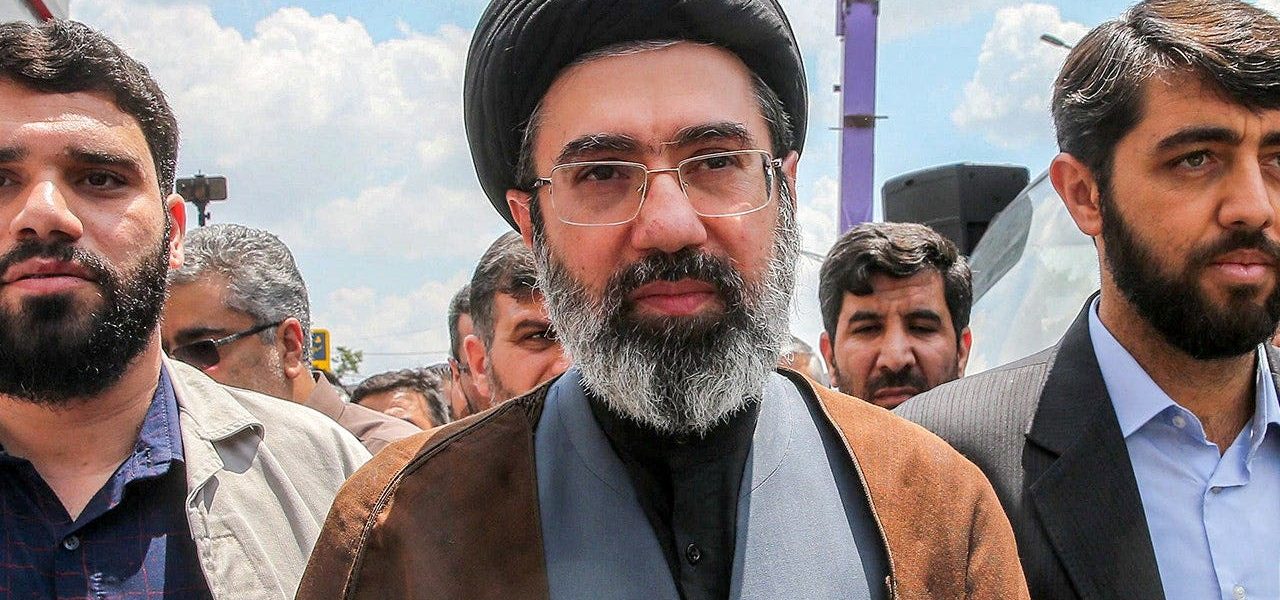
The man himself, Mojtaba Khamenei, isn’t exactly a public face. His profile’s intentionally kept low. His influence, though, particularly over Iran’s Revolutionary Guard Corps (IRGC), is an open secret within informed circles. So, any engagement he’s involved in? It doesn’t just represent the clerical establishment; it *is* the establishment’s deeper, less visible will. But to what end? And why this method?
Because, let’s be blunt, a normal, above-board deal between any representative of the current Iranian regime and an American presidency associated with Donald Trump seems wildly implausible right now, given the maximal pressure campaigns and lingering mutual animosity. Any agreement—if indeed this rumor bears an ounce of truth—would likely sidestep official channels, possibly to manage regional tensions, negotiate prisoner exchanges, or perhaps even—and this is a long shot—address specific sanctions. The sheer logistical gymnastics involved in having a figure widely reported as a [QUOTE_PLACEHOLDER] by several Western intelligence agencies even interact with a former US president’s team, let alone sign anything, beggars belief. But history’s shown us stranger bedfellows.
The implications for the broader Middle East — and South Asia? They’re monumental. A secret accord, if it exists, could instantly redraw geopolitical lines, impacting everyone from Riyadh to Islamabad. Pakistan, for instance, which shares a significant border with Iran and maintains complex diplomatic and economic ties, would find its strategic calculus abruptly shifted. Stability in its Balochistan province—often a hotbed for cross-border tensions and smuggling—could be affected directly or indirectly. The prospect of Iran and the US engaging, even unofficially, could either cool a potentially incendiary regional climate or, conversely, alienate traditional American allies who’ve banked on Tehran’s continued isolation. It’s a knife-edge situation.
It’s not lost on many observers that previous US administrations—including Trump’s first one—often pursued behind-the-scenes dialogues with adversaries. You just don’t hear about them until years later, usually in memoirs or declassified documents. And if true, it certainly lends credence to the idea that some forms of communication, even among arch-rivals, never truly cease, they just morph into a more [QUOTE_PLACEHOLDER] form. An official from a Western diplomatic mission in Islamabad, speaking off the record (naturally), pointed out that [QUOTE_PLACEHOLDER] approximately 40% of international crises are resolved through back-channel diplomacy when official channels are gridlocked. It’s an inconvenient truth, but a truth nonetheless.
📄 POLICY WIRE WHITEPAPER PUBLISHED: PAKISTAN'S NATIONAL SECURITY POLICY PRIORITIES
👉 READ BY CLICKING HEREWe’ve been living through an era of unpredictable leadership, haven’t we? Trump, famed for his transactional approach and disdain for diplomatic niceties, is the perfect foil for such an [QUOTE_PLACEHOLDER] gambit. He doesn’t play by the old rulebook, and neither, frankly, does a figure like Mojtaba Khamenei, operating as he does outside the established, publicly visible hierarchies. This isn’t diplomacy for show; it’s diplomacy for keeps—or at least for what they deem essential. The details, or lack thereof, are precisely what make this so intriguing and, honestly, quite worrying.
What This Means
Should this rumored clandestine interaction hold any weight, the reverberations across the political and economic landscape would be immense. Economically, even a whiff of dialogue could stabilize—or destabilize, depending on your perspective—global oil markets. Traders would be trying to second-guess the content of such an agreement: are sanctions relief on the table? Is Iranian oil supply about to shift? The sheer uncertainty breeds speculation, which impacts markets directly.
Politically, the implication is stark: a direct undermining of multilateral diplomatic frameworks. If such a powerful, and deeply controversial, handshake occurs outside of official gazes, it validates a transactional, individualistic approach to foreign policy, one where established alliances and institutions are sidelined. For America’s allies in the Middle East—think Saudi Arabia, UAE, or Israel—it could signal a dangerous precedent, forcing them to re-evaluate their own strategic postures. They’ve relied on a degree of predictability in US policy, but this suggests that personal emissaries and secretive dealings might trump traditional state-to-state relations. It fragments alliances, breeding mistrust.
it’s a testament to the enduring power of specific individuals over the institutions they represent, particularly in autocratic or heavily centralized states. Mojtaba Khamenei, by his mere implied involvement, demonstrates the deep internal mechanisms of power in Iran, bypassing the public-facing government. This kind of deal, brokered through an [QUOTE_PLACEHOLDER] means, suggests a profound lack of trust—or a deliberate attempt to evade accountability—on both sides. It’s a pragmatic play, perhaps, but one that skirts international norms, creating a vacuum where rumor and suspicion thrive. We’re likely to be untangling the strands of this one for years to come, assuming, of course, that we ever get the full, unvarnished story. And we usually don’t, do we?