
Shadow of Silence: Lebanon’s Southern Villages Pay a Grim Price in Escalating Crossfire
POLICY WIRE — Beirut, Lebanon — The latest dispatches from Lebanon’s southern border didn’t just report numbers; they etched another deep, angry scar into the region’s enduring tragedy. Eleven souls...

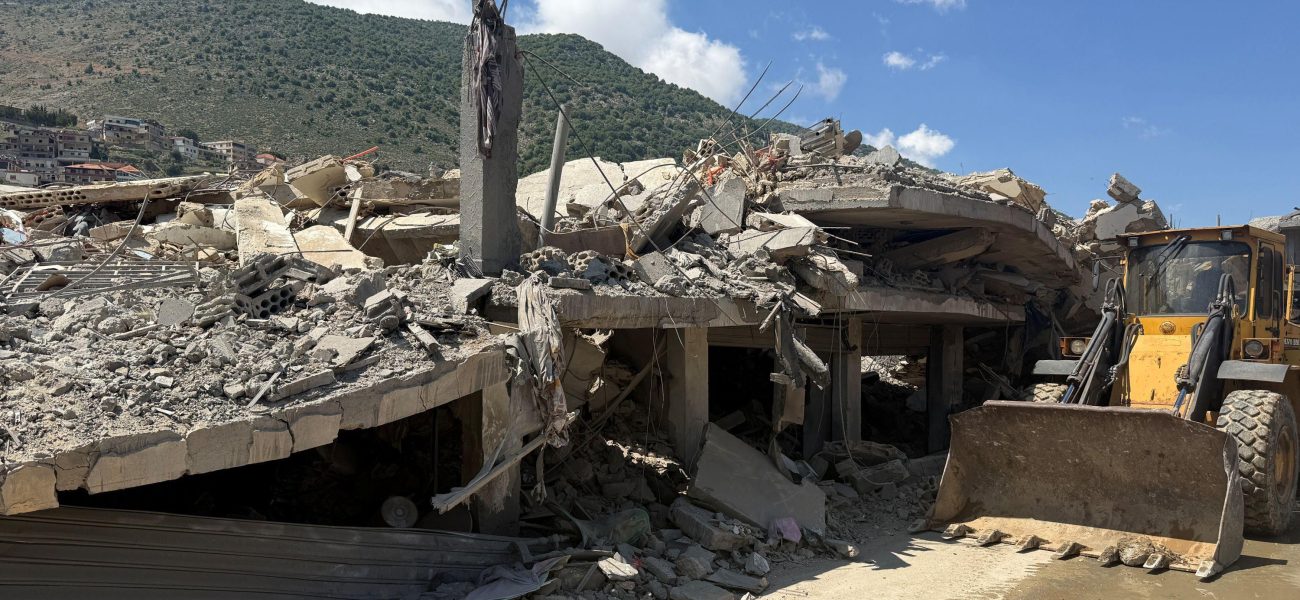
POLICY WIRE — Beirut, Lebanon — The latest dispatches from Lebanon’s southern border didn’t just report numbers; they etched another deep, angry scar into the region’s enduring tragedy. Eleven souls — an unthinkable count for a quiet morning — were obliterated in Houla this week, victims of what Israel terms “intensified strikes.” It wasn’t a shock, not really. It was, rather, a sickeningly familiar crescendo in a grim symphony of attrition that just won’t quiet down.
Israeli Defense Forces (IDF) say their objective was simple: dismantle Hezbollah infrastructure. But the fallout? It’s rarely simple. This recent onslaught didn’t just target military sites, it swept up homes, it tore apart families. A few weeks back, it was a group of ambulances. Before that, agricultural lands turned into moonscapes. But why should this be surprising? We’ve watched this play out for generations.
“We regret civilian casualties, truly,” stated Rear Admiral Daniel Hagari, spokesperson for the IDF, in a recent press briefing from Tel Aviv. “But Hezbollah insists on operating from within — and beneath populated areas. Our intelligence, quite frankly, indicates those structures—where these regrettable outcomes occur—harbored operational cells or launch capabilities. Our intent, to be clear, remains to defend our borders and neutralize threats, wherever they originate.” His words, steeped in familiar justification, do little to staunch the grief spilling from village homes.
Meanwhile, across the fence, the rhetoric is equally sharp, yet far more desperate. “This isn’t about ’retaliation’ or surgical strikes anymore. This is collective punishment, plain and simple, inflicted upon communities trying to cling to existence,” countered Hisham Jawad, a senior advisor to the Lebanese Prime Minister, speaking in a hushed tone over a secure line. “What message does incinerating entire homes, rendering them uninhabitable, send? Save for perpetual grievance, nothing. And the world watches, doesn’t it? But it doesn’t seem to act.” You couldn’t mistake the weary anger in his voice. He’s seen this act before, too many times.
The immediate political impact here? A deepening chasm of mistrust, certainly. But also, a dangerous escalation dynamic that threatens to snap the already frayed threads holding the fragile peace—or rather, the non-war—together. Each volley fired across the Blue Line echoes far beyond these immediate battlefields. It galvanizes factions, hardens stances, and makes de-escalation look less like a diplomatic art and more like a fool’s errand. And this instability isn’t confined to a small sliver of land. Think about it: a destabilized Lebanon, struggling under an economic crunch that just won’t quit, affects everyone. From the refugees pouring into already stretched European states, to the complex calculus of regional powers.
For nations like Pakistan, for example, observing the incessant bloodshed from afar isn’t a passive exercise. Such events invariably fuel internal discourse, strengthening voices that champion pan-Islamic solidarity and criticize perceived Western complicity or inaction. The narrative of enduring suffering in the Muslim world, often at the hands of seemingly intractable geopolitical conflicts, resonates deeply. It shapes public opinion and, subsequently, influences Islamabad’s diplomatic postures in multilateral forums. Because, let’s be honest, few in that part of the world view this as just an isolated border skirmish.
📄 POLICY WIRE WHITEPAPER PUBLISHED: PAKISTAN'S NATIONAL SECURITY POLICY PRIORITIES
👉 READ BY CLICKING HEREAnd let’s talk numbers for a second. According to UN OCHA data, more than 90,000 people have been displaced in southern Lebanon alone since hostilities intensified last October. That’s not just a statistic; it’s nearly a hundred thousand lives uprooted, houses abandoned, livelihoods ruined. These people don’t have much, you know? Many barely subsist. Losing what little they’ve built, fleeing their ancestral lands — it’s another layer of dispossession that builds upon decades of trauma.
The situation isn’t improving; it’s rotting, spreading. It casts a long shadow over humanitarian efforts, strains aid organizations, and perpetually keeps the wider Middle East teetering on the edge of a far larger explosion. For instance, the geopolitical maneuvering, Tehran’s quiet machinations, the shifting alliances across the Muslim world—all these elements coalesce, intensifying an already volatile environment.
What This Means
The brutal cost exacted in places like Houla signals far more than simply intensified skirmishes. Politically, it deepens the isolation of Hezbollah within Lebanon but paradoxically might strengthen its hand among its most ardent supporters, presenting it as the sole bulwark against external aggression. For Beirut, a government already wrestling with an imploding economy, it’s yet another wrench in the works, making any semblance of stability or recovery an even more distant mirage. International donors, fatigued by Lebanon’s perennial crises, will face renewed pressure to provide aid, yet they’ll also demand accountability and a cessation of hostilities that doesn’t seem forthcoming.
Economically, the strikes further cripple Lebanon’s south. Agriculture, once a bedrock of local economies, becomes impossible under the constant threat of bombs. Trade routes are disrupted, — and tourism, already negligible, evaporates entirely. The ripple effect? Increased poverty, mass internal displacement straining already limited resources in urban centers, and a brain drain as younger generations seek opportunities elsewhere. For Israel, this sustained engagement comes at its own economic and human price, draining resources and keeping swaths of its northern border region depopulated and under constant threat. It’s a lose-lose proposition, ultimately. But try telling that to either side as they count their dead.