


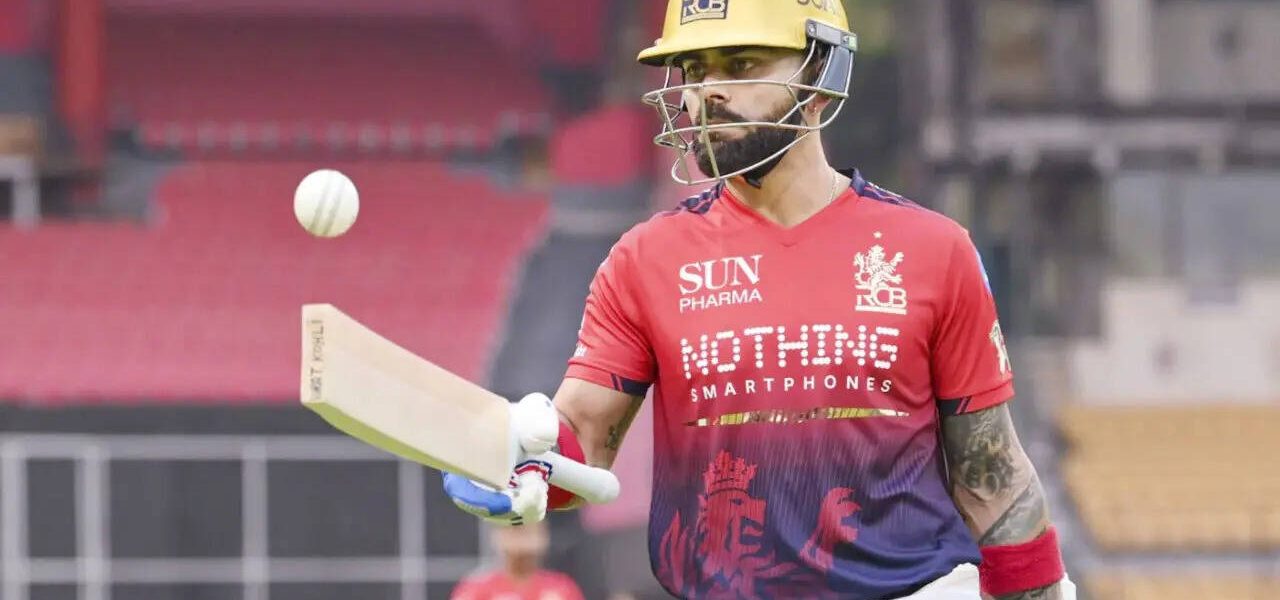
Dharamsala’s Crucible: Kohli, RCB, and the Heavy Crown of a Playoff Paradox
POLICY WIRE — Dharamsala, India — In a land obsessed with demigods and data, India’s cricket maestro, Virat Kohli, stands as a curious paradox. The Indian Premier League (IPL) isn’t merely a...

POLICY WIRE — Dharamsala, India — In a land obsessed with demigods and data, India’s cricket maestro, Virat Kohli, stands as a curious paradox. The Indian Premier League (IPL) isn’t merely a sporting spectacle; it’s an economic behemoth, a cultural juggernaut that dictates Friday night plans for hundreds of millions across South Asia, shaping national mood like little else. This season, Royal Challengers Bengaluru (RCB) stormed through, defying early predictions and qualifying for the playoffs with a swagger befitting defending champions. Nine wins in 14 matches, an impressive 18 points, and a net run rate of +0.78 – these aren’t the stats of a team coasting; they’re the metrics of a unit on a mission, eyeing a rare back-to-back title. But hovering above this gleaming record, like a storm cloud gathering over the Himalayas where Qualifier 1 is set to unfurl, lies the curious case of their captain’s playoff performances.
It’s a strange thing, this sports journalism business. You’d think the biggest name would have an equally monumental record where it truly counts, right? Not so for Kohli in the IPL playoffs. The man has, over his illustrious career, re-written batting manuals, accumulated more runs than entire national teams sometimes manage in a year, yet the elimination stages seem to consistently whisper a different narrative. Data from official IPL statistics show that across 16 playoff encounters, Kohli has mustered a modest 357 runs. And his average? A rather un-Kohli-like 25.50, paired with a strike rate of just 121.42.
Compare that, if you will, to his overall IPL average of 40.07 — and a strike rate humming above 134. And this isn’t just one lean season. We’re talking about a pattern that spans his nearly two-decade journey with RCB. But you can’t tell that to the sea of crimson-clad fans, many of whom still carry the exhilaration of last year’s triumph. They don’t deal in statistics, do they? They deal in faith, in the raw, electric promise of another trophy, with Kohli as their undisputed icon. “The IPL is more than a game; it’s an articulation of Indian aspiration — and ingenuity,” noted Mr. Jay Shah, Secretary of the Board of Control for Cricket in India (BCCI), just last month. “Our stars aren’t just athletes; they’re cultural ambassadors, and the pressure they face is immense – a reflection of national fervor.”
What This Means
This isn’t just about a star player — and his stats; it’s about the very psychology of a global sporting juggernaut. For RCB, Kohli’s playoff performance—or lack thereof—is the ultimate wild card. A triumph here would cement his legacy, proving even the greats can overcome their personal statistical blips when the lights are brightest. A failure, however, would amplify whispers that his regular-season brilliance doesn’t always translate to the cold, unforgiving theater of elimination cricket. The financial stakes for the league, team sponsors, and even peripheral industries that thrive on cricket mania in India are astronomically high. Every Kohli boundary or dismissal impacts television ratings, merchandising, and the very narrative surrounding the IPL brand. It’s also a powerful symbol across the subcontinent. Consider how religiously fans in neighboring Pakistan or Bangladesh—even without their own national teams in the fray—track Kohli’s fortunes. He’s not just an Indian captain; he’s an Asian sporting phenomenon, and his victories resonate with pride, his struggles with empathetic understanding.
It gets tricky, doesn’t it? The expectation weighs heavy on a man who’s spent his career defying limits. RCB, after all, secured their playoff berth decisively, their formidable run rate speaking volumes about their collective strength. But here’s the thing about T20 cricket in these pressure-cooker situations: one big name can change everything. One single inning can erase years of underwhelming performances.
📄 POLICY WIRE WHITEPAPER PUBLISHED: PAKISTAN'S NATIONAL SECURITY POLICY PRIORITIES
👉 READ BY CLICKING HERE“In politics as in sport, the biggest names are often defined not by their everyday brilliance, but by how they perform when everything is on the line,” observed Dr. S. K. Khan, a geopolitical analyst specializing in South Asian dynamics, speaking from his Karachi office. “The adulation is intoxicating, yes, but the scrutiny, especially for figures like Kohli, becomes an almost unbearable national burden.” And now, with Qualifier 1 against Gujarat Titans looming large, all eyes are fixed. Will the IPL’s most consistent run-scorer finally shatter this particular glass ceiling? Because if he does, it won’t just be RCB fans celebrating; it’ll be a cathartic roar that echoes from the Dharamsala hills across every cricketing heart in South Asia, a true reflection of how intertwined sport and public sentiment are.
They’ve built a dominant side, this RCB outfit. But all the statistical dominance in the league stage means little if their guiding light, the ‘King,’ cannot find his crown-jewel form when it matters most. It’s not just about winning; it’s about conquering the narrative, both for himself — and for a legion of loyalists. This isn’t a mere cricket match; it’s a high-stakes psychological drama, unfolding on a stage that captivates billions and dictates the very emotional temperature of a subcontinent.