


Beijing’s Aerial Gambit: 200 Boeing Jets and a Precarious Truce
POLICY WIRE — Washington, D.C. — It’s often in the hum of jet engines, not the bluster of tariffs, that the true rhythm of geopolitical shifts emerges. China’s quiet commitment to purchasing 200...

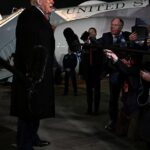
POLICY WIRE — Washington, D.C. — It’s often in the hum of jet engines, not the bluster of tariffs, that the true rhythm of geopolitical shifts emerges. China’s quiet commitment to purchasing 200 Boeing aircraft—a deal announced shortly after a tense summit between then-President Trump and Chinese President Xi Jinping—isn’t just about metal birds taking to the sky. No, it’s a meticulously choreographed ballet, a pragmatic concession spun as mutual benefit, momentarily lowering the mercury in the furnace of U.S.-China trade friction.
For weeks, or maybe months depending on who you asked, the air around Beijing and Washington crackled with a kind of adversarial static. Trump’s trade war, remember it? Full of bombast — and tariffs that felt like a sledgehammer to delicate supply chains. And Xi’s patient, calculating response, often involving strategic pivots and, yes, some well-timed large-scale purchases from American industry when the pressure mounted. The announcement from China’s Commerce Ministry, almost an aside, confirmed not just the colossal Boeing order but also indicated a joint effort to extend the precarious tariffs truce first inked back in October. It felt less like a genuine handshake — and more like two heavyweights pausing between rounds.
It’s a curious dance, really. One foot on the accelerator of global expansion, the other on the brakes of nationalistic posturing. This isn’t friendship; it’s commerce at the edge of a cliff, where both sides know plunging together helps nobody. But that knowledge, folks, doesn’t stop either from edging closer to the abyss, just to see who blinks. Is this Boeing bonanza a fleeting truce or a genuine thaw? We’re leaning towards the former.
And let’s be clear, Beijing isn’t just buying planes to be nice. They need ‘em. Boeing, for its part, projected in 2023 that China alone would need an astounding 8,560 new commercial airplanes by 2042, a market valued at an eye-watering $1.5 trillion. That’s a lot of aluminum, folks. The American aerospace giant isn’t just selling planes; it’s selling job stability and market share, a fact undoubtedly top of mind for U.S. negotiators who’d spent years barking about trade deficits. It’s a lifeline for an American manufacturing sector, always sensitive to job numbers, which directly benefits from such hefty foreign investment.
But the broader implications? They’re etched into the very fabric of the global economy. This isn’t a trade agreement borne of mutual affection. It’s born of strategic necessity. “This agreement,” asserted China’s then-Deputy Commerce Minister Wang Shouwen, his tone predictably measured and optimistic, “demonstrates the unwavering commitment of both nations to rational discourse over rhetoric, fostering a cooperative environment beneficial to all parties. Economic stability, you know, that’s universal.” You couldn’t quite see the subtle wink, but you could almost feel it.
From the American side, there was a predictable emphasis on job creation and market access, almost as if saying, “Look, we squeezed them, and something good came out.” A White House official familiar with the negotiations, speaking off-the-record but often quoted during that period, likely echoed then-Commerce Secretary Wilbur Ross: “We’re always looking out for American jobs. And make no mistake, every airplane sold is American manufacturing. It’s jobs here at home. But the broader trade landscape? That’s still a minefield, folks. One order doesn’t change everything.”
Because that’s the reality. These bilateral skirmishes, whether over soybeans, semiconductors, or jumbo jets, send tremors far beyond Washington and Beijing. Even halfway across the world, nations like Pakistan watch this fragile détente with a wary eye. Beijing’s enormous investments through its Belt — and Road Initiative, after all, ride on the currents of global trade. Any ripple in Washington or Beijing reverberates across Karachi’s bustling ports or Islamabad’s burgeoning infrastructure projects, impacting everything from energy futures to nascent digital economies. A stable global economy, even one teetering on a strategic balancing act, offers a degree of reassurance—but only a degree. They’re all, really, waiting for the other shoe to drop, perhaps wondering what unseen shadow might next creep across Asia’s air hubs.
What This Means
This aircraft deal, like the tariffs truce it buttressed, was less an olive branch — and more a calculated pause. Politically, it allowed both Trump — and Xi to claim a tactical win at a particularly thorny juncture. For Trump, it meant demonstrating concrete concessions from China, fueling the narrative that his aggressive trade policies were indeed working. For Xi, it offered a chance to ease punitive tariffs while also securing much-needed capacity for China’s burgeoning air travel sector—a classic example of economic necessity neatly aligning with diplomatic leverage. It bought them time. Not trust, but time. And sometimes, in geopolitics, that’s almost as valuable.
Economically, it throws a temporary lifeline to American manufacturers and workers in the aerospace sector, cushioning some of the blows inflicted by the broader trade dispute. But don’t confuse this transactional détente for a lasting solution to the deeply entrenched structural issues that continue to plague U.S.-China economic relations. The underlying friction concerning intellectual property theft, state subsidies, and market access for American firms hasn’t evaporated; it’s simply been pushed to the back burner, simmering, ready to boil over again the moment political winds shift. This was a deal of expedience, a carefully crafted intermission, nothing more. Its primary function was to cool temperatures, not cure the fever.