

Shadow of a Bullet: Nazareth Shooting Unmasks Deeper Cracks in Israel’s Arab Heartland
POLICY WIRE — Nazareth, Israel — The echo had barely dissipated, the frantic calls to emergency services still spiking across the old city’s cellular network, when they were already there. A Border...

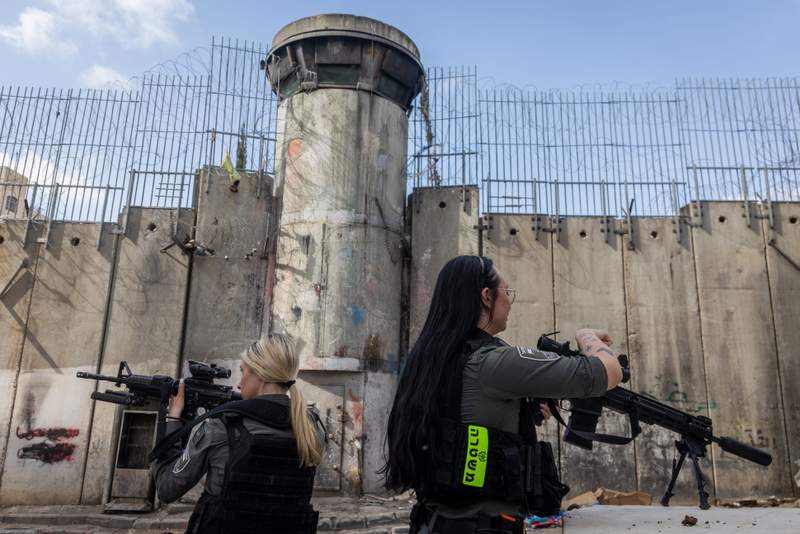
POLICY WIRE — Nazareth, Israel — The echo had barely dissipated, the frantic calls to emergency services still spiking across the old city’s cellular network, when they were already there. A Border Guard unit, flanked by seasoned detectives, swooped down on a Nazareth street not with ponderous deliberation, but with the surgical precision of a falcon hitting its mark. A suspect, allegedly involved in a fresh shooting incident—gun still hot, metaphorically speaking—was bagged, just minutes after the gunfire had startled a morning (or afternoon, the details are still filtering, but it’s beside the point really) into chaos. It’s that chilling efficiency that always gets you, isn’t it?
This wasn’t some protracted manhunt, no slow burn of an investigation unfolding over days. This was immediate. Decisive. And it offered a stark, if fleeting, glimpse into the well-oiled, hyper-responsive security apparatus at play within Israel’s Arab communities. It also served, for those paying close enough attention, as a rather pointed reminder of the fraught undercurrents bubbling beneath the surface of everyday life here. They say Israel lives in a tough neighborhood. True enough. But sometimes, the neighborhood is actually your own living room, or in this case, the historic lanes of Nazareth.
“Look, our forces are trained for speed. In situations like this, hesitation costs lives. It just plain shows that our intelligence and coordination networks are always, always, running hot,” Lieutenant Colonel Yoram Katz, a spokesperson for the Border Guard, told Policy Wire, his voice holding that familiar blend of professionalism and underlying exasperation. You get the sense he’s uttered some version of that line a thousand times.
But quick arrests, while perhaps reassuring to some, often fail to address the deeper maladies. Faisal Abbas, a prominent community activist and Nazareth municipal council member, views such incidents with a weary, knowing sigh. “They move fast, yes, but do they move with understanding? This isn’t just about guns; it’s about generations of feeling cornered, about the despair that makes young men think this is their only option. We’re talking socioeconomic gaps that run wider than the Jordan River here, you know?” He didn’t mince words.
The incident itself, according to an Israeli Police source (who wished to remain nameless, as these things often go), involved an altercation that escalated rapidly, leaving one person injured and another in custody. It’s not just a statistic, but a fresh tremor in an already seismically active social landscape. And these aren’t isolated sparks. Internal Israeli Police data indicates a 22% increase in serious firearms-related offenses in Arab communities compared to the previous year, a trajectory that worries everyone from beat cops to Cabinet ministers. The iron fist, for all its speed, can’t clamp down on desperation.
📄 POLICY WIRE WHITEPAPER PUBLISHED: PAKISTAN'S NATIONAL SECURITY POLICY PRIORITIES
👉 READ BY CLICKING HEREAcross the wider Muslim world, such swift actions by Israeli security forces are often viewed through a different, far more critical lens. From Rabat to Jakarta, state actions within Palestinian and Israeli-Arab communities are frequently seen as exercises in control, often neglecting underlying grievances. In places like Pakistan, where foreign policy and domestic sentiment are often inextricably linked to events in the Middle East, such incidents reinforce long-held narratives about state power and minority rights—a sort of twilight of order where every move is scrutinized. Pakistan’s own security calculations and its perception of global justice are, of course, a complex mix; you only need to look at discussions around defense procurement, say, a nation’s push for advanced J-35 stealth jets, to see that international influence is very much about both hard power and the softer power of narrative.
Because ultimately, these aren’t just security incidents. They’re social mirrors. And what they reflect back isn’t always pretty. You see the deep mistrust, the socioeconomic frustration, the cyclical nature of violence in these close-knit communities. It’s messy. It’s human. It’s also incredibly difficult to untangle.
What This Means
This quick-fire arrest in Nazareth, while seemingly a straightforward law enforcement success, packs a much larger punch for anyone tracking the stability—or lack thereof—in Israel’s internal fault lines. Politically, it grants the current security-minded government another talking point about its effectiveness, a sort of ‘see, we’re on it’ moment for their base. But it simultaneously infuriates those who see these actions as heavy-handed and divorced from the systemic issues that create the fertile ground for crime in the first place. Economically, unrest, even localized incidents like this, tends to deter investment, perpetuate cycles of poverty, and maintain the very disparities that often fuel dissent. Don’t kid yourself, the impact goes beyond a single block in Nazareth. When Arab citizens, roughly 21% of Israel’s population, feel marginalized or targeted, the nation’s broader social fabric frays. For policymakers, the tightrope walk between maintaining order and fostering genuine inclusion just gets a whole lot thinner with every gunshot, no matter how quickly the alleged perpetrator is collared.