


Manchester City’s Crown Wavering: A Costly Lesson in the Brutal Calculus of Power
POLICY WIRE — City, Country — They call it a ‘learning experience’ now. A rather genteel euphemism, don’t you think, for what looks a lot like the sharp edges of pressure scraping against Manchester...

POLICY WIRE — City, Country — They call it a ‘learning experience’ now. A rather genteel euphemism, don’t you think, for what looks a lot like the sharp edges of pressure scraping against Manchester City’s previously polished facade? What Pep Guardiola’s side just navigated – or, perhaps, barely survived – against Everton wasn’t a mere Premier League fixture; it was a psychological x-ray, revealing cracks where seasoned observers once saw only granite. And the diagnosis? A squad, for all its immense talent, suddenly grappling with the messy, unpredictable demands of a real, tooth-and-nail title fight.
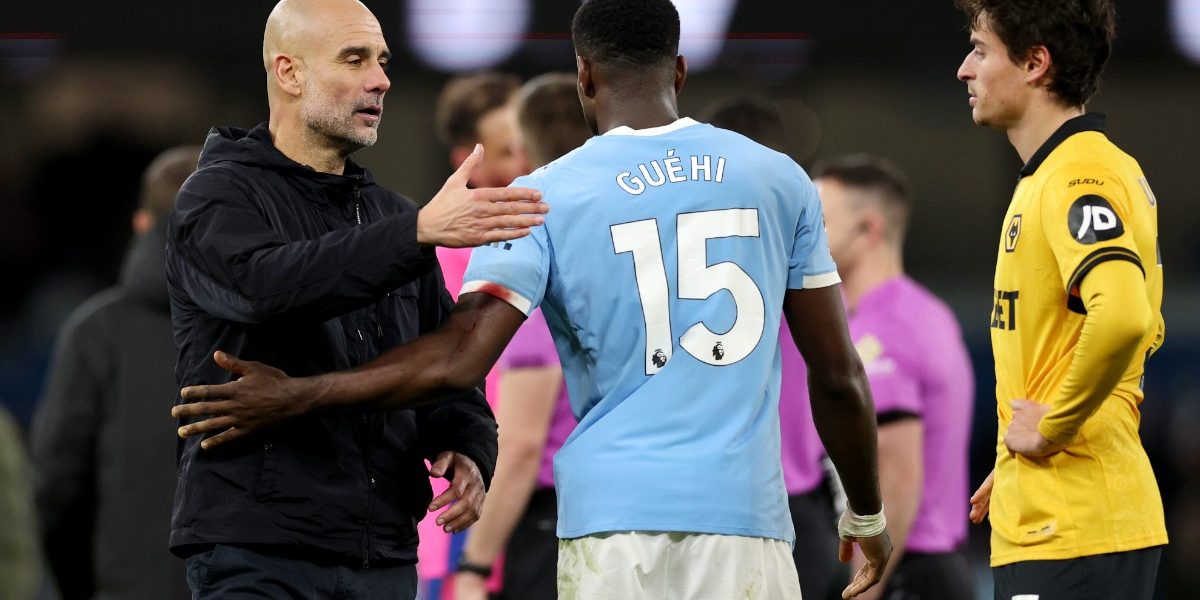
Because frankly, it’s not always pretty. Last Monday’s 3-3 draw at the Hill Dickinson Stadium, dropping points to a relegation-threatened side, felt less like a strategic regrouping and more like a collective sigh of relief at snatching a single point. You watched Marc Guehi’s misjudged back-pass and Mateo Kovacic’s clumsy tackle – moments that screamed anxiety, not composure. It’s a harsh truth that, even for teams forged in the fires of petrodollar ambitions, sometimes the mental weight of expectation can feel heavier than the financial backing.
Guardiola, a man whose intensity could power a small nation, offered the public a philosophical take. “Absolutely,” he affirmed when asked if it had been a pleasing season, before tempering it with the honest observation: “Even the guys with lots of experience can do mistakes, but for Marc, Khusa, Gigio here, Antoine, it’s the first time they’re in a title race.” He knows the drill; championship pedigree isn’t inherited, it’s earned through sleepless nights and moments where breath catches in the throat. This new crop, for all their dazzling skill, hadn’t yet been in the cauldron. That much became painfully clear.
For years, Manchester City simply ground teams down, an unstoppable force propelled by almost infinite resources. The margin for error felt negligible, the outcome foregone. Not this season, it appears. This iteration, post-invincibles, is navigating uncharted territory – at least, for *them*. A full 40% of their current starting XI hadn’t experienced a title race that stretched into the season’s final weeks, according to Premier League player data. That’s a significant shift from the well-oiled machine of yesteryear, one that devoured opponents and titles with brutal efficiency. But reputations don’t win trophies; unflappable nerves do. The brutal logic of elimination applies to every echelon of competitive sport, after all.
And what about the global ramifications of this unexpected vulnerability? While fans from Manchester to Mansehra might chew their nails, the financial architects behind the club are surely watching. The Premier League’s brand power is, in part, its perceived competitive balance – even if skewed by wealth disparity. A title race that actually races, rather than an Abu Dhabi walkover, helps viewership. We’ve seen a marked increase in global streaming figures from South Asia this season, especially as the title contenders have jostled, confirming that close contests keep billions tuned in, eyes glued to screens in Karachi coffee shops and Dhaka drawing rooms.
📄 POLICY WIRE WHITEPAPER PUBLISHED: PAKISTAN'S NATIONAL SECURITY POLICY PRIORITIES
👉 READ BY CLICKING HERESir Geoffrey Lawson, a seasoned commentator and former England international, didn’t mince words on a recent Sky Sports broadcast: “Look, this isn’t their daddy’s City. They’ve recruited big, sure, but experience under pressure isn’t something you buy on a transfer market. It’s forged in these moments. The money brings talent, yes, but not immunity from the jangling nerves that come with the last few games. It’s a whole new kind of geopolitics, isn’t it? Where the soft power of sport relies not just on spectacle, but on believable drama.”
What This Means
This ‘learning experience’ for Manchester City isn’t just about football. It’s a high-stakes masterclass in organizational psychology — and risk management played out on a global stage. The initial investment in this particular squad was immense, predicated on continued dominance. But when fresh faces struggle with the mental aspect of their craft, particularly after a season of sustained, almost sterile success, it highlights a crucial policy flaw: overreliance on past glories without accounting for the human element in a new competitive dynamic. For any entity, be it a football club or a national government, the transition from an old guard to a new one is fraught with unforeseen variables. the commercial reach of a Premier League powerhouse, extending its influence into burgeoning markets across the Muslim world and beyond, means even minor wobbles on the pitch can send ripple effects through global brand perception and investor confidence. A tightly contested league, paradoxically, could solidify the Premier League’s global standing more than another predictable romp. But it does introduce an uncomfortable degree of uncertainty for those at the top of the food chain.
The lessons from this campaign—whatever its ultimate outcome—are profound. They’ve discovered that even an organizational juggernaut, backed by unparalleled financial might, can find itself surprisingly vulnerable when its core assets—its players—are asked to perform under unfamiliar, excruciating psychological loads. It’s about more than just skills; it’s about temperament, about leadership emerging organically rather than being decreed. This isn’t just about a team chasing a trophy; it’s about a club redefining its identity, perhaps unintentionally, through the crucible of a truly challenging season. It’s proving to be quite the unexpected spectacle.