


Referee Rage or Roster Rot? Bayern’s European Exit Stirs Deeper Questions Than Just Whistles
POLICY WIRE — Munich, Germany — European football’s upper crust isn’t supposed to get upset over a missed penalty call or a dodgy offside flag. Not really. But last night, as Bayern...

POLICY WIRE — Munich, Germany — European football’s upper crust isn’t supposed to get upset over a missed penalty call or a dodgy offside flag. Not really. But last night, as Bayern Munich watched their UEFA Champions League ambitions unravel in their own gleaming Allianz Arena, the usual post-game niceties evaporated like beer foam. This wasn’t just about 22 men chasing a ball; it was about pride, immense sums of cash, and—perhaps most tellingly—the political theatre inherent when an institution of German efficiency and sporting dominance gets, well, nudged off its perch by Gulf-backed flash and dash.
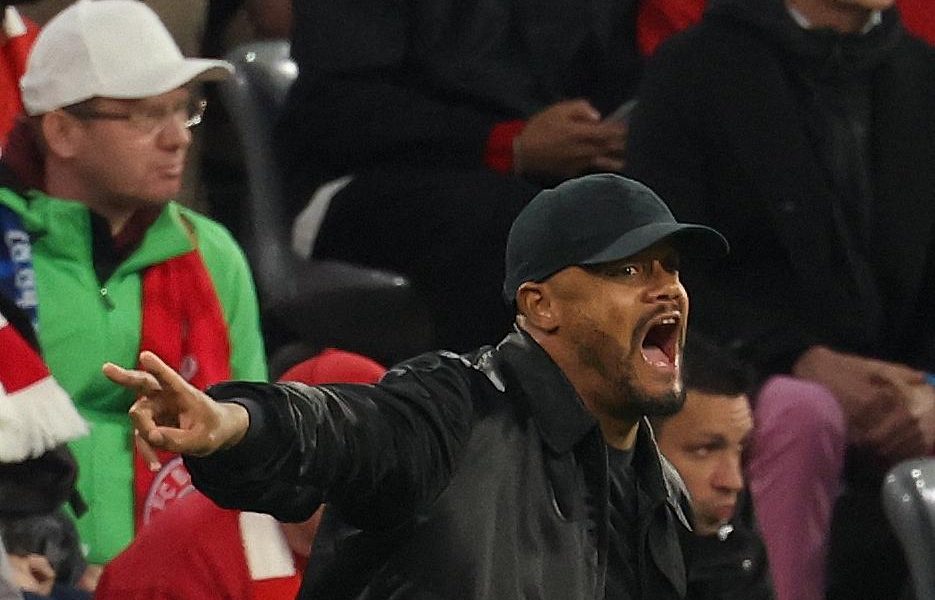
Vincent Kompany, the relatively fresh-faced Belgian at Bayern’s helm, certainly didn’t mince words after his squad bowed out 6-5 on aggregate to Paris Saint-Germain. He looked, frankly, a bit vexed. His comments weren’t just the typical coach-speak about effort; they carried a barbed undertone, a thinly veiled swipe at officiating decisions that, according to Kompany, fundamentally skewed the semi-final. “I know how difficult it’s to win the Champions League and how much it depends on details,” he said, managing to sound both diplomatic and utterly irked. “We’ll try everything to do better next season. And I also hope we’ll have some of these [refereeing] decisions to our favor.” That last part? It hung in the Bavarian air like unaddressed grievances.
It’s an old trick, isn’t it? Deflect from your own team’s faltering star power – yes, Harry Kane and Michael Olise offered performances less than legendary on a night that demanded exactly that – by casting doubt on external factors. Pure political theatre, really. The narrative control starts immediately, shifting blame before the morning papers even hit the stands. Because losing this match? It wasn’t cheap.
The UEFA Champions League, after all, isn’t just about gleaming trophies; it’s a financial behemoth. Making the semi-finals alone is worth an estimated €12.5 million in prize money this season, according to UEFA’s own distribution model, and the final brings in substantially more. For a club like Bayern, accustomed to deep runs, missing out isn’t just a bruised ego; it’s a dent in the balance sheet, affecting everything from transfer budgets to shareholder expectations. You don’t just ‘get over it.’
But the money angle only tells half the tale. For major European clubs, particularly those steeped in national identity like Bayern is for Germany, their on-field prowess carries soft power. A strong showing is a testament to national sporting health, attracting investment, tourism, and a global audience that tunes in from Jakarta to Karachi. Many fans across Pakistan and other South Asian nations, fiercely loyal to their European teams, absorb these narratives, celebrating victories as their own, and feeling the sting of defeat. It’s a digital dominion of fandom, fiercely contested. So when Kompany grumbles about referees, it reverberates far beyond Munich, sowing seeds of doubt into the fairness of European sporting systems globally.
And Kompany, though new to Bayern’s hot seat, he’s not naive. He understands the optics. He’s trying to buy himself time, managing expectations after a season where his big-money signings and veteran mainstays didn’t quite deliver the European supremacy demanded by the Bayern faithful. It’s a precarious tightrope walk for any manager at such a storied club, especially one inheriting a team accustomed to deep Champions League runs.
📄 POLICY WIRE WHITEPAPER PUBLISHED: PAKISTAN'S NATIONAL SECURITY POLICY PRIORITIES
👉 READ BY CLICKING HERE“These losses sting because they erode faith,” observed Dr. Anya Sharma, lead economist for European Sports Analytics. “It isn’t just about revenue lost today, but potential sponsorship deals tomorrow, — and the confidence of investors. A few questionable calls, amplified globally, can chip away at the perceived integrity of the sport itself, which for an entertainment product, is, you know, everything.” She didn’t have to explain that.
What This Means
The fallout from Bayern’s early European exit—and Kompany’s strategically deployed complaints—reaches well beyond the pitch. Politically, it’s a subtle yet firm blow to Germany’s sporting psyche. A Bayern struggling in Europe isn’t just a club in crisis; it’s a national standard-bearer momentarily faltering. Expect discussions about the Bundesliga’s competitiveness — and Bayern’s long-term strategy to intensify. Kompany’s veiled criticism of refereeing decisions isn’t just about a single game; it’s a political move to protect his fledgling tenure and deflect scrutiny from player performance onto external factors, a classic tactic we’ve seen from politicians for millennia.
Economically, the immediate loss of prize money is just the tip of the iceberg. There’s a trickle-down effect: lower future broadcasting revenues, potentially softer merchandise sales, and even reduced local economic activity in Munich tied to fewer high-profile home games. PSG’s continued success, bankrolled by Qatari investment, highlights the ongoing geopolitical football battle. It’s a testament to petro-dollars versus legacy, challenging the established order of European football powerhouses. This loss, therefore, is a quiet tremor in the larger continental sporting landscape. And the quiet diplomatic tension this dynamic introduces? You can’t put a price tag on that, not really. It certainly isn’t a problem that will fix itself overnight.
For Policy Wire, these sporting ‘details’ often offer clearer insights into broader economic and political currents than a stack of white papers. And Kompany knows it; he’s playing more than just a game.