

The Enduring Drama of the Unresolved: SWAT’s Silent Vigil in Albuquerque’s Shadow
POLICY WIRE — ALBUQUERQUE, N.M. — The hum of the afternoon traffic, a ceaseless, indifferent drone along Valencia Drive SE, briefly ceded its primacy to a more insistent, more ominous sound on a...

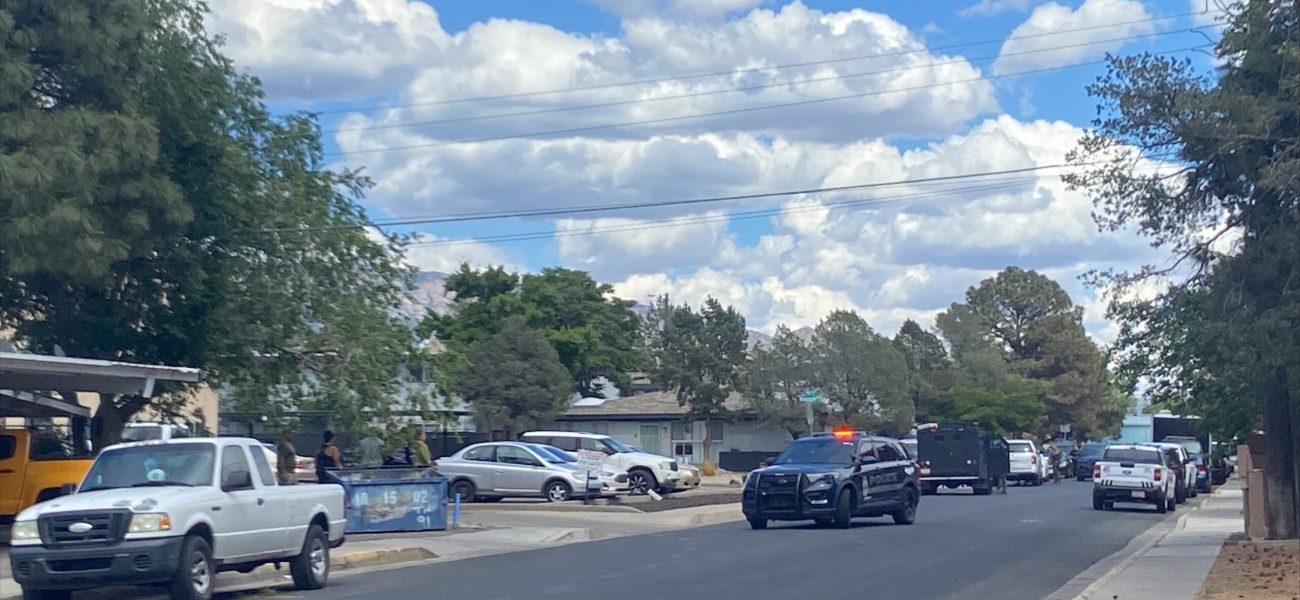
POLICY WIRE — ALBUQUERQUE, N.M. — The hum of the afternoon traffic, a ceaseless, indifferent drone along Valencia Drive SE, briefly ceded its primacy to a more insistent, more ominous sound on a recent Saturday: the tactical rumble of a SWAT vehicle. This wasn’t a sudden, explosive crisis in the conventional sense, but rather the quiet, almost inevitable culmination of several smaller, less dramatic failures — the kind that play out daily across America’s sun-baked, asphalt arteries and then fade from collective memory as quickly as they emerge.
It began, as these things often do, with a neighborly dispute, a domestic friction that escalated from hushed grievances to overt antagonism. Police officers, initially responding to the prosaic call, soon discovered their central figure wasn’t just agitated; he was also, rather inconveniently, a man with an active warrant appending his name to various legal dockets. Suddenly, a minor squabble transmogrified into a tactical quandary, necessitating the deployment of Albuquerque Police Department’s specialized units. They weren’t there for a dramatic breach, not yet anyway, but for the painstaking, often tedious dance of a potential peaceful surrender. A whole neighborhood, for a time, became a tableau of enforced patience.
And so, the barricade. A man, cornered by his own history — and immediate circumstance, retreated into the perceived sanctuary of his apartment. SWAT officers, those stoic arbiters of extreme negotiation, encircled the building, their presence a stark silhouette against the Southwestern sky. They’d begun the slow, deliberate process of talking him out, a psychological chess match where the stakes weren’t just property, but freedom, and potentially, life itself. It’s a scene that, while localized, speaks to a broader, nationwide challenge: the quiet desperation that can push individuals to the brink, straining municipal resources and community trust.
“Our primary objective remains a peaceful resolution, safeguarding both the public and our officers,” shot back APD Spokesperson Officer Rebecca Martinez, her voice a practiced blend of calm authority and weary experience. “These situations are inherently unpredictable, but our protocols are designed to de-escalate. We’re dealing with individuals, not just statistics, and every effort is made to bring these standoffs to a conclusion without force.” It’s a delicate balance, one that sometimes feels more like tightrope walking over a chasm of public expectation and systemic shortcomings.
Still, the cost isn’t merely measured in overtime hours for tactical units. According to a 2023 report from the New Mexico Department of Public Safety, outstanding felony warrants across the state increased by a notable 12% over the previous five years, placing an ever-growing burden on law enforcement resources — resources that could otherwise be dedicated to more proactive community engagement. This incident, therefore, isn’t just a Saturday afternoon’s localized drama; it’s a tiny, intensely focused lens on a sprawling issue. Every such response consumes personnel, equipment, and public attention, diverting it from other pressing urban problems, from property crime to the chronic underfunding of social services. And for the residents, it’s an unsettling reminder of the volatile undercurrents beneath the surface of urban tranquility.
Councilwoman Aisha Khan, a vocal advocate for comprehensive social programs in Albuquerque, didn’t mince words. “What happens behind these apartment doors isn’t just a police matter; it’s a symptom of deeper societal fractures we’ve allowed to fester,” she observed, her tone laced with a palpable frustration. “We’re asking too much of our police when we consistently fail to adequately fund mental health, housing support, and addiction recovery. This isn’t policing; it’s crisis management, day in and day out, and it’s unsustainable.” Her point wasn’t lost on observers: the police become the default responders to what are fundamentally social crises.
📄 POLICY WIRE WHITEPAPER PUBLISHED: PAKISTAN'S NATIONAL SECURITY POLICY PRIORITIES
👉 READ BY CLICKING HEREThe localized drama played out in southeast Albuquerque, while geographically distant from the intricate geopolitical maneuvers surrounding, say, Iran’s recent diplomatic overtures through Pakistan, underscores a universal truth: internal stability, whether national or neighborhood-level, hinges on addressing individual crises before they become collective emergencies. In cities from Albuquerque to Karachi, the quiet desperation that precipitates such standoffs often echoes similar patterns of urban neglect and strained social services, albeit under vastly different geopolitical pressures. It’s a reminder that the fabric of civil society is woven from countless individual threads, and a fraying anywhere can weaken the whole. These micro-events, often dismissed as local curiosities, reflect the macro-challenges of governance and social cohesion, problems that transcend borders and political systems.
Behind the headlines, beyond the perimeter tape, the residents of Valencia Drive SE likely felt a mixture of fear, inconvenience, and perhaps, a weariness at the repetitive nature of such disruptions. It’s a silent toll, an erosion of the sense of security that underpins daily life. And it’s not just the immediate danger; it’s the constant, low-level stress of living in a city grappling with the consequences of an expanding population and finite resources, much like the broader issues highlighted by other recent infrastructure strains in the Southwest.
What This Means
This localized incident, seemingly a mere blip on the metropolitan radar, serves as a consequential microcosm of broader policy dilemmas. The recurring need for highly specialized police units like SWAT to manage situations stemming from domestic disputes and outstanding warrants points to systemic gaps in social welfare and mental health infrastructure. It means cities like Albuquerque are increasingly relying on coercive force to address issues that might be better mitigated by preventative social programs—an approach that’s fiscally inefficient and often counterproductive to community trust. Politically, it frames a persistent debate between ‘tough on crime’ rhetoric and ‘root cause’ solutions, frequently leaving law enforcement caught in the middle. Economically, the constant deployment of high-cost tactical teams for non-violent warrants represents a significant drain on municipal budgets, funds that could otherwise bolster understaffed social work departments or expand housing initiatives. It’s a policy paradox: deferring investment in upstream social services only guarantees more expensive, downstream crises for police to manage.