


Cricket’s Cruel Calculus: Rohit Sharma’s Hamstring, Mumbai’s Fortunes, and the Precarious Economics of Elite Sport
POLICY WIRE — Mumbai, India — The hum of anticipation, thick as the city’s monsoon air, invariably masks a more profound anxiety in the cutthroat world of professional sports. It isn’t merely...

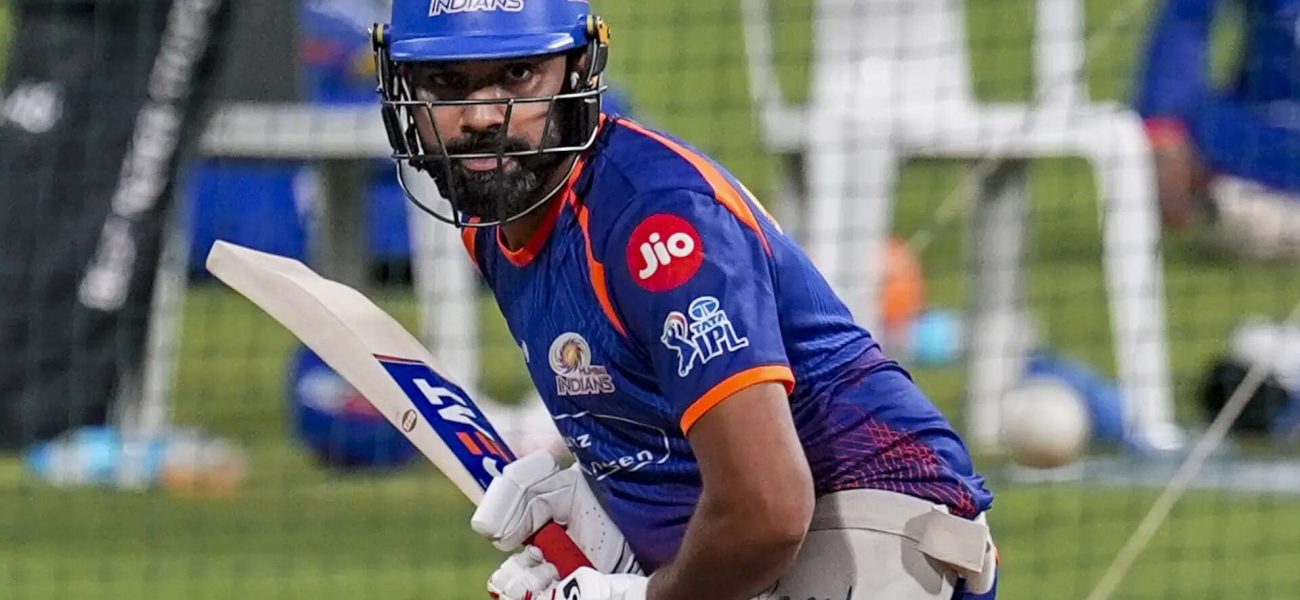
POLICY WIRE — Mumbai, India — The hum of anticipation, thick as the city’s monsoon air, invariably masks a more profound anxiety in the cutthroat world of professional sports. It isn’t merely about tonight’s fixture; it’s about the very fragile human capital — the irreplaceable, high-value asset whose sudden absence can send multi-million dollar franchises into a tailspin. And right now, few situations epitomize this stark reality quite like Rohit Sharma’s precarious hamstring ahead of the Mumbai Indians’ pivotal clash against Sunrisers Hyderabad.
It’s not the most obvious storyline, perhaps, but it’s undeniably the most consequential. Behind the glittering spectacle of the Indian Premier League, an economic behemoth that captivates a subcontinent, a single injury to a linchpin like Sharma reverberates far beyond the boundary ropes. For the Mumbai Indians, a team with an almost monarchical legacy in the IPL, his continued sidelining since April 12 has cast a pall over their campaign. And frankly, they’ve been less than regal this season.
The team’s management remains conspicuously tight-lipped, a tacit admission of the delicate balance they’re attempting to strike. Sharma, after all, isn’t just a batsman; he’s a brand, a leader, a symbol of Mumbai’s past glories. His absence isn’t simply a numerical void in the batting order; it’s a psychological chasm. While he’s been seen batting extensively in the nets — a glimmer of hope, some would say — the whispers from inside the camp suggest a cautious, almost glacial approach to his return. They won’t risk aggravating the injury, not when the season’s balance hangs by such a slender thread. “We’re monitoring him day-by-day, minute-by-minute, quite literally,” a Mumbai Indians team official, who requested anonymity due to ongoing sensitive discussions, shot back when pressed on the star’s availability. “It’s about safeguarding his career, not just one match.”
Still, the numbers don’t lie. Mumbai Indians have compiled a paltry 1173 runs this season, the lowest among all contending teams, according to league statistics. Their Powerplay returns, usually a fortress, stand at an anemic 366 runs — also the poorest. Without Sharma’s customary early momentum, the batting unit has repeatedly faltered. Tilak Varma, despite his efforts, isn’t yet in the league’s top-tier scorers, and Suryakumar Yadav, last season’s phenom, has struggled to find his rhythm. Hardik Pandya — and Sherfane Rutherford, too, have endured lean patches. It’s a collective malaise, amplified by the vacuum at the top.
Contrasting this, Sunrisers Hyderabad arrive at the Wankhede in formidable shape, setting batting benchmarks throughout the tournament. They boast superior statistics across the board, from total runs to six-hitting prowess, fueled by a cadre of in-form players. Pat Cummins has galvanized their bowling attack, turning a perennial weakness into a newfound strength with young pacers stepping up admirably. This isn’t just a game; it’s a collision of narratives, a testament to what happens when one team is firing on all cylinders and the other is limping.
And so, the Wankhede awaits, typically a cauldron of high-scoring drama. The average first-innings total here hovers above 200, but Mumbai’s recent inconsistencies — including a humbling collapse against Chennai Super Kings — add layers of pressure. Will Sharma play? Don’t bet on it fully. His presence would undoubtedly provide a psychological fillip, a jolt of confidence for a squad desperately seeking stability. But if he remains on the sidelines, Mumbai Indians will, yet again, have to navigate a must-win situation without one of their most experienced and influential figures. It’s a gamble they can ill-afford.
📄 POLICY WIRE WHITEPAPER PUBLISHED: PAKISTAN'S NATIONAL SECURITY POLICY PRIORITIES
👉 READ BY CLICKING HEREWhat This Means
At its core, this ongoing saga underscores the precarious nature of human capital in the hyper-commercialized world of elite sports. For franchises like Mumbai Indians, backed by significant corporate entities, an injury to a marquee player isn’t just a sporting setback; it’s an economic tremor. Rohit Sharma’s brand value, his ability to draw crowds and secure sponsorships, represents a substantial portion of the team’s intangible assets. His continued absence means not only diminished on-field performance but also a dent in fan engagement and commercial appeal – crucial metrics in an ecosystem where every player is, in effect, a walking, talking, incredibly valuable stock option.
the strategic quandary facing Mumbai’s management mirrors dilemmas seen in corporate boardrooms globally: how much risk do you assume with a high-value asset, balancing immediate returns against long-term sustainability? Pushing a player back too soon can lead to re-injury, compounding financial — and reputational losses. This isn’t merely about wins — and losses; it’s about shrewd portfolio management in a dynamic, unpredictable market. From Lahore to Dhaka, millions of fans in the Muslim world and across South Asia scrutinize these decisions, understanding intuitively the confluence of sporting passion and cold, hard economics that underpins their favorite game.
Still, for players, the pressure is immense. Their careers are finite, — and every match, particularly in a league of this caliber, is an audition. The IPL, a billion-dollar enterprise, acts as a microcosm of global economic and reputational stakes, where individual performance directly translates to market value. The choices made today about Rohit Sharma’s health aren’t just for tonight’s game; they’re policy decisions impacting his future earning potential and the Mumbai Indians’ strategic trajectory for seasons to come. It’s a stark reminder that even in the dazzling theatre of sport, cold economic logic often dictates the script.