


NIO’s Silicon Gambit: Beijing’s Deepening Play for Tech Sovereignty in the EV Age
POLICY WIRE — Washington, D.C. — The global semiconductor arena, once a testament to seamless cross-border innovation, is fast devolving into an economic battleground, a high-stakes contest for...

POLICY WIRE — Washington, D.C. — The global semiconductor arena, once a testament to seamless cross-border innovation, is fast devolving into an economic battleground, a high-stakes contest for technological supremacy. And China, it appears, isn’t just watching from the sidelines anymore; it’s drawing its own battle lines, albeit incrementally. This isn’t merely about market share in the booming electric vehicle (EV) sector, no, it’s something far more consequential — a strategic reorientation with profound implications for global supply chains and geopolitical fault lines.
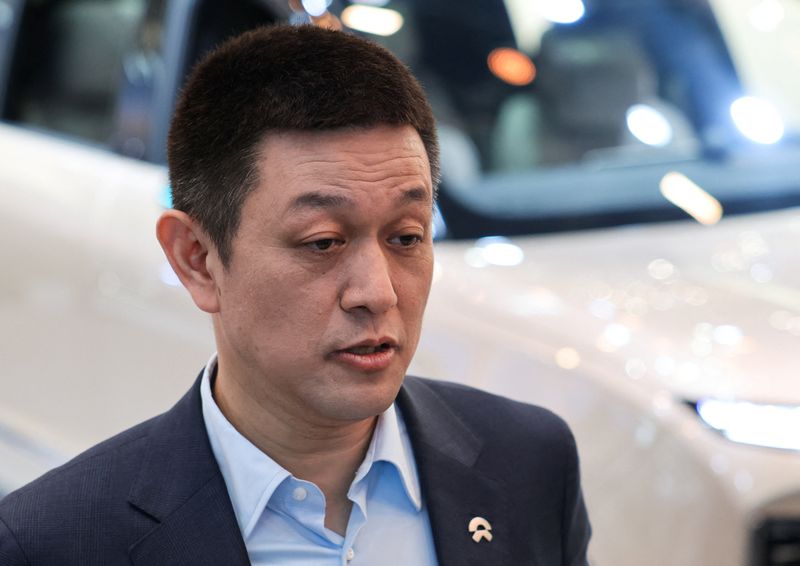
At its core, this narrative pivots on Chinese EV maker NIO, which has quietly begun laying the groundwork to replace advanced chips from American giant Nvidia with its own internally designed silicon. It’s a move that, while seemingly confined to a single automotive company, speaks volumes about Beijing’s overarching agenda: insulate its burgeoning tech industries from foreign vulnerabilities, particularly those emanating from Washington. This isn’t a sudden epiphany, mind you, but a calculated, deliberate progression fueled by years of U.S. export controls — and a palpable fear of technological strangulation.
But make no mistake, designing advanced semiconductors isn’t like assembling a LEGO set; it’s an incredibly complex, capital-intensive endeavor requiring specialized expertise, cutting-edge intellectual property, and access to the world’s most sophisticated fabrication facilities (often, ironically, reliant on American or European tools). Still, the message from Shanghai is unambiguous: China will build its own, come what may. Li Wei, Deputy Minister for Industry and Information Technology, didn’t mince words in a recent state media interview, stating, “We cannot afford to have our automotive future dictated by foreign choke points. This isn’t merely about market share; it’s about national resilience and technological sovereignty.”
And so, NIO’s ambition to design its own autonomous driving chips isn’t an isolated incident. Instead, it’s a microcosm of a much larger national strategy. Recall that in 2022, China imported over $430 billion worth of integrated circuits, highlighting its profound reliance on foreign technology – a dependency Beijing is desperate to unravel. That eye-watering figure, sourced from the General Administration of Customs, China, underscores the sheer scale of the challenge and, simultaneously, the urgency driving these domestic initiatives.
Behind the headlines, there’s a quiet understanding that the path is arduous. Dr. Eleanor Vance, a Senior Fellow at the Atlantic Council, conveyed a healthy dose of skepticism. “The notion that any EV maker can simply ‘design its own chips’ and replicate Nvidia’s decades of R&D is, frankly, naive. The supply chain for advanced semiconductors is profoundly complex, a global web of specialized firms, and decoupling from that isn’t a weekend project.” Her assessment encapsulates the daunting technical hurdles. NVIDIA, for instance, has years, even decades, of optimization and software integration behind its hardware – a cumulative advantage that’s not easily surmounted. But even if China can’t achieve full parity immediately, reducing reliance by even a fraction is a victory in their eyes.
For burgeoning economies in South Asia, including Pakistan, this pursuit of indigenous tech isn’t an abstract geopolitical play; it’s a blueprint for navigating their own industrial aspirations. As the world fragments into technological blocs, these nations must weigh allegiances and dependencies, understanding that future economic growth might hinge on access to — or better yet, control over — critical components. Pakistan, for instance, eyeing its own EV ambitions and seeking to attract foreign investment, will be keenly observing how China manages its push for self-sufficiency, recognizing both the opportunities and the inherent risks of such deep technological entanglement.
📄 POLICY WIRE WHITEPAPER PUBLISHED: PAKISTAN'S NATIONAL SECURITY POLICY PRIORITIES
👉 READ BY CLICKING HEREUltimately, NIO’s gambit, like similar moves by other Chinese tech firms, is less about achieving absolute technological superiority overnight and more about building a credible deterrent against future export restrictions. It’s a long game, a marathon, not a sprint — and one that’s reshaping the very architecture of global commerce and power. We’re witnessing the slow, deliberate untangling of a deeply interconnected world, and the reverberations, you can bet, will be felt everywhere.
What This Means
This pivot by NIO signals a deepening resolve within China to achieve technological autonomy, particularly in strategically vital sectors like electric vehicles and AI. Economically, it means increased investment in domestic R&D and manufacturing infrastructure, potentially fostering a more resilient — though initially less efficient — local supply chain. It’s an expensive proposition, to be sure, and one that may see Chinese firms struggle for years to match the cutting-edge performance of established Western players. But it’s a cost Beijing seems willing to bear.
Politically, this trend exacerbates the ongoing tech rivalry between the U.S. and China. Washington views China’s push for self-sufficiency as a direct challenge to its technological leadership and national security. Therefore, expect to see continued, perhaps even intensified, export controls and efforts to ‘friend-shore’ supply chains, drawing allies closer and pushing adversaries further apart. For companies like Nvidia, it translates to lost market share and a heightened need to diversify their global customer base. The world is splitting, slowly but surely, into distinct technological ecosystems, and companies — and nations — will increasingly have to choose a side, or at least navigate a perilous middle ground. It’s an endurance test, a brutal calculus of athletic endurance, playing out on a geopolitical scale.