


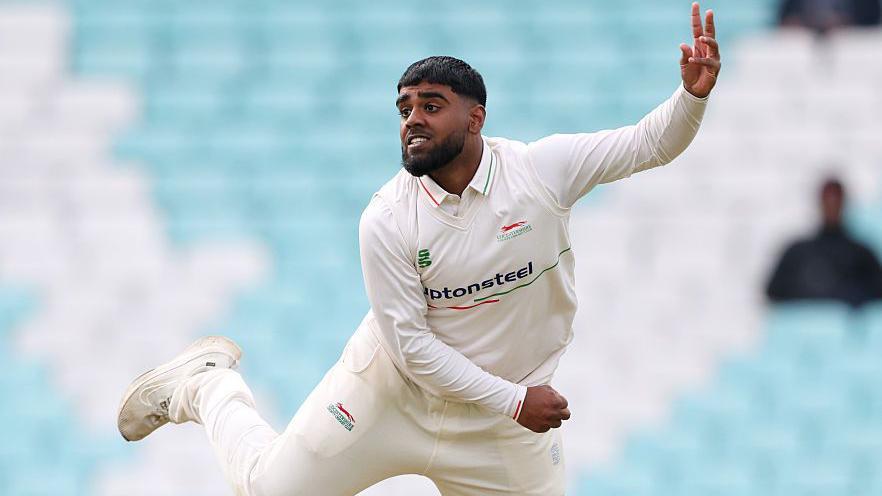
Ahmed’s IPL Call-Up: A Seismic Shift for English Cricket’s Rising Star
POLICY WIRE — London, England — Not every day does a burgeoning talent from the quiet English county circuit get plucked mid-season to plunge headfirst into the raucous, money-spinning spectacle that...

POLICY WIRE — London, England — Not every day does a burgeoning talent from the quiet English county circuit get plucked mid-season to plunge headfirst into the raucous, money-spinning spectacle that is the Indian Premier League.
But that’s precisely the high-stakes gamble being taken by both England’s Rehan Ahmed and the Delhi Capitals. The 21-year-old leg-spinning all-rounder has been snapped up by the Indian franchise for the remainder of this year’s IPL campaign, an abrupt move that underscores the magnetic pull of the world’s richest cricket league.
For Ahmed, it’s a meteoric ascent. He’s played five Tests, nine One Day Internationals, and 13 T20 Internationals for England, a testament to his versatility and undeniable skill. Across all formats, the young spinner has already claimed an impressive 49 wickets, a statistic that speaks volumes about his impact in a short international career.
Leicestershire, his county side, must certainly be feeling a mix of pride and profound inconvenience. Their director of cricket, Claude Henderson, made no bones about the club’s feelings.
“We’re absolutely delighted for Rehan and incredibly proud as a club to see him earn this opportunity,” Henderson told reporters. “It’s a real testament to the hard work of everyone within our academy and pathway system, and exactly what we strive for. We’re excited to watch him go and express himself, and we’ll be right behind him every step of the way before welcoming him back to Leicester.”
Yet, the implications for the Foxes are stark. Ahmed will miss at least four crucial County Championship matches and their first two T20 Blast group games. That’s a significant chunk of a season for a team that recently returned to the first division of the County Championship.
This isn’t just a simple player transfer; it’s a geopolitical statement about cricket’s changing landscape. The IPL, an economic powerhouse born from India’s burgeoning market, routinely draws the best talent from around the globe, often at the expense of established domestic and even international schedules.
Few other leagues command such attention, or such hefty paychecks. Indeed, the league’s economic clout is such that even established national teams sometimes struggle to retain their players. The allure of the IPL, with its fast-paced action and global viewership — reportedly topping 600 million viewers in India alone for its 2023 season final — is simply too strong for many to resist.
The Delhi Capitals, currently sitting fifth in the standings with three wins and three losses from six games, clearly believe Ahmed’s leg-spin can provide the mid-tournament spark they need. But will it be enough?
From a broader perspective, Ahmed’s journey to the IPL also resonates deeply within the cricketing communities of South Asia and the wider Muslim world. A young, talented Muslim cricketer from England, making his mark on such a prominent global stage, sends a powerful message. It highlights the increasing diversity within international cricket and the unifying power of the sport across cultural divides, especially in a region where cricket is practically a religion itself. His success, or even just his participation, inspires countless aspiring athletes, particularly in nations like Pakistan, Bangladesh, and beyond, who see a reflection of their own ambitions.
Consider the career path of a player like Yasiel Puig in baseball, whose journey has seen him navigate different leagues and legal challenges, mirroring the complex demands and high stakes placed upon professional athletes today. Related: Legal Cloud Hangs Over Ex-MLB All-Star Yasiel Puig’s Canadian Baseball League Deal. Cricket isn’t immune to these pressures, particularly when the IPL money talks.
📄 POLICY WIRE WHITEPAPER PUBLISHED: PAKISTAN'S NATIONAL SECURITY POLICY PRIORITIES
👉 READ BY CLICKING HEREWhat’s particularly striking about Ahmed is his youth. At 21, he isn’t just making his IPL debut; he’s doing so with a significant international cap count already under his belt. That’s a heavy expectation to carry, even for a player hailed as a generational talent.
What This Means
This transfer isn’t merely about bolstering Delhi’s squad; it represents a deepening trend in modern cricket where franchise leagues, particularly the IPL, increasingly dictate the rhythms of the international game. English cricket, in particular, finds itself in a perpetual balancing act, trying to protect its domestic structure while allowing its stars to cash in on lucrative global opportunities.
Economically, it’s a no-brainer for players. The financial incentives offered by the IPL dwarf county wages, creating an almost irresistible pull. For boards like the ECB, it’s a tightrope walk: deny players and risk losing them to white-ball specialization; permit them, and weaken the domestic game.
Politically, the IPL’s influence continues to grow, effectively creating an alternative ecosystem of wealth and power that sometimes runs parallel, or even counter, to traditional cricketing hierarchies. Nations across the subcontinent, with their immense fan bases, are increasingly shaping the sport’s commercial future.
And yet, is it sustainable? The current club-versus-country debate shows no signs of abating, and young talents like Ahmed become the very embodiment of this tension. Their decisions carry implications far beyond the boundary rope, shaping national team strengths and domestic league viability for years to come.
Ricky Ponting, the Delhi Capitals’ head coach, is reportedly delighted with the acquisition. “Rehan brings that X-factor with his leg-spin, and he’s not afraid to use the bat either,” a source close to the Capitals management, requesting anonymity due to the ongoing season, indicated. “We’ve been watching him closely, and his temperament for big occasions is exactly what we need right now.”
This isn’t just about a team chasing a playoff spot; it’s about the continued dominance of a league that changes careers, shifts loyalties, and undeniably redefines the pathways to global cricketing stardom.
Looking ahead, expect more young talents to follow Ahmed’s path, prioritizing the immediate rewards and exposure of the IPL. The question isn’t if the balance of power will continue to shift towards franchise cricket, but how quickly national boards can adapt to avoid being completely overshadowed.