

Between Crisis and Opportunity: Pakistan’s Diplomatic Balancing Act in US–Iran Mediation
A State at the Crossroads of Global Diplomacy In April 2026, Islamabad quietly transformed into one of the most consequential diplomatic hubs in the world. As tensions between the United States and...

A State at the Crossroads of Global Diplomacy
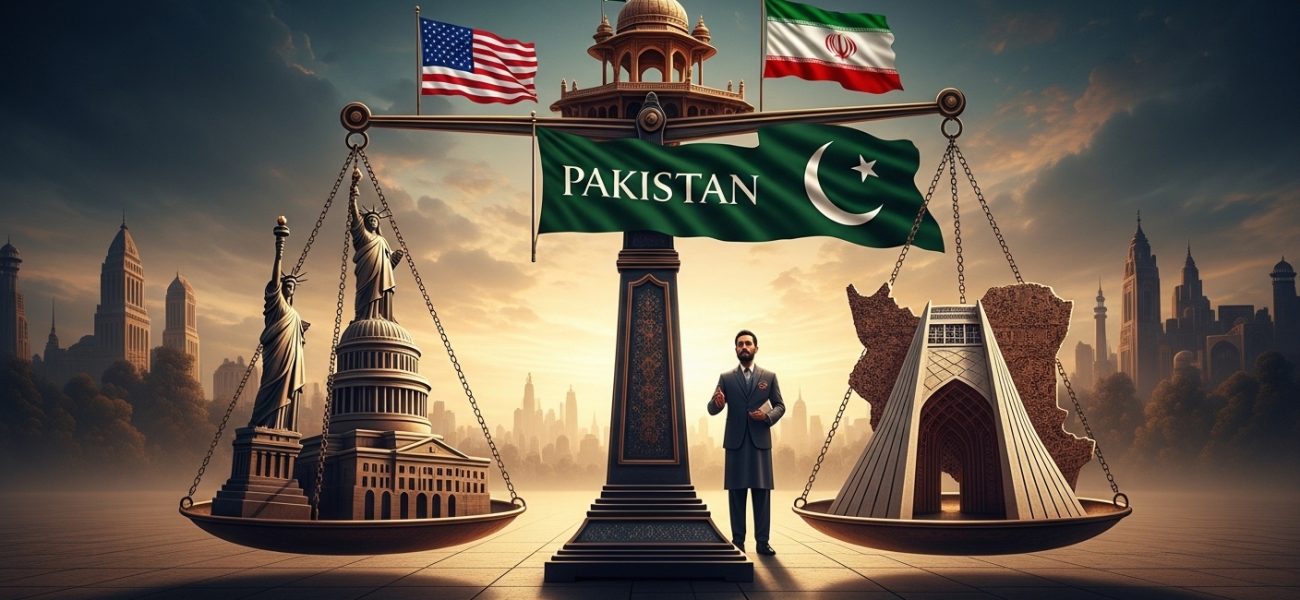
In April 2026, Islamabad quietly transformed into one of the most consequential diplomatic hubs in the world. As tensions between the United States and Iran escalated toward potential regional war, Pakistan stepped in—not merely as a facilitator, but as a strategic mediator attempting to prevent a wider geopolitical catastrophe.
The Islamabad Talks marked the first direct high-level engagement between Washington and Tehran in decades, underscoring Pakistan’s emergence as a credible diplomatic broker.
But this role did not emerge in a vacuum. It is the product of decades of geopolitical positioning, institutional capacity, and strategic necessity.
Historical Context: From Frontline State to Diplomatic Broker
Pakistan’s mediation effort must be understood within its broader historical trajectory:
- During the Cold War and post-9/11 era, Pakistan served as a frontline state, deeply embedded in global security architectures.
- It has historically maintained working relations with both Washington and Tehran, despite their adversarial relationship.
- Pakistan has previously acted as an intermediary in complex diplomatic settings, including facilitating backchannel communications in global conflicts.
This dual-access diplomacy has positioned Islamabad uniquely: Trusted enough by both sides to host talks. Neutral enough to avoid being perceived as partisan.
Political Drivers: Strategic Neutrality and Institutional Synergy
At the political level, Pakistan’s mediation reflects a carefully calibrated foreign policy:
- The civilian leadership under Prime Minister Shehbaz Sharif and the military leadership, COAS Field Marshal Asim Munir, have operated in strategic alignment, strengthening credibility abroad.
- Pakistan’s neutrality especially its non-alignment in Middle Eastern rivalries has enhanced its acceptability as a mediator.
A senior diplomatic source noted that Pakistan’s approach is not ideological but pragmatic, focused on: De-escalation, stability in the Strait of Hormuz and prevention of regional spillover.
This reflects a shift from reactive to proactive diplomacy, where Pakistan is not merely responding to crises but shaping outcomes.
Economic Imperatives: Stability as Survival
Behind diplomacy lies a hard economic reality.
The US–Iran conflict has direct consequences for Pakistan:
- Disruptions in the Strait of Hormuz threaten global oil supply chains, directly impacting Pakistan’s already fragile energy security.
- Rising oil prices exacerbate inflation and economic instability domestically.
- Regional war risks undermining trade routes and foreign investment.
Analysts suggest Pakistan’s mediation is partly driven by economic self-preservation:
A prolonged conflict would not only destabilize the region but cripple Pakistan’s recovery trajectory.
At the same time, successful mediation could:
- Enhance investor confidence
- Elevate Pakistan’s global economic standing
- Open avenues for strategic partnerships
Social Dimensions: Public Perception and National Identity
Domestically, Pakistan’s diplomatic role is shaping national identity narratives.
There is growing public discourse portraying Pakistan as:
A peace-building state rather than a conflict zone
This shift is significant. For decades, Pakistan’s global image was tied to security challenges. Now, mediation efforts are contributing to a rebranding of the state as a diplomatic stabilizer.
Inside the Mediation: Complex Realities and Constraints
Despite progress, the mediation process remains fragile:
- Iran has shown willingness to engage but insists on lifting economic and military pressure before negotiations.
- The United States remains cautious, balancing diplomacy with coercive leverage.
- Internal divisions within Iran and strategic calculations in Washington complicate consensus-building.
Pakistan’s role, therefore, is less about imposing solutions and more about: Maintaining dialogue channels, preventing escalation and Building incremental trust
As one former ambassador observed, Pakistan’s mediation has already played a “positive role in keeping dialogue alive.”
📄 POLICY WIRE WHITEPAPER PUBLISHED: PAKISTAN'S NATIONAL SECURITY POLICY PRIORITIES
👉 READ BY CLICKING HEREExpert Insights: Why Pakistan Matters
Interviews and expert commentary highlight three key strengths:
Geostrategic Position
Pakistan sits at the crossroads of:
South Asia, Central Asia and Middle East
This gives it both geographic relevance and logistical feasibility for hosting talks.
Institutional Capacity
The coordinated role of:
- Civilian leadership
- Military establishment
- Diplomatic corps
creates a cohesive negotiation framework, rarely seen in fragile states.
Balanced Relationships
Unlike many actors:
- Pakistan has security ties with the US
- Cultural and geographic proximity to Iran
This dual engagement builds mutual trust, a critical asset in mediation.
Potential Solutions and Their Feasibility
Several pathways are currently being discussed:
Ceasefire Extension Agreements
Short-term but necessary. Already partially achieved through Pakistan-facilitated talks
Structured Peace Framework
Security guarantees, Long-term and complex, dependent on political will
Multilateralization of Talks
Involving Gulf states, China, or UN
Notably, even the U.S. State Department has acknowledged Pakistan’s role as “important in keeping communication open”, signaling growing international trust.
Conclusion: Diplomacy as Strategic Power
Pakistan’s mediation between the United States and Iran is more than a diplomatic initiative, it is a strategic assertion of relevance in a shifting global order.
At a time when great power rivalries threaten global stability, Pakistan’s approach demonstrates that: Middle powers can shape outcomes, Diplomacy remains a viable alternative to conflict and Strategic neutrality can translate into global influence
If sustained with consistency and realism, this role could redefine Pakistan’s place in international politics from a security-dependent state to a proactive architect of regional peace.
Author